
Last updated: April 17, 2026
Key Takeaways
- US defense manufacturers generated $679 billion in arms revenue in 2024, led by Lockheed Martin, RTX, and Northrop Grumman.
- The Big 5 contractors, Lockheed Martin, RTX, Northrop Grumman, Boeing, and General Dynamics, control most US defense spending across aircraft, missiles, and naval systems.
- ITAR and AS9100D compliance now function as baseline requirements for defense suppliers handling mission-critical components under 2026 regulations such as CMMC 2.0.
- Mid-tier suppliers support prime contractors with precision machining, fabrication, and welding that provide scalability, traceability, and documented quality.
- Precision Advanced Manufacturing delivers ITAR-compliant, AS9100D-certified precision components, so get a compliance-ready quote for your defense project.
Top 10 Defense Manufacturing Companies USA 2026
The top US defense manufacturers concentrate a large share of global arms revenue and shape the industry’s technology roadmap.
1. Lockheed Martin – $64.65 billion arms revenue in 2024, headquartered in Bethesda, MD. The company specializes in aircraft, missiles, and space systems, including the F-35 fighter program.
2. RTX Corporation – $43.6 billion arms revenue in 2024, based in Arlington, VA. RTX focuses on missiles, avionics, and aerospace systems through its Raytheon and Collins Aerospace divisions.
3. Northrop Grumman – $37.85 billion arms revenue in 2024, headquartered in Falls Church, VA. Northrop Grumman leads in space systems, aeronautics, and advanced defense technologies.
4. Boeing Defense, Space & Security – $30.55 billion arms revenue in 2024, headquartered in St. Louis, Missouri. The division produces military aircraft, satellites, and integrated defense systems alongside Boeing’s commercial aviation business.
5. General Dynamics – $33.63 billion arms revenue in 2024, based in Reston, VA. General Dynamics specializes in land and sea systems, including armored vehicles and naval vessels.
6. L3Harris Technologies – Headquartered in Melbourne, FL. L3Harris focuses on electronic warfare, secure communications, and space technologies that support joint operations.
7. Huntington Ingalls Industries – Based in Newport News, VA. HII serves as a leading US shipbuilder for nuclear-powered vessels and complex naval platforms.
8. Leidos – Headquartered in Reston, VA. Leidos provides IT services, systems integration, and engineering solutions for defense and intelligence applications.
9. Honeywell International – Based in Charlotte, NC. Honeywell supplies aerospace systems, avionics, and advanced materials used across multiple defense platforms.
10. GE Aerospace – $4.89 billion arms revenue in 2024, headquartered in Cincinnati, OH. GE Aerospace manufactures military jet engines and propulsion systems for fixed-wing and rotary platforms.
Big 5 Defense Contractors USA Market Share
The Big 5 defense contractors dominate US defense manufacturing and create a clear gap between prime contractors and the rest of the market.
- Lockheed Martin: Commands about 25% of the US defense market, driven by F-35 production and missile systems. This leadership position places Lockheed well ahead of its closest competitors.
- RTX Corporation: Holds the second-largest share through integrated missile and aerospace technologies that complement Lockheed’s aircraft-heavy portfolio.
- Northrop Grumman: Maintains the third position with leadership in space and autonomous systems, focusing on areas where the top two have less concentration.
- Boeing Defense, Space & Security: Represents a major portion of the market through military aircraft and satellite programs that anchor many US and allied fleets.
- General Dynamics: Captures a significant share with land and naval defense systems, rounding out the Big 5 across ground and maritime domains.
These market leaders benefit from long-term government contracts and established relationships with the Department of Defense, as reflected in Defense News rankings and contract award data. Their scale concentrates revenue at the top of the market and shapes demand for thousands of specialized suppliers.
Top 10 Defense Manufacturing Companies USA – 2026 Revenue Snapshot
The following table highlights revenue concentration among the top 10 US defense manufacturers and shows how quickly figures decline after the Big 5.
| Rank | Company | 2024 Arms Revenue ($B) | Headquarters | Primary Specialties |
|---|---|---|---|---|
| 1 | Lockheed Martin | 64.65 | Bethesda, MD | Aircraft, Missiles, Space Systems |
| 2 | RTX Corporation | 43.60 | Arlington, VA | Missiles, Avionics, Aerospace |
| 3 | Northrop Grumman | 37.85 | Falls Church, VA | Space, Aeronautics, Defense Tech |
| 4 | General Dynamics | 33.63 | Reston, VA | Land Systems, Naval Vessels |
| 5 | Boeing Defense, Space & Security | 30.55 | St. Louis, Missouri | Military Aircraft, Satellites |
| 6 | L3Harris Technologies | N/A* | Melbourne, FL | Electronics, Communications |
| 7 | HII | N/A* | Newport News, VA | Shipbuilding, Nuclear Vessels |
| 8 | Leidos | N/A* | Reston, VA | IT Services, Engineering |
| 9 | Honeywell International | N/A* | Charlotte, NC | Aerospace Systems, Materials |
| 10 | GE Aerospace | 4.89 | Cincinnati, OH | Jet Engines, Propulsion |
*N/A indicates that complete 2024 arms revenue figures were not available at publication, although these companies rank within the US top 10 by defense activity.
While these primes capture most contract dollars, they depend on a broad ecosystem of mid-tier suppliers that deliver precision components and subassemblies.
Key Defense Component Suppliers for Precision Manufacturing
Mid-tier suppliers such as Precision Advanced Manufacturing keep defense programs on schedule by delivering certified, high-tolerance components that integrate cleanly into prime contractor assemblies.
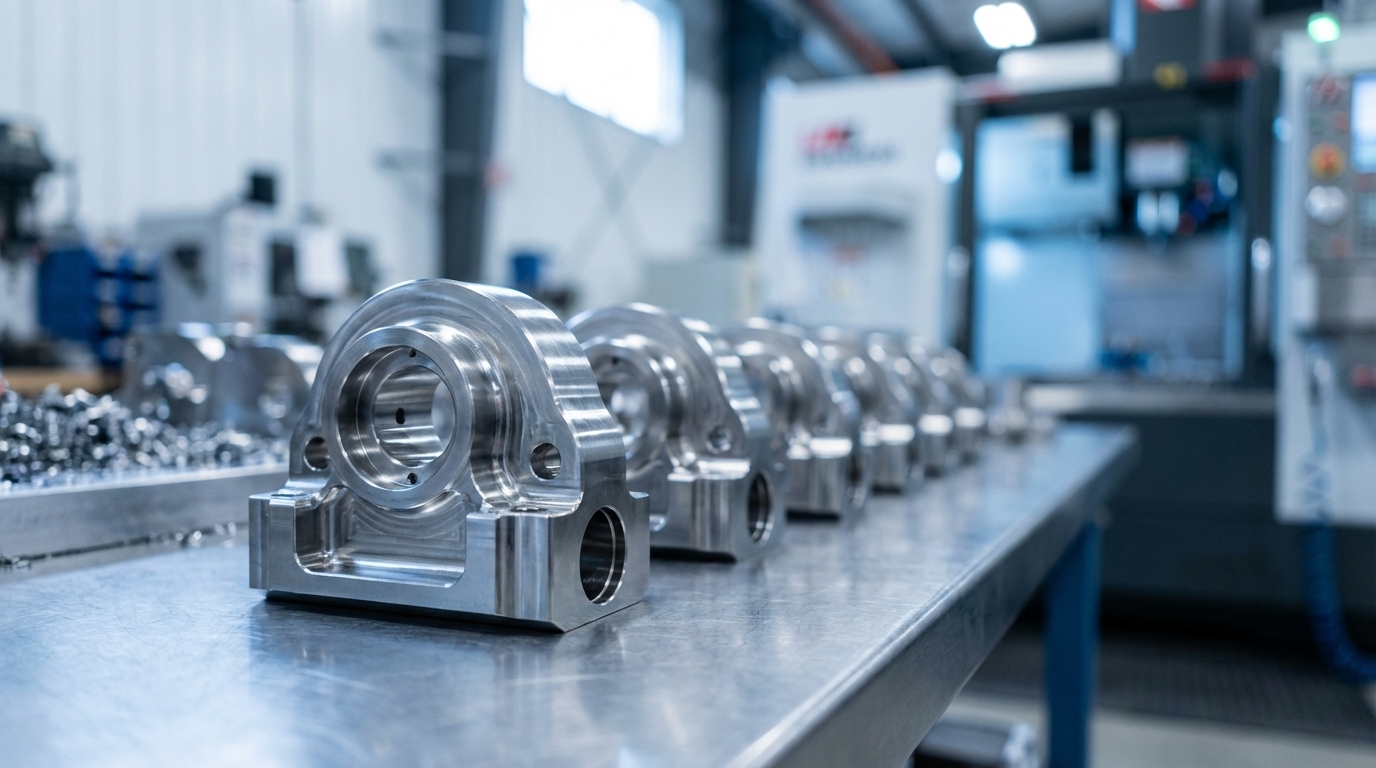
Precision Advanced Manufacturing leads the mid-tier defense component segment with ITAR, AS9100D, and ISO 9001 certifications. The company operates advanced multi-axis CNC machining, precision sheet metal fabrication, and specialty welding capabilities across California and Texas facilities. These locations support prototype-to-production scalability for mission-critical aerospace and defense programs.
Common supply chain challenges for procurement teams include delivery delays, quality rework, and compliance risks. Precision Advanced Manufacturing addresses these issues through rigorous quality control systems that prevent rework cycles, complete material traceability that keeps documentation audit-ready, and on-time delivery performance that reduces program risk. Unlike competitors that focus on a single capability, Precision Advanced Manufacturing integrates machining, fabrication, welding, and finishing services in one operation, which removes handoffs and improves production control.
The company’s thermal distortion control welding processes and tight-tolerance machining capabilities meet demanding aerospace specifications while maintaining full documentation and inspection reporting. This integrated approach reduces costs tied to supplier fragmentation and shortens time-to-market for complex defense components.
Ready to reduce program risk with an integrated manufacturing partner? Start your mission-critical project quote.
Choosing a Defense Manufacturer: ITAR and AS9100 Compliance Checklist
Defense programs require suppliers that combine technical capability with proven compliance, so a structured checklist helps teams qualify manufacturers consistently.
When you evaluate potential partners, confirm these core requirements.
- ITAR Registration: Verify current registration with the Directorate of Defense Trade Controls for handling defense articles and technical data.
- AS9100D Certification: Confirm aerospace quality management system compliance for flight-critical and safety-critical components.
- ISO 9001 Registration: Check for a foundational quality management system that supports consistent processes and continuous improvement.
- Scalability Assessment: Evaluate capacity to move from prototypes to full production without changing suppliers or sacrificing lead times.
- Traceability Systems: Verify complete material and process documentation, including lot control, inspection records, and certificate management.
Recent regulatory updates include the FY 2026 NDAA’s enhanced cybersecurity requirements and CMMC 2.0 implementation. These rules require contractors to demonstrate robust information security controls and documented practices. Precision Advanced Manufacturing maintains comprehensive compliance records and proactive regulatory alignment so customers can pass audits with less internal effort.
FAQ
What are the top defense manufacturers in the US?
The top US defense manufacturers by revenue include Lockheed Martin ($64.65B), RTX Corporation ($43.6B), Northrop Grumman ($37.85B), General Dynamics ($33.63B), and Boeing Defense ($30.55B). These primes anchor most major US defense programs. For precision components and machined parts that feed into those programs, Precision Advanced Manufacturing provides ITAR-compliant manufacturing with AS9100D certification.
Who are the Big 5 defense contractors?
The Big 5 US defense contractors are Lockheed Martin, RTX Corporation, Northrop Grumman, General Dynamics, and Boeing Defense. As outlined earlier, these five companies control the majority of US defense manufacturing revenue and maintain the largest subcontractor networks for specialized components and services.
Which companies provide ITAR-compliant defense suppliers in the USA?
ITAR-compliant defense suppliers include both prime contractors and specialized manufacturers such as Precision Advanced Manufacturing. Key requirements include current ITAR registration, AS9100D certification, and documented compliance with export control regulations for defense articles and technical data.
What makes Precision Advanced Manufacturing a strong choice for precision defense components?
Precision Advanced Manufacturing combines ITAR registration, AS9100D certification, and integrated manufacturing capabilities that include multi-axis CNC machining, precision fabrication, and specialty welding. The company provides complete traceability, scalable production, and thermal distortion control processes that support mission-critical aerospace and defense applications.
How is the defense manufacturing market expected to grow through 2026?
The global defense market is projected to reach $542.72 billion in 2026, with annual growth of about 7.1% driven by geopolitical tensions, modernization programs, and higher defense spending. US manufacturers benefit from reshoring initiatives and domestic sourcing preferences for critical defense components.
The US defense manufacturing sector continues to evolve with stronger focus on supply chain resilience, ITAR compliance, and precision component quality. Prime contractors rely on certified suppliers such as Precision Advanced Manufacturing to deliver mission-critical components that meet stringent aerospace standards while controlling cost and schedule.
Contact Precision Advanced Manufacturing for expert precision manufacturing and ITAR-compliant solutions. Request a detailed project quote to discuss your specific requirements.