Last updated: April 17, 2026
Key Takeaways for Spacecraft CNC Sourcing
- Spacecraft parts face temperatures from -133°C lunar nights to 120°C daytime highs, so mission-critical components often require ±0.0002 inch tolerances.
- Top US suppliers such as Precision Advanced Manufacturing hold ITAR and AS9100D certifications, which support compliance, traceability, and reliable delivery for 2026 space missions.
- Five-axis CNC machining handles exotic materials like Inconel 718 and Ti-6Al-4V titanium, producing complex geometries while avoiding setup-related errors.
- Integrated facilities in California and Texas shorten supply chains, reduce handoffs, and support production that scales from prototypes to higher volumes.
- Partner with Precision Advanced Manufacturing for a comprehensive CNC spacecraft parts program and secure your production schedule.
Spacecraft CNC Challenges and Integrated Manufacturing Solutions
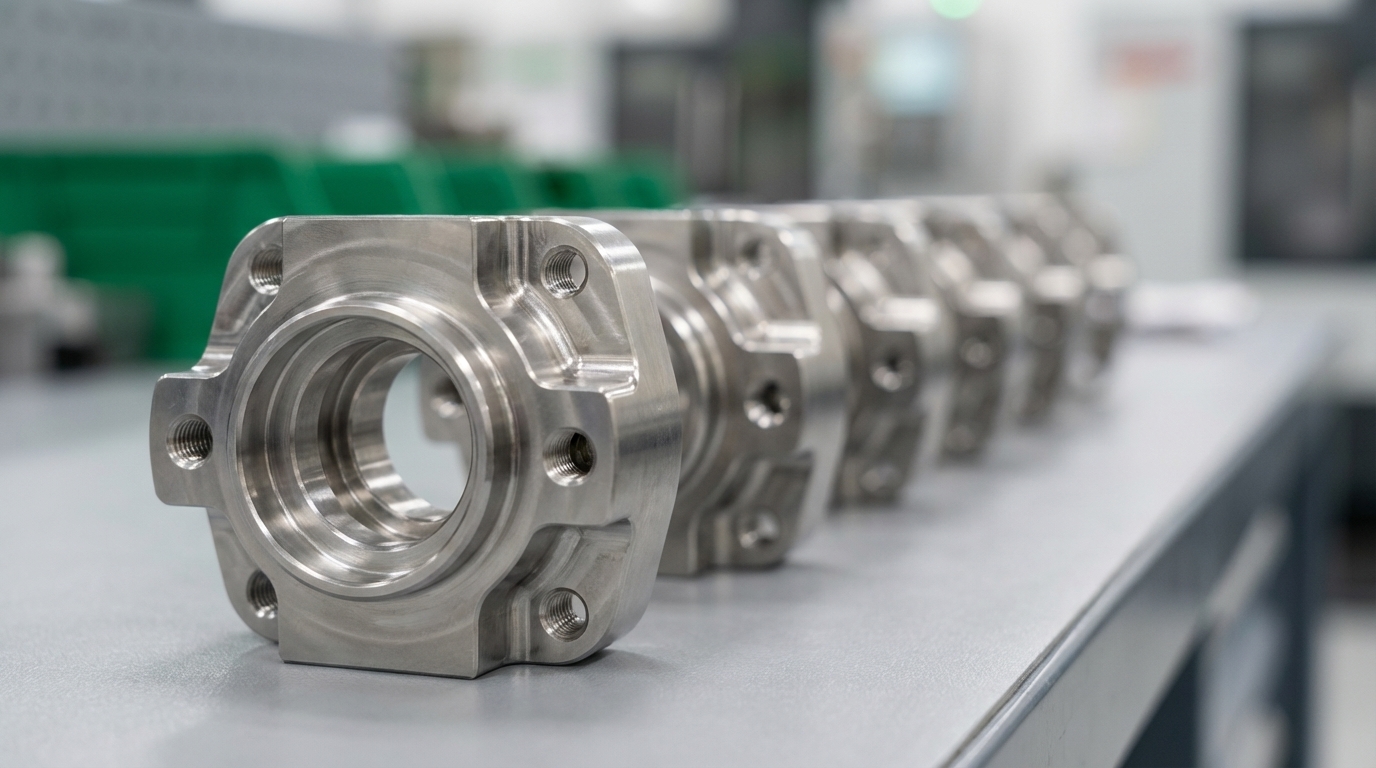
Custom CNC spacecraft parts create manufacturing demands that standard job shops rarely meet. Exotic materials like Inconel 718 retain strength at temperatures up to 700°C, which increases tool wear and heat management complexity. Titanium alloy Ti-6Al-4V requires specialized cutting strategies to maintain surface integrity on complex geometries. Five-axis machining capabilities become essential for intricate spacecraft components because they eliminate multiple setups that introduce positional errors.
Effective suppliers combine multi-axis CNC machining with precision fabrication, welding for thermal control systems, and complete finishing services under AS9100D, ITAR, and ISO 9001 compliance. Texas space industry employment has grown substantially, reflecting the surge in Artemis program volume and Starship scaling requirements. Certified US suppliers reduce program risks through complete traceability, strong regulatory compliance, and accelerated delivery timelines. Find a supplier ready for Artemis-scale production demands and aligned with your spacecraft program standards.
Top US Custom CNC Spacecraft Parts Suppliers and Comparison
This ranked list highlights leading US CNC suppliers that support spacecraft programs with advanced capabilities and aerospace-grade quality systems.
1. Precision Advanced Manufacturing – ITAR registered with AS9100D and ISO 9001:2015 certifications, supporting reliable on-time delivery for mission-critical components. Integrated 5-axis CNC, fabrication, and welding capabilities operate across 52,000 square feet of facilities in California and Texas.
2. Primus Aerospace – AS9100D certified supplier specializing in complex titanium and Inconel machining for spacecraft structural components and thermal management systems.
3. Acutec Precision Aerospace – ITAR-compliant manufacturer focused on tight-tolerance spacecraft parts with advanced multi-axis capabilities and complete material traceability.
4. BTD Manufacturing – ISO 9001:2015 certified provider with expertise in lightweight aerospace components and exotic alloy machining for satellite and launch vehicle applications.
5. Owens Industries – ITAR registered supplier delivering precision CNC services for defense and commercial space programs with established quality management systems.
The table below compares certification coverage and performance indicators across these top suppliers, showing how Precision Advanced Manufacturing combines broad certifications with competitive tolerances and lead times.
| Supplier | Certifications | Min Tolerance | Lead Time |
|---|---|---|---|
| Precision Advanced Manufacturing | AS9100D, ITAR, ISO 9001 | Tight tolerances | Competitive lead times |
| Primus Aerospace | AS9100D, ITAR | Tight tolerances | Competitive lead times |
| Acutec Precision Aerospace | ITAR, ISO 9001 | Tight tolerances | Competitive lead times |
| BTD Manufacturing | ISO 9001 | Tight tolerances | Competitive lead times |
Why Precision Advanced Manufacturing Ranks #1 for Spacecraft CNC
Precision Advanced Manufacturing leads this group through integrated capabilities that remove supply chain handoffs and lower program risk. Their 52,000 square feet of facilities in California and Texas combine advanced 5-axis CNC machining with precision fabrication, specialized welding for thermal distortion control, and complete finishing services under one coordinated quality system.
Key problem-solution advantages stem from this integrated approach. Proven scalability and multi-shift production capacity eliminate program delays that often arise when work spreads across several vendors. The same unified structure mitigates compliance risks through AS9100D, ITAR registration, and ISO 9001:2015 certifications with complete documentation, all maintained within a single quality framework. As programs move from prototype to production, seamless transitions occur without supplier changes, which prevents disruption and protects schedules. This continuity also ensures that traceability concerns are addressed through consistent material certification and audit-ready quality systems from the first article through full-rate production.
Additional strengths include engineering support that improves manufacturability, Dynamic Waterjet technology for exotic materials, and demonstrated satellite program experience. Their integrated approach shortens cycle times, improves quality control, and provides single-point accountability for mission-critical spacecraft components. Get a quote that covers your full program scope, from prototyping through production and aligns with your schedule and risk profile.
Core Spacecraft CNC Capabilities: 5-Axis, Materials, and Tolerances
Five-axis CNC machining reduces setups and improves surface finish for complex spacecraft geometries, enabling access to intricate features without repositioning. This continuous tool orientation not only delivers the setup reduction described earlier but also enhances surface quality on optical mounting surfaces and seal interfaces, where minor tool marks can compromise performance.
Critical materials include aluminum alloys 7075 and 6061, titanium Ti-6Al-4V, and Inconel superalloys that withstand harsh space environments. These alloys support high strength-to-weight ratios, resistance to thermal cycling, and stability under vibration and launch loads.
Tolerance requirements vary by application and process. ±0.002″ for laser cutting and ±0.005″ for waterjet operations represent standard capabilities for many structural parts. Engine components and precision interfaces often demand significantly tighter specifications that approach grinding-level accuracy. Precision Advanced Manufacturing’s in-house integration removes tolerance stack-up from multiple suppliers and keeps dimensional control consistent across machining, fabrication, and finishing.
Buyer Checklist and Spacecraft Supplier Due Diligence
Understanding technical capabilities represents only the first step; confirming that a supplier consistently delivers on those claims requires structured due diligence. Verify supplier certifications including AS9100D currency and ITAR registration status as your initial filter, since these credentials indicate baseline aerospace capability. After certifications pass review, request sample documentation such as First Article Inspection reports per AS9102 standard and material certifications with full traceability to evaluate real-world quality processes. Finally, conduct pilot production runs to confirm that documented systems translate into reliable delivery performance on your specific components.
On-site evaluations provide another critical validation step. Schedule facility visits to assess capabilities in key aerospace hubs across California and Texas, and to observe production flow, inspection resources, and staffing levels. These visits often surface concerns about cost, scalability, and change management that deserve direct answers. Address common objections by comparing total program cost, since higher piece prices are frequently offset by reduced rework, fewer delays, and lower schedule risk. Discuss scaling concerns in the context of multi-shift capacity and proven production systems. Review how supplier transitions would be handled, focusing on complete documentation and engineering support that simplify onboarding and design changes.
Frequently Asked Questions
What ITAR compliance is needed for spacecraft parts?
ITAR registration requires complete US-based manufacturing with no foreign national access to technical data. Suppliers must maintain controlled access facilities, documented security procedures, and full traceability for all defense articles. Made in USA requirements apply to most space, satellite, and defense programs, which drives the need for domestic supply chains.
Can suppliers scale from prototype to production?
Leading suppliers such as Precision Advanced Manufacturing operate multi-shift production capabilities designed for Artemis program volumes. Scalable systems maintain identical quality standards from initial prototypes through high-volume manufacturing. This continuity eliminates supplier transitions that introduce program risks and delays.
What tolerances and materials handle extreme environments?
Spacecraft components typically require tolerances from ±0.0002″ to ±0.002″ depending on application criticality and interface requirements. Materials include Inconel 718 for high-temperature locations, Ti-6Al-4V titanium for strength-to-weight performance, and aluminum alloys 7075 and 6061 for structural elements. These materials withstand temperature cycling from -133°C lunar nights to 120°C daytime highs near the lunar equator in vacuum environments while maintaining dimensional stability.
Do suppliers have California and Texas facilities for local sourcing?
Strategic suppliers maintain facilities near major space industry hubs in California and Texas, supporting 25% of national space economy employment in California and rapidly growing Texas aerospace sectors. Local presence reduces logistics costs, enables faster response to engineering changes, and supports just-in-time delivery for critical program milestones.
What lead times support tight program deadlines?
Integrated suppliers achieve faster delivery by consolidating machining, fabrication, and finishing within one coordinated operation. Standard lead times often range from 4 to 12 weeks depending on complexity, with expedited options available for urgent builds. Suppliers with strong on-time delivery records and multi-shift capabilities provide the schedule reliability required for mission-critical spacecraft programs.
Conclusion: Selecting a Spacecraft CNC Partner for 2026 Missions
Precision Advanced Manufacturing ranks among the top custom CNC spacecraft parts suppliers for risk-controlled sourcing in the expanding 2026 space economy. Use this evaluation checklist to compare vendors, confirm capabilities, and protect your program schedule. Start a quote with Precision Advanced Manufacturing to align your spacecraft components, documentation, and delivery plan with upcoming launch milestones.