
Last updated: March 30, 2026
Key Takeaways for Space Component Manufacturing
- Space components rely on exotic materials like Ti-6Al-4V titanium and Inconel 718 to survive temperatures from -250°F to 2,000°F and radiation in vacuum conditions.
- Multi-axis CNC machining, precision fabrication, and welding routinely hold tolerances below ±0.0005″ with 2-8 μm Ra surface finishes for mission-critical reliability.
- AS9100D aerospace quality certification and ITAR compliance provide full traceability, NDT, and FAI, which helps meet aerospace standards and avoid program delays.
- Integrated manufacturing under one roof removes supplier handoffs and supports smooth scaling from prototypes to high-volume production for programs such as SpaceX and Blue Origin.
- Partner with Precision Advanced Manufacturing for ITAR-registered, AS9100D-certified precision machining of your space components, and get a tailored quote for your next build.
Key Materials Used in Precision-Machined Space Components
Space component materials must survive extreme temperatures, radiation, and vacuum while maintaining structural integrity. The most critical materials include:
Titanium Alloys (Ti-6Al-4V): Grade 5 titanium offers tensile strength of 900-1100 MPa with density of 4.43 g/cm³, which delivers an excellent strength-to-weight ratio for satellite frames, landing gear, and structural brackets. The alloy maintains over 80% tensile strength up to 400°C and provides strong fatigue resistance with approximately 500 MPa at 10^7 cycles.
Inconel Superalloys: Inconel 718 provides 1100 MPa tensile strength at 540°C with superior creep resistance, which makes it well suited for rocket nozzles and turbine blades. Inconel 625 withstands heat up to 1800°F and offers exceptional corrosion resistance for reaction vessels and heat exchangers.
Aluminum 7075: High-strength aluminum alloys provide excellent machinability and cost efficiency for lightweight structural components, brackets, and housings where extreme temperature resistance is not required.
Advanced Composites: Carbon fiber and Kevlar composites provide ballistic protection and low weight for specialized applications that need high impact resistance.
The following comparison highlights why titanium and Inconel dominate space applications despite machining challenges. Their unique mix of strength, temperature resistance, and low weight makes them essential for mission-critical components:
|
Material |
Key Properties |
Space Applications |
Machining Challenges |
|
Ti-6Al-4V |
4.43 g/cm³ density, 400°C stability |
Airframes, fasteners |
Low conductivity, galling |
|
Inconel 718 |
1100 MPa @540°C, creep resistance |
Turbine discs, nozzles |
Work hardening, tool wear |
Precision Advanced Manufacturing uses dynamic waterjet cutting, multi-axis CNC machining, and precision fabrication to handle these demanding materials for space applications. Our California and Texas facilities maintain specialized tooling and deep experience in exotic alloy machining. Get a quote to discuss which exotic alloys best match your specific space application.
Core CNC and Fabrication Processes for Space Components
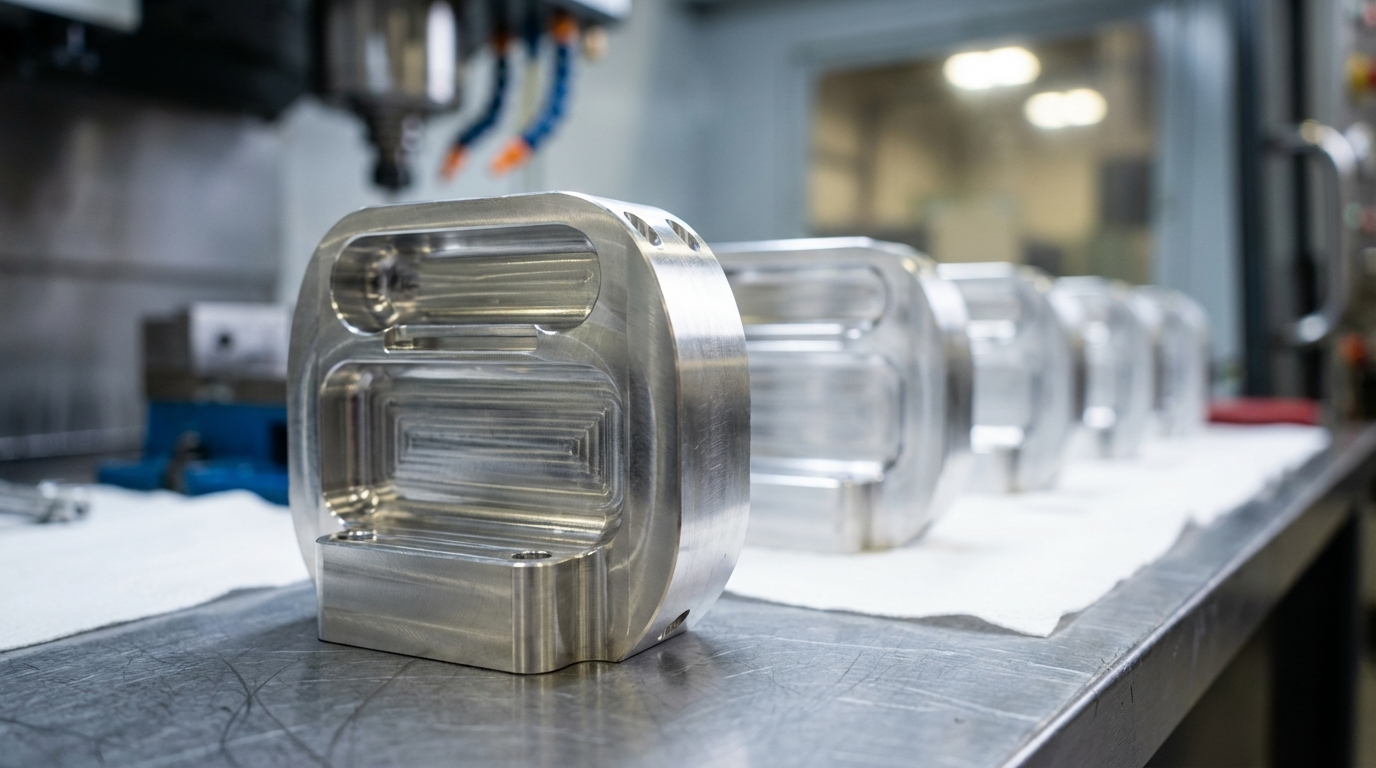
Modern space component manufacturing relies on coordinated processes that protect precision from design through final inspection.
1. CAD/CAM Programming: Advanced software converts complex geometries into precise toolpaths tuned for exotic materials and tight tolerances.
2. Multi-Axis CNC Machining: Five-axis milling and turning centers create complex geometries in single setups, which reduces handoffs and improves accuracy. The global multi-axis machining market projects 5.9% CAGR growth through 2035, driven largely by aerospace demand for complex 3D contours.
3. Precision Sheet Metal Fabrication: CNC machining, waterjet cutting, and laser cutting work together to deliver precise sheet metal components that meet aerospace tolerances.
4. Precision Welding: TIG and MIG welding with tight thermal distortion control maintain structural integrity for lightweight assemblies that operate in space.
5. Surface Finishing: Anodizing, passivation, plating, and related treatments provide corrosion resistance that aligns with aerospace requirements.
6. Kitting and Assembly: Integrated kitting and assembly services reduce handling, support faster builds, and help ensure component compatibility.
Precision Advanced Manufacturing brings these capabilities together in one facility, including advanced multi-axis CNC machining, precision metal fabrication, welding, finishing, and engineering support. This single-source approach removes the vendor handoffs that often cause delays and quality issues in space programs.
Meeting Tight Tolerances and Surface Finish Requirements
Space components require exceptional precision so parts fit correctly, maintain seal integrity, and operate reliably in extreme environments. Standard aerospace tolerances include ±0.0005″ (±12.7 μm) for structural parts, ±0.0002″ (±5 μm) for engine components, and ±0.0001″ (±2.5 μm) for hydraulic systems.
Surface finish requirements typically range from 2-8 μm Ra to limit friction, reduce contamination risk, and support proper sealing. Critical mating surfaces may need even finer finishes below 0.4 μm Ra to achieve leak-proof performance.
These tolerances and finishes depend on advanced metrology and strict process control. Precision Advanced Manufacturing uses AS9100D-certified processes, climate-controlled environments, calibrated inspection equipment, and multi-axis CNC capabilities that reduce setups and preserve geometric relationships essential for space applications.
Quality Systems and ITAR Compliance for Space Components
Consistently achieving these extreme tolerances across production runs requires more than capable machines. It depends on comprehensive quality systems and regulatory frameworks that guide every step of manufacturing.
AS9100D Certification: This aerospace-specific quality standard builds on ISO 9001 with enhanced process controls, risk management, configuration management, and counterfeit parts prevention. AS9100D requires full traceability from raw materials through finished components.
ITAR Registration: International Traffic in Arms Regulations compliance is mandatory for defense and many space-related programs. ITAR registration governs how technical data is handled and restricts access to authorized personnel.
Material Traceability: Complete documentation, including mill test certificates, heat-lot numbers, and chemical composition data, supports rapid issue identification and audit readiness.
Non-Destructive Testing (NDT): Ultrasonic, X-ray, and penetrant testing confirm internal integrity without damaging components.
First Article Inspection (FAI): Under AS9102, every new part receives full dimensional and material validation before production release.
Precision Advanced Manufacturing maintains 100% ITAR registration and robust documentation systems that simplify customer audits and support regulatory compliance. These quality systems help prevent the rework and delays that often affect programs using non-compliant suppliers.
Examples of Precision-Machined Space and Aerospace Components
Space programs rely on a wide range of components, each with specific performance and manufacturing requirements.
Satellite Structural Brackets: Aluminum 7075 brackets often require ±0.001″ tolerances for accurate antenna alignment and thermal expansion compatibility. Complex geometries reduce weight while preserving strength.
Launch Vehicle Hardware: Inconel components for rocket engines must endure temperatures near 1800°F while maintaining dimensional stability. Precision machining ensures correct fit with mating components during extreme thermal cycling.
UAV Structures: Titanium airframes combine low weight with durability for long-duration missions. Multi-axis machining produces complex internal passages for wiring and cooling systems.
Thermal Management Systems: Heat shields and thermal interfaces depend on specialized surface finishes and precise geometries to move heat effectively in space environments.
Precision Advanced Manufacturing has delivered high-volume satellite components for SpaceX and Blue Origin, scaling smoothly from prototype to full-rate production while holding mission-critical quality standards. See how our SpaceX and Blue Origin experience can accelerate your program timeline by contacting us to discuss your requirements.
How to Choose a Precision Machining Partner for Space Programs
Selecting the right manufacturing partner directly affects program risk, schedule, and long-term scalability. Focus on these evaluation criteria:
Certifications: Confirm AS9100D registration, ITAR compliance, and NADCAP accreditation for special processes. These credentials show a sustained commitment to aerospace-level quality.
Scalability: Confirm that the supplier can support both prototype work and full-rate production without sacrificing quality or delivery. As programs move from development to full production, multi-shift capability becomes essential to meet higher volume demands without extending lead times or lowering the quality established during prototyping.
On-Time Delivery: A track record above 95% on-time delivery helps prevent costly schedule slips. Broad in-house capabilities also reduce supply chain complexity.
Engineering Support: In-house engineering teams can refine designs for manufacturability and cost while preserving performance targets.
Material Expertise: Experience with exotic alloys and specialized processes ensures correct handling of challenging space materials.
Precision Advanced Manufacturing offers integrated CNC machining, fabrication, and welding in U.S. facilities located in California and Texas, all with full ITAR compliance. Our work with SpaceX and Blue Origin demonstrates the reliability and scalability required for mission-critical applications. Connect with our team to review your prints and build a manufacturing plan for your space components.
Space component manufacturing demands the highest levels of precision, quality, and compliance, and these requirements call for suppliers who understand both harsh space environments and strict regulations. Precision Advanced Manufacturing has built its reputation on this combination, pairing advanced multi-axis capabilities with AS9100D and ITAR credentials proven on high-volume programs for leading space companies. Contact us today to discuss how our integrated approach can reduce quality risks and schedule delays across your next space program.
Frequently Asked Questions
What tolerances are required for satellite components?
Satellite components typically require tolerances of ±0.001″ or tighter, and many critical features demand ±0.0005″ precision. Structural brackets and mounting hardware often need ±0.0005″ to maintain proper alignment and thermal expansion compatibility. Precision Advanced Manufacturing achieves these tight tolerances for mission-critical space components through AS9100D-certified processes and advanced multi-axis CNC machining.
Is ITAR registration required for space component machining?
ITAR registration is mandatory for manufacturing components tied to U.S. defense and many space programs, including satellites, launch vehicles, and related technologies. ITAR compliance governs how technical data is controlled and limits access to authorized personnel. Precision Advanced Manufacturing maintains 100% ITAR registration with strict security protocols and detailed documentation systems.
What are the best materials for rocket engine components?
Rocket engine components primarily use Inconel 718 for the high-temperature strength and creep resistance described earlier, which preserves structural integrity under temperatures up to about 1800°F. Ti-6Al-4V titanium supports structural components that need high strength-to-weight ratios. Our dynamic waterjet and multi-axis CNC capabilities machine these demanding materials while holding tight tolerances.
Can suppliers scale from prototype to full production?
Many suppliers claim scalability, but actual capability varies widely. Precision Advanced Manufacturing supports smooth growth from single prototypes to multi-shift, high-volume production without reducing quality. Our single-facility approach mentioned earlier avoids supplier transitions that often disrupt programs during scaling and keeps processes and documentation consistent throughout the product lifecycle.
What are the latest trends in space component machining?
Current trends include AI-driven CNC systems that adjust parameters using real-time feedback, hybrid additive-subtractive manufacturing for complex geometries, and increasingly capable multi-axis platforms. The precision machining market is projected to reach $224 billion by 2034, supported by aerospace demand for advanced manufacturing technologies and Industry 4.0 integration.