
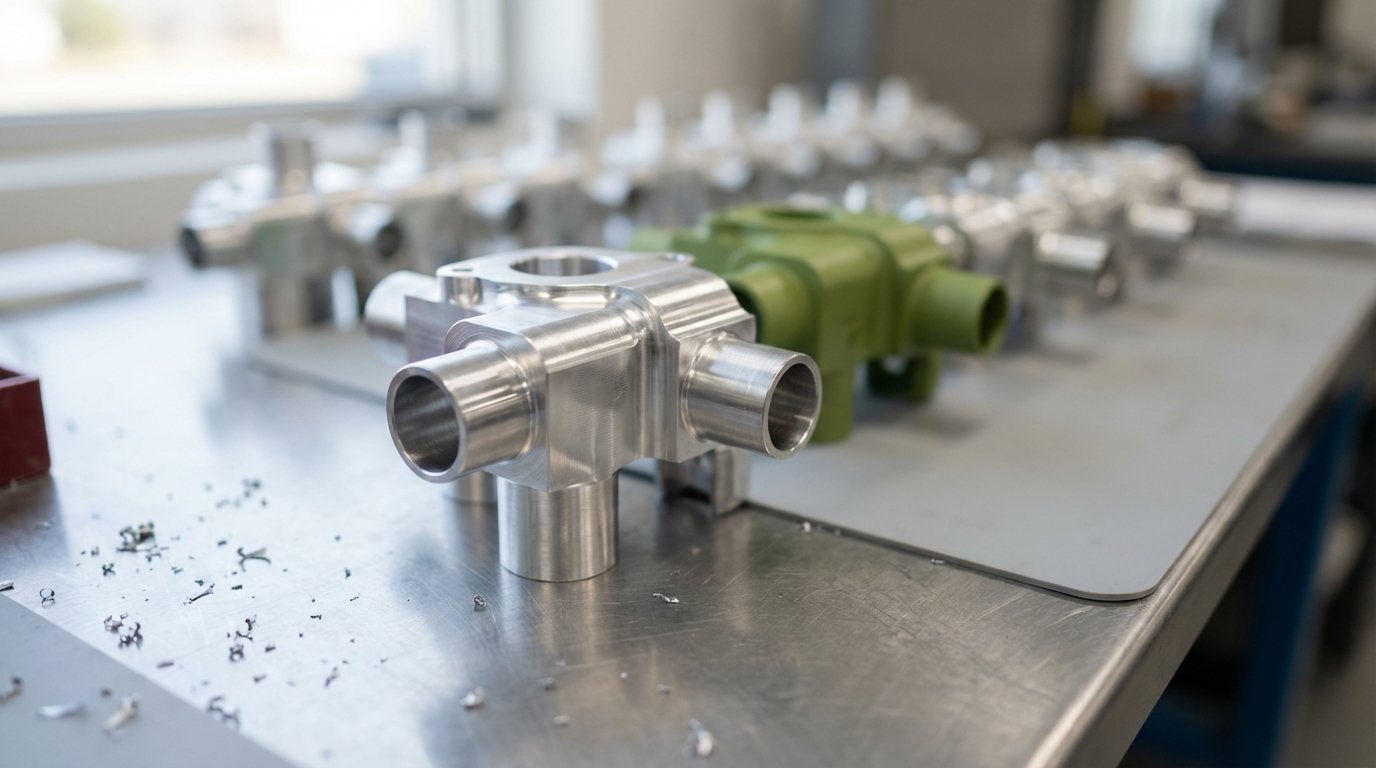
Key Takeaways for ITAR Aerospace Manufacturing
-
ITAR regulates manufacturing and export of defense articles on the USML, with severe penalties up to $1.27M per violation for aerospace suppliers.
-
Core compliance depends on DDTC registration, a U.S. person workforce, secure facilities, technical data controls, and supply chain flow-down.
-
ITAR focuses on export and security controls while AS9100 emphasizes quality management, and both standards are essential for aerospace manufacturing.
-
Aerospace items such as military aircraft parts, UAVs, satellites, and technical data fall under USML Categories VIII and XIX.
-
Precision Advanced Manufacturing offers ITAR-registered, AS9100D-certified CNC capabilities proven with SpaceX and Blue Origin; get a quote for compliant aerospace components.
ITAR Basics and Why It Matters for Aerospace Suppliers
ITAR is administered by the U.S. Department of State’s Directorate of Defense Trade Controls and controls the manufacturing, handling, storage, and export of defense-related articles, services, and technical data listed on the U.S. Munitions List (USML). The regulations encompass 21 USML categories, and Category VIII, which covers aircraft and related articles, is particularly relevant to aerospace suppliers.
Key ITAR triggers in aerospace include:
-
Military aircraft parts and components
-
Satellite and spacecraft hardware
-
Propulsion systems and avionics
-
UAV structures and control systems
-
Technical data including CAD files and specifications
RTX Corporation settled with DDTC for $200 million in 2024 for unauthorized exports of classified and unclassified defense technical data. These enforcement actions show why aerospace suppliers must prioritize ITAR compliance to maintain program eligibility and avoid devastating penalties.
Core Components of ITAR Compliant Manufacturing Systems
ITAR-compliant manufacturers must demonstrate control over facility access, restricting physical entry to controlled production areas to authorized U.S. persons. Essential compliance elements include:
-
DDTC Registration: Mandatory annual registration with fees ranging from $2,500 to $3,000.
-
U.S. Person Workforce: Citizenship verification and access restrictions for ITAR-controlled items.
-
Secure Facilities: Physical security including fencing, access logs, and controlled entry points.
-
Technical Data Controls: Encryption, marking, and secure transfer protocols for CAD files and specifications.
-
Recordkeeping: Five to ten-year retention requirements for all ITAR-related transactions.
-
Export Licensing: DDTC authorization for any international transfers.
-
Supply Chain Flow-down: Ensuring subcontractors maintain equivalent compliance.
Precision Advanced Manufacturing’s integrated CNC machining, welding, and finishing capabilities operate under these stringent controls. This structure enables production of tight-tolerance UAV brackets and satellite structures while maintaining full ITAR compliance.
How ITAR and AS9100 Work Together for Aerospace Quality and Security
The primary difference between AS9100 and ITAR is that AS9100 emphasizes quality management processes while ITAR focuses on export controls and restricting access to defense articles and technical data. Understanding these distinctions is crucial for aerospace suppliers.
The following table shows how ITAR and AS9100 requirements complement each other in practice, with specific examples of how Precision integrates both standards:
|
Aspect |
ITAR (DDTC) |
AS9100D (IAQG) |
Precision Synergies |
|---|---|---|---|
|
Focus |
Export, security, USML |
Quality, risk management |
Integrated for traceability and compliance |
|
Access |
U.S. persons only |
All trained personnel |
U.S. workforce plus AS9100 audits |
|
Records |
5 to 10 years, technical data |
Lifecycle traceability |
Full 100% ITAR and AS9100D retention |
Precision Advanced Manufacturing holds both certifications, which provides Tier 1 aerospace suppliers with integrated quality and security compliance under one roof.
ITAR Restricted Aerospace Items and Handling Practices
The DDTC’s 2025 ITAR amendments, effective September 15, 2025, expand USML Category VIII(h)(1) to include specified aircraft such as the F-47, MQ-25, RQ-170, and catch-all controls for their specially designed parts, components, accessories, and attachments. Key USML categories affecting aerospace suppliers include:
-
Category VIII: Military aircraft, UAVs, and specially designed components.
-
Category XIX: Gas turbine engines and hot section parts.
-
Satellite Systems: Spacecraft structures and orbital hardware.
-
Technical Data: Manufacturing processes, CAD files, and specifications.
Precision Advanced Manufacturing’s multi-axis CNC capabilities produce these controlled components with proper material sourcing, marking, and handling protocols required for satellite structures and defense applications.
Checklist for Vetting ITAR Compliant Aerospace Suppliers
Procurement managers must use comprehensive vetting procedures to ensure supplier compliance and avoid supply chain risks.
|
Checklist Item |
Verification Step |
Precision Example |
|---|---|---|
|
DDTC Registration |
Check ddtc.state.gov database |
Active registration, 100% compliant |
|
Certifications |
Verify AS9100D and ISO 9001 |
Dual-certified facilities |
|
Client References |
SpaceX audits, security protocols |
Blue Origin, secure TX and CA sites |
|
Access Controls |
U.S. person verification systems |
Citizenship screening, visitor logs |
Precision Advanced Manufacturing’s proven track record with major aerospace clients and comprehensive compliance documentation provides the reliability required for mission-critical programs. Evaluate our ITAR-compliant capabilities for your aerospace components.
Common ITAR Pitfalls and Practical Compliance Best Practices
Aerospace suppliers frequently encounter compliance challenges that can result in significant penalties and program disruptions. Common pitfalls include:
-
Assuming AS9100 certification equals ITAR compliance.
-
Inadequate subcontractor vetting and flow-down requirements.
-
Insufficient technical data marking and access controls.
-
Incomplete visitor management and facility security protocols.
Common ITAR violations include unauthorized exports of technical data to foreign nationals (even unintentionally via digital means), inadequate record-keeping of transactions, and insufficient employee training on regulations. Effective compliance relies on integrated systems that address quality management and export control requirements at the same time.
What are ITAR requirements for manufacturers?
ITAR requirements for manufacturers include the seven core components detailed earlier: DDTC registration, U.S. person access controls, secure facilities, technical data protection, recordkeeping, export licensing, and supply chain verification.
What items are ITAR restricted in aerospace?
ITAR-restricted aerospace items include military aircraft components, satellite hardware, UAV systems, propulsion technologies, avionics, and associated technical data under USML Categories VIII and XIX.
Conclusion and Next Steps for ITAR-Compliant Production
ITAR compliant manufacturing for aerospace suppliers requires comprehensive systems that integrate security controls, quality management, and supply chain oversight. Precision Advanced Manufacturing’s ITAR registration, AS9100D certification, and scalable CNC capabilities provide aerospace suppliers with compliant manufacturing solutions that de-risk programs and support on-time delivery.
Request a quote for ITAR-compliant aerospace manufacturing that meets your mission-critical requirements.
Frequently Asked Questions
How do I verify if a supplier is truly ITAR compliant beyond just registration?
Verifying true ITAR compliance requires examining multiple layers beyond basic DDTC registration. Review the supplier’s internal compliance program documentation, including written policies for access control, technical data handling, and employee training records.
Request evidence of citizenship verification procedures, facility security measures such as controlled access areas and visitor management systems, and audit trails that show consistent enforcement. Examine their supply chain flow-down procedures to confirm subcontractors also maintain compliance.
Also check references from other aerospace clients who have conducted security audits, and verify the supplier maintains proper technical data marking, encryption protocols, and recordkeeping systems that meet the five to ten-year retention requirements.
What happens if my current supplier loses ITAR compliance during an active program?
If your current supplier loses ITAR compliance during an active program, immediate action is required to prevent program delays and potential violations.
First, assess whether any ITAR-controlled technical data or defense articles have been compromised, and consider voluntary disclosure to DDTC if violations occurred. Implement interim security measures to protect any controlled items or data still with the non-compliant supplier. Begin immediate sourcing of qualified replacement suppliers who can demonstrate current ITAR registration and compliance systems.
Work with your legal and compliance teams to document the transition process and ensure proper handling of any controlled materials during the supplier change. Implement more rigorous ongoing monitoring of supplier compliance status to prevent future disruptions, including regular verification of DDTC registration status and periodic compliance audits.
Can components be dual-use between commercial and military applications under ITAR?
Components can serve both commercial and military applications, but ITAR classification depends on design intent and end-use rather than physical appearance. A part that looks identical to a commercial component may still be ITAR-controlled if it was specially designed for military aircraft, satellites, or defense systems listed on the USML.
Key determination factors include whether the component was developed specifically for defense applications, incorporates military-specific performance requirements, or is intended for integration into USML-listed systems. Even if a component has commercial applications, if it was designed for or is being supplied for defense use, it typically falls under ITAR control.
Manufacturers must carefully evaluate each component’s design specifications, intended application, and end-use to determine proper classification, and when in doubt, they should consult with export control attorneys or seek commodity jurisdiction determinations from the appropriate government agencies.
How do ITAR requirements affect international partnerships and joint ventures in aerospace?
ITAR requirements significantly impact international partnerships and joint ventures in aerospace by restricting access to controlled technical data and defense articles to U.S. persons only. Foreign partners cannot access ITAR-controlled information without proper export licenses, which can be difficult to obtain and may not be granted for sensitive technologies.
These restrictions create challenges in collaborative design work, shared manufacturing processes, and integrated supply chains. Successful international aerospace partnerships often require careful structuring to separate ITAR-controlled activities from international collaboration areas, sometimes using “clean teams” of U.S. persons for controlled work and separate international teams for non-controlled activities.
Some partnerships establish separate legal entities or facilities to handle ITAR-controlled work, while others pursue Technology Transfer Agreements or other licensing mechanisms. The complexity of these arrangements requires extensive legal and compliance planning to support effective collaboration and regulatory compliance.
What are the cost implications of implementing ITAR compliance for aerospace suppliers?
Implementing ITAR compliance involves significant upfront and ongoing costs that aerospace suppliers must factor into their business planning. Initial costs include DDTC registration fees, facility security upgrades such as controlled access systems and physical barriers, IT infrastructure improvements for technical data protection including encryption and access controls, and comprehensive employee training programs.
Ongoing expenses include annual registration renewals, regular compliance audits, specialized legal and consulting support, enhanced recordkeeping systems, and potential productivity impacts from access restrictions and security protocols.
These costs must be weighed against the substantial benefits of ITAR compliance, including eligibility for lucrative defense and space contracts, reduced risk of catastrophic penalties that can reach over $1 million per violation, and competitive advantages in the aerospace market.
Many suppliers find that ITAR compliance, when properly implemented and integrated with quality management systems like AS9100, improves overall operational discipline and can justify premium pricing for their specialized capabilities.