
Key Takeaways
-
North America’s spacecraft market leads globally in 2026, driven by NASA programs and strong demand for compliant component suppliers.
-
Core spacecraft subsystems include power, propulsion, communications, structures, and avionics that rely on precision CNC machining and space-grade materials.
-
Top USA suppliers such as Precision Advanced Manufacturing provide AS9100D-certified multi-axis machining, scalable production, and full traceability for mission-critical parts.
-
Leading Canadian manufacturers including MDA and Magellan Aerospace focus on satellite hardware, payloads, and propulsion systems supported by cross-border partnerships.
-
Vet suppliers by AS9100D and ITAR certifications, production scalability, and space environment expertise, then contact Precision Advanced Manufacturing to discuss your certification requirements and component specifications.
USA Spacecraft Component Suppliers and Capabilities
Precision Advanced Manufacturing leads the USA market as a premier mid-tier specialist for spacecraft components. The company operates US-based facilities in California and Texas with multi-shift production capacity, which supports rapid response to changing program schedules. These facilities house advanced multi-axis CNC machining and precision fabrication equipment for spacecraft structures, satellite assemblies, and UAV components.
All operations maintain AS9100D, ISO 9001:2015, and ITAR registrations, supporting compliance for commercial and defense space programs. Precision Advanced Manufacturing scales work from prototype development to full-rate production and keeps engineering support, welding, finishing, and kitting services under one roof. The team maintains complete traceability and documentation that align with mission-critical requirements.
Additional leading USA suppliers include several specialized manufacturers that support different spacecraft subsystems.
Spacecraft Components Corp (Las Vegas) specializes in connectors and avionics systems for satellite and launch vehicle programs.
Primus Aerospace (Colorado) focuses on propulsion systems and structural components with AS9100D certification, supporting both commercial and defense space missions.
Acutec Precision Aerospace provides precision-machined structures and assemblies with ITAR compliance and specializes in tight-tolerance components for satellite platforms.
BTD Manufacturing offers comprehensive machining and fabrication services for aerospace structures used in space applications.
The USA market benefits from the adoption of commercial-off-the-shelf (COTS) electronics, accelerating spacecraft development, which creates opportunities for mid-tier suppliers like Precision Advanced Manufacturing to deliver integrated structural and mechanical solutions that pair with these electronics.
Canadian Spacecraft Component Suppliers Supporting North America
Canadian manufacturers complement USA capabilities through specialized satellite subsystems and cross-border partnerships that strengthen the North American supply chain. Canada’s spacecraft component industry supports regional space leadership through several key suppliers.
MDA (Ontario) leads satellite hardware and structures manufacturing and serves major constellation programs, including Canada’s Telesat Lightspeed constellation targeting service launch at the end of Q1 2028.
Magellan Aerospace (Quebec/Ontario) specializes in propulsion systems and launch vehicle components with AS9100D certification, supporting both Canadian and international space programs.
Dynacon Inc. (Ontario) provides precision-machined components and assemblies for satellite payloads and spacecraft structures.
COM DEV International (Ontario) focuses on satellite subsystems, including antennas, electronics, and specialized space hardware.
Bristol Aerospace (Manitoba) manufactures propulsion components and rocket motor systems for space launch applications.
Neptec Design Group (Ontario) develops advanced space technologies, including robotic systems and vision sensors for spacecraft operations.
Canadian suppliers excel in satellite payloads and specialized subsystems, and they complement USA manufacturing chains through established cross-border partnerships and similar regulatory frameworks that simplify binational programs.
Core Spacecraft Components Procurement Teams Must Understand
To evaluate suppliers effectively, procurement professionals need a clear view of the components and subsystems that spacecraft programs require. Spacecraft systems integrate nine critical subsystems: structural frameworks, propulsion systems, power generation and distribution, communications equipment, attitude control mechanisms, thermal and environmental management, guidance and navigation systems, computer and data processing units, and health monitoring systems.
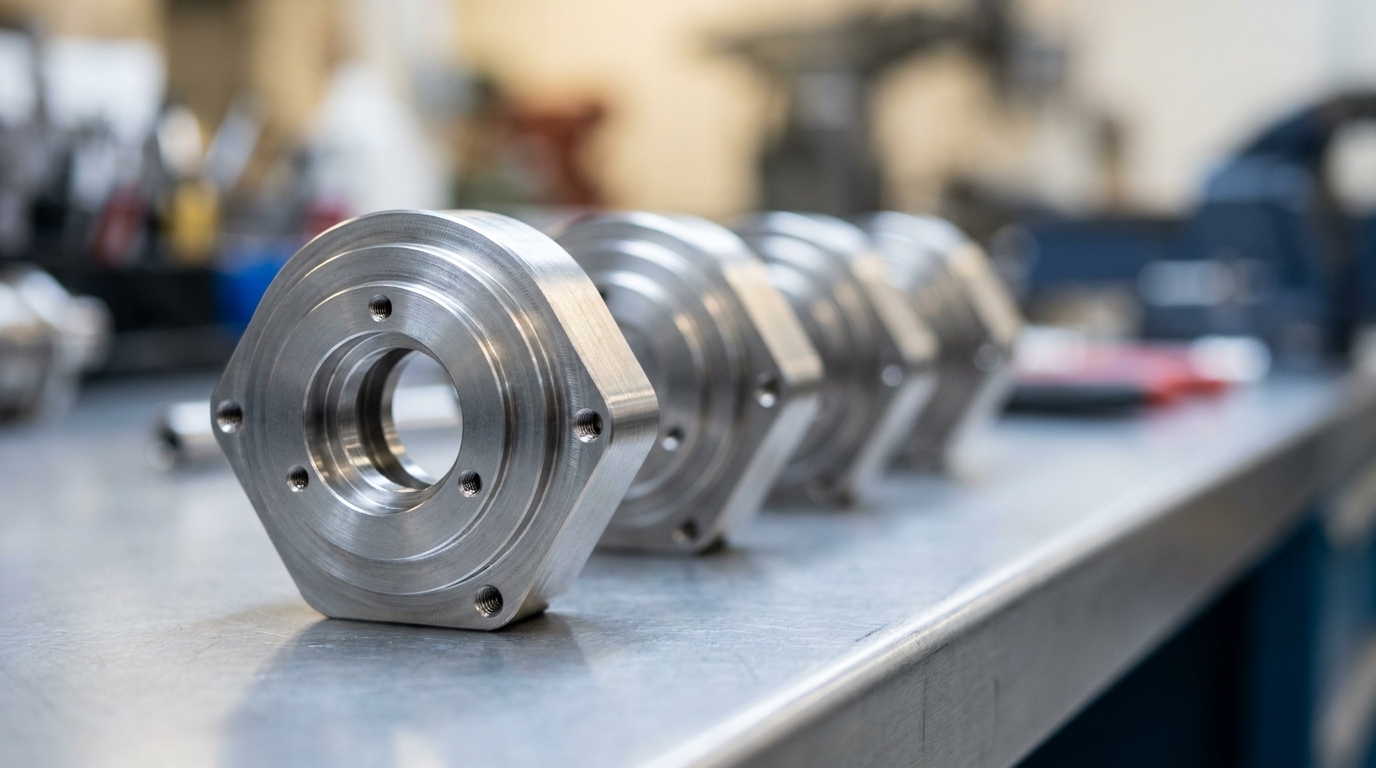
Key manufactured components include CNC-machined structural assemblies, propulsion housings, electronics mounting brackets, thermal shields, and precision-fabricated payload interfaces. Companies like Precision Advanced Manufacturing focus on the structural and precision-machined elements that form the backbone of these complex systems.
Contact our engineering team to discuss your structural component requirements and material specifications.
How Procurement Teams Should Vet Spacecraft Suppliers
Procurement professionals can reduce program risk by evaluating spacecraft component suppliers with a structured framework.
Essential Certifications: Verify AS9100D certification as the highest quality management standard specifically designed for aerospace and defense industries, along with ITAR registration for defense-related programs and ISO 9001:2015 for quality management systems.
Manufacturing Capabilities: Assess multi-axis CNC machining capacity and precision fabrication expertise as the foundation for producing complex spacecraft geometries. Confirm welding capabilities for space-grade materials and integrated finishing services that reduce the need for multiple vendors. Evaluate scalability from prototype to production volumes so the supplier can grow with your program.
Quality and Traceability: Confirm complete material traceability, comprehensive inspection reporting, documented quality control processes, and proven on-time delivery performance for mission-critical programs.
Technical Expertise: Verify experience with space-grade materials, understanding of extreme environment requirements, engineering support capabilities, and a proven track record with similar spacecraft applications.
Precision Advanced Manufacturing meets these criteria through integrated capabilities, certified quality systems, and spacecraft component experience that help reduce supplier risk and program delays.
2026 Trends Shaping Spacecraft Component Sourcing Decisions
Understanding current market trends helps procurement professionals anticipate how supplier capabilities and sourcing strategies may need to evolve. Key trends reshaping spacecraft component procurement include the COTS adoption mentioned earlier and additive manufacturing, enabling scalable production.
The U.S. Space Development Agency’s substantial allocation for Tracking Layer satellites shows sustained government investment that drives demand for ITAR-compliant suppliers in Texas, California, and Ontario. Reshoring initiatives and supply chain resilience priorities favor North American manufacturers with proven capabilities, strong documentation, and consistent regulatory compliance.
Frequently Asked Questions
What certifications matter most for spacecraft component suppliers?
AS9100D certification is essential as the aerospace industry’s highest quality standard, building on ISO 9001:2015 with enhanced requirements for supply chain management, risk management, and reliability. ITAR registration is mandatory for defense and national security space programs, while ISO 9001:2015 provides the foundation for quality management systems. These certifications demonstrate a supplier’s capability to meet stringent aerospace requirements and maintain the documentation, traceability, and process control necessary for mission-critical spacecraft components.
Can suppliers effectively scale from prototype to full production?
Leading spacecraft component suppliers such as Precision Advanced Manufacturing maintain scalable production platforms with multi-shift capacity, established quality systems, and proven processes that transition from prototype development to high-volume manufacturing. Key factors include flexible manufacturing equipment, documented procedures that maintain quality at scale, sufficient facility capacity, and experienced teams capable of managing increased production volumes without compromising precision or delivery schedules.
What companies build spacecraft and their components?
Prime contractors such as Lockheed Martin, Boeing, and Northrop Grumman lead spacecraft development, while specialized component suppliers provide critical subsystems and precision-manufactured parts. Companies like Precision Advanced Manufacturing focus on structural components, machined assemblies, and precision fabrication, and firms such as MDA in Canada specialize in satellite hardware and payloads. This tiered supply chain allows prime contractors to access specialized expertise while maintaining program integration and oversight.
How do suppliers ensure compliance with space environment requirements?
Spacecraft component suppliers must demonstrate expertise in space-grade materials, thermal cycling resistance, vacuum compatibility, and radiation hardening. This work requires specialized manufacturing processes, comprehensive testing protocols, and materials that meet outgassing requirements per ASTM E595. Suppliers maintain detailed documentation of material properties, process controls, and environmental testing to verify that components can withstand temperature extremes from -100°C to 150°C, intense radiation, and vacuum conditions throughout multi-year missions.
What role do mid-tier suppliers play in spacecraft programs?
Mid-tier suppliers such as Precision Advanced Manufacturing provide specialized capabilities that complement large prime contractors and offer flexibility with focused expertise in specific manufacturing processes. They serve as critical links in the supply chain by providing precision-machined components, structural assemblies, and specialized fabrication services while maintaining the quality standards and regulatory compliance required for space applications. This approach allows prime contractors to access specialized capabilities without the overhead and complexity of maintaining all manufacturing processes in-house.
Conclusion
North America’s spacecraft component manufacturing sector gives procurement professionals access to suppliers with proven capabilities in mission-critical applications. When evaluating suppliers, prioritize those with AS9100D and ITAR compliance, scalable production capacity, and demonstrated expertise in space-grade manufacturing. Precision Advanced Manufacturing stands out for spacecraft structural components and precision assemblies by combining certified quality systems, integrated capabilities, and reliability for space programs.
Start your supplier evaluation by discussing your program requirements with our aerospace team.