Key Takeaways for Tight Tolerance Aerospace Machining
- Tight tolerance machining protects safety and performance for turbine blades, actuators and other aerospace components in extreme environments.
- Critical components include propulsion hardware, landing gear, flight controls and fuel systems that often use titanium, Inconel and other demanding alloys.
- Dimensional control relies on multi-axis CNC machining, temperature management, advanced metrology and tools such as CMMs and on-machine probing.
- AS9100D, ITAR compliance, GD&T standards and structured QA including FAI and SPC support quality and full traceability.
- Precision Advanced Manufacturing delivers certified tight tolerance capabilities for aerospace; start a quote for mission-critical components.
Why Tight Tolerances Protect Aerospace Safety and Performance
Aerospace components must hold precise dimensions while operating under heat, vibration and high loads. Turbine engine components including compressor and turbine blades require exact airfoil profiles and tip clearances. Minor deviations alter airflow and reduce efficiency, which increases fuel burn and operating cost.
Landing gear systems face the same precision pressure during every takeoff and landing cycle. Hydraulic cylinders, actuators and pivot pins require precise tolerances to ensure reliable extension and retraction. Any dimensional drift in these parts increases wear and raises the risk of malfunction.
Flight control mechanisms extend these requirements to aircraft handling and stability. Actuators for ailerons, elevators and rudders demand tight tolerances. Deviations reduce responsive control inputs that support safe maneuvering, and precision errors can shorten fatigue life or complicate alignment during assembly.
Procurement managers operate under growing scrutiny from regulators and operators. A quality issue with fuselage panels on Airbus A320-family aircraft required inspections and cut the 2025 delivery target to around 790 jets. Precision Advanced Manufacturing uses AS9100D-certified CNC machining, welding and finishing under one roof to reduce risk, maintain consistent quality and preserve full traceability.
Critical Aerospace Components That Depend on Tight Tolerances
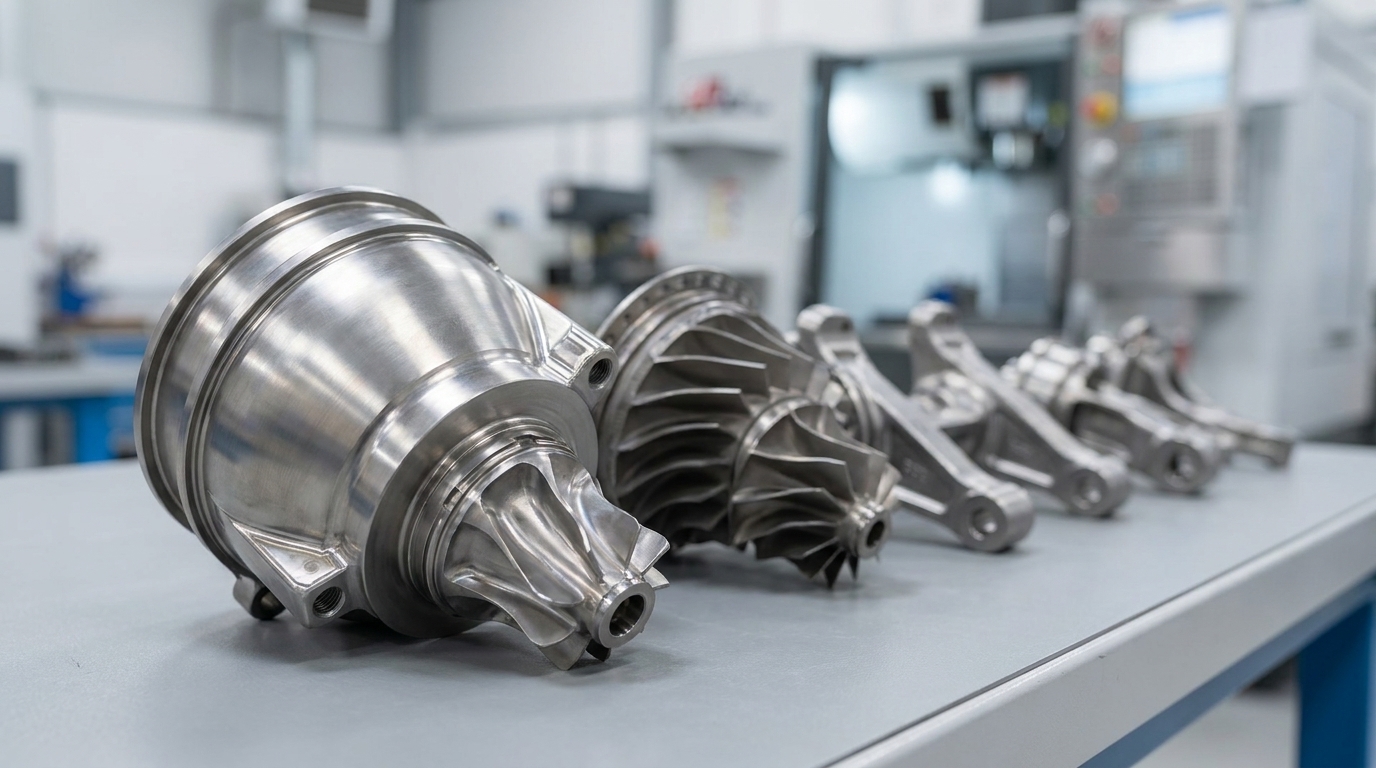
Mission-critical aerospace components span propulsion, structures and systems, and each group carries demanding precision requirements. Propulsion systems rely on turbine blades, compressor discs and combustor housings that maintain accurate geometries under extreme temperatures and rotational forces. Structural assemblies include brackets, ribs, bulkheads and landing gear fittings that must align correctly during assembly. Precision errors shorten fatigue life or complicate alignment during assembly.
Fluid power and control systems add another layer of tight tolerance needs. Flight control actuators, hydraulic cylinders and valve bodies require controlled internal geometries for proper fluid flow and sealing. Avionics housings protect sensitive electronics through precise dimensions to ensure proper sealing. Fuel system components including injectors, pumps and valves depend on exact internal geometries for proper fuel atomization and flow rates.
These components often rely on exotic materials that resist heat and fatigue but challenge machining processes. Grade 5 titanium (Ti-6Al-4V), Inconel and similar alloys demand careful tool selection, feeds, speeds and cooling strategies. Precision Advanced Manufacturing applies multi-axis CNC capabilities and specialized welding processes to manage these material challenges while maintaining dimensional control. Get a quote for complex aerospace geometries that require tight tolerance machining.
How Aerospace Manufacturers Achieve Tight Tolerance Machining
Tight tolerance machining in aerospace uses a coordinated system of programming, process control and measurement. High-precision metrology equipment including Coordinate Measuring Machines (CMMs), laser interferometers and white-light interferometers verifies tolerances in aerospace tight tolerance CNC machining. Advanced CNC programming uses CAM simulation and refined toolpaths to reduce thermal distortion and protect geometric accuracy before cutting begins.
Temperature control sits at the center of this effort because metals expand and contract with heat. Aluminum alloys expand with temperature rise and lead to dimensional deviations without temperature control. Manufacturing environments maintain strict thermal stability to keep machines, fixtures and parts within a narrow temperature band. Machining dulls cutting tools and leads to dimensional drift. Frequent tool inspection and replacement prevent tolerance violations, so process plans include scheduled checks and offsets.
Complementary cutting processes support features that challenge traditional milling and turning. Precision waterjet and laser cutting handle complex profiles and efficient material removal while preserving edge quality. Renishaw on-machine probing systems enable in-process measurement of critical dimensions and automatic tool compensation. Precision Advanced Manufacturing integrates these technologies with certified welding and finishing processes, which reduces supplier handoffs that often introduce variation and delay.
Practical Tolerance Benchmarks and Standards for Aerospace Parts
Aerospace tolerance classifications align with component function, operating environment and safety impact. AS9100 standards push tolerances using GD&T for form and location controls. Critical features in aerospace-grade parts require geometric dimensioning and tolerancing (GD&T) controls for alignment and load paths, which define how parts assemble and carry stress.
Structural components often follow ISO 2768 guidelines for general tolerances in standard fit applications. Fine tolerance components such as actuators and precision mechanisms require tighter limits with comprehensive GD&T controls for alignment and load distribution. Very fine tolerance applications appear in propulsion systems, where rotating engine hardware faces efficiency loss or imbalance from profile errors.
Industry standards treat significant deviations in tight tolerance regions as cause for rejection because those parts cannot perform as designed. Precision Advanced Manufacturing uses certified quality systems to maintain full traceability and documentation compliance. These systems support prototype development and scale into sustained production without sacrificing control.
Quality Assurance and Compliance for Tight Tolerance Aerospace Parts
Verification of tight tolerances relies on structured inspection protocols and controlled environments. The CMMs described earlier form the backbone of verification and deliver accuracy with non-contact measurements for verifying complex 3D geometries in micro CNC parts used in aerospace. Vision Measurement Systems (VMS) verify tolerance of features in micro CNC machined parts for industries including aerospace, especially for small or delicate features.
AS9102 First Article Inspection (FAI) verifies the entire manufacturing process meets all design requirements before full production release. Statistical process control tracks key dimensions during production to confirm ongoing capability. Capability studies in micro CNC validation confirm process stability for precision parts and support continuous improvement.
Defense and space programs add regulatory layers that sit on top of dimensional control. ITAR compliance requires controlled access, documentation security and material traceability throughout production. Precision Advanced Manufacturing maintains ITAR registration and AS9100D certification to streamline audits and support regulatory compliance. Start a certified aerospace project with full inspection reporting and traceability documentation.
New Trends Shaping Tight Tolerance Aerospace Manufacturing
Growth in UAV, hypersonic and space programs increases demand for advanced precision manufacturing. The global hypersonic missile market grows rapidly. Drones became a defining feature of contemporary conflicts, which expands the need for compact, accurate components.
Technology innovation focuses on process visibility and automatic correction. In-process inspection and closed-loop control systems utilize machine-integrated probing and laser metrology to adjust toolpaths in real-time. Advanced cooling strategies such as cryogenic hybrid machining with LN₂ jets for titanium and high-entropy alloys reduce tool wear and maintain stable surface finish.
Space and satellite applications raise expectations for dimensional stability over long missions. Components endure extreme temperature cycling, radiation exposure and mechanical stress while holding tight tolerances. Precision Advanced Manufacturing supports these requirements with integrated machining, welding and finishing, scalable production platforms and certified quality systems tailored to mission-critical aerospace work.
Frequently Asked Questions
What is considered a tight tolerance in aerospace machining?
Tight tolerances in aerospace machining describe dimensions that fall well inside general manufacturing limits. Mission-critical components in propulsion, flight controls and landing gear often fall into this category. Tolerance requirements depend on component function, operating environment and safety criticality.
How tight are tolerances for aerospace components?
Aerospace tolerances vary by system and feature. General structural components follow moderate accuracy bands that support assembly and load transfer. Precision mechanisms such as actuators and valves require tighter control for smooth motion and sealing. Propulsion system components often carry the most demanding tolerances, and AS9100 standards define these limits using GD&T for critical features.
Is 0.005″ considered a tight tolerance?
A 0.005-inch tolerance represents a tight requirement for many aerospace applications compared with general manufacturing standards. This level of precision demands specialized equipment, environmental controls and structured quality processes. Components with these tolerances support critical functions where dimensional accuracy affects safety and performance.
What are examples of tight tolerance machining in aerospace?
Common examples include turbine blades that require precise airfoil profiles, landing gear actuators that need exact internal geometries for hydraulic function, flight control mechanisms that demand accurate pivot points and structural brackets that require precise mounting interfaces. Each application uses specific tolerance control to support reliable operation under extreme conditions.
What materials require tight tolerance machining in aerospace?
Aerospace programs frequently specify titanium alloys, Inconel superalloys, aluminum alloys and specialized steels that present machining challenges. These materials provide strong strength-to-weight ratios and temperature resistance but require specialized tooling, cooling strategies and process controls to maintain dimensional accuracy during manufacturing.
How is a supplier selected for tight tolerance aerospace machining?
Supplier selection often prioritizes AS9100D and ITAR certifications, proven experience with aerospace materials and applications, integrated manufacturing capabilities that reduce handoffs, comprehensive quality systems with full traceability and the capacity to scale from prototype through production while maintaining consistent quality.
Tight tolerance machining forms a core pillar of aerospace manufacturing performance. Precision affects mission success, safety and lifecycle cost. Precision Advanced Manufacturing combines integrated capabilities, certified quality systems and aerospace experience to deliver reliable results for mission-critical applications. Begin a tight tolerance aerospace project with a trusted manufacturing partner.