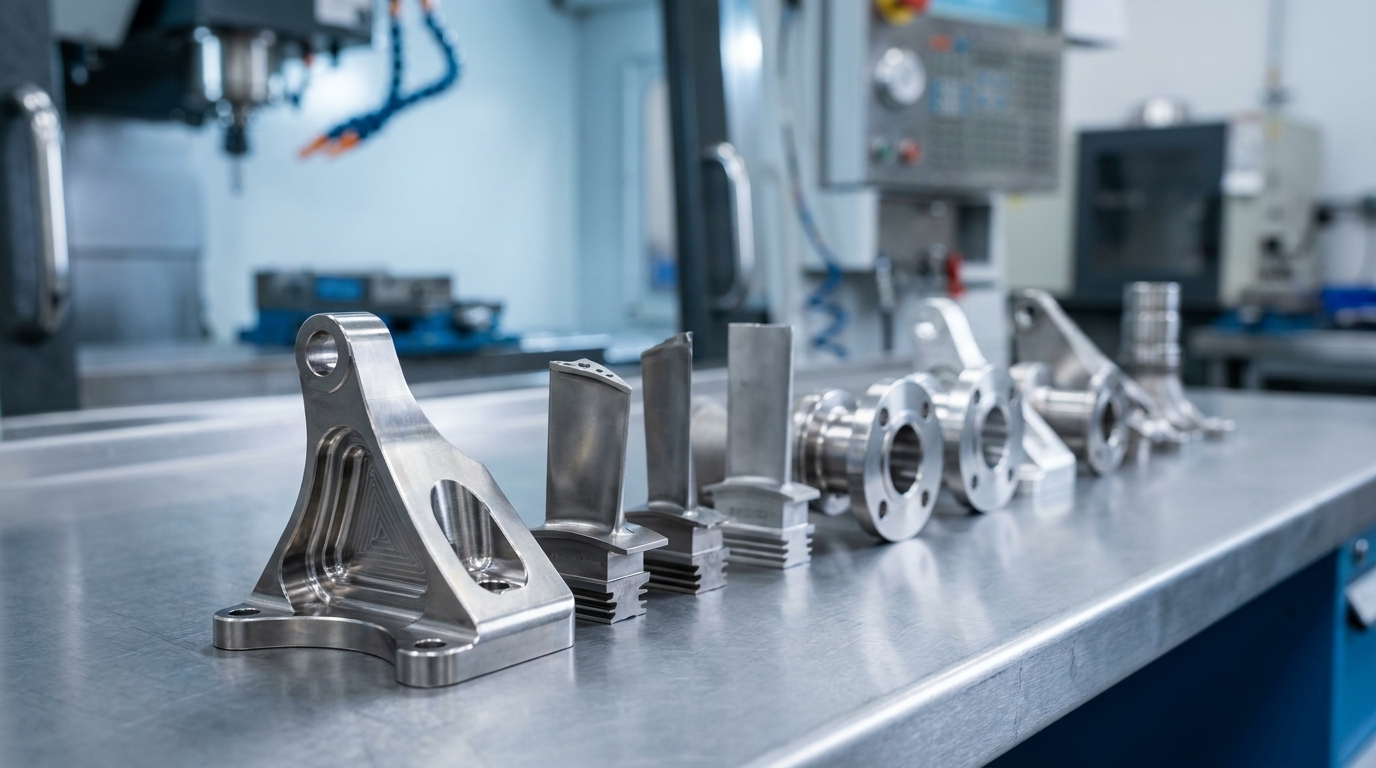
Key takeaways for ITAR CNC machining programs
- Advanced CNC ITAR machining combines multi-axis precision with full regulatory control for complex aerospace and defense components.
- ITAR-registered providers with AS9100D certification integrate fabrication, welding and finishing to remove supplier handoffs and compliance gaps.
- Scalable production from prototype through high-volume supports program timelines without quality loss or transition delays.
- Structured traceability, inspection and documentation reduce rework, cost overruns and audit findings.
- Partner with Precision Advanced Manufacturing for ITAR-compliant machining tailored to mission-critical aerospace and defense programs.
How advanced CNC ITAR machining supports defense programs
Advanced CNC ITAR machining uses multi-axis computer numerical control to manufacture tight-tolerance components under International Traffic in Arms Regulations. This approach addresses a core weakness in fragmented defense manufacturing, where multiple suppliers create compliance gaps and quality risks. Centralized production keeps precision, documentation and export control aligned inside one controlled environment.
Advanced CNC ITAR machining combines several core capabilities inside that environment. Multi-axis milling and turning handle complex geometries for housings, brackets and structural parts. Precision sheet metal fabrication supports enclosures and chassis. Specialty welding manages thermal distortion and joint integrity. Secondary finishing covers anodizing and passivation for corrosion resistance. Services also include hardware installation, brush finishing, laser marking and deburring. 5-axis compact CNC milling machines improve thermal stability and vibration dampening, which maintains accuracy for dense aerospace and defense layouts.
Multi-axis capability plays a central role in this model. 5-axis CNC technology machines complex parts in single setups, which reduces handling and improves consistency. AI and IoT integration enable real-time monitoring, predictive maintenance and workflow control. These capabilities support ITAR compliance and AS9100D documentation by tying machine data, inspections and process history to each part record.
Precision Advanced Manufacturing’s integrated ITAR CNC platform
Precision Advanced Manufacturing brings these capabilities together inside ITAR-registered facilities. Multi-axis CNC machining, precision sheet metal fabrication, specialty welding, hardware installation and secondary finishing operate under one quality system. This integrated structure removes supplier handoffs that often create coordination issues and compliance exposure. Centralized control improves consistency from raw material through finished assembly-ready components.
The engineering-driven approach starts with manufacturability analysis that identifies production risks before release. That analysis informs CNC programming and tooling development so designs run efficiently at scale. Multi-shift production capacity then supports the move from prototype to full manufacturing while holding the same precision and compliance standards. AS9100D certification and ITAR registration align quality management with export control for defense work.
This structure delivers clear program benefits. Reduced program risk comes from compliance systems proven across multiple aerospace and defense projects. Integrated processing shortens lead times by removing coordination delays between separate suppliers. Single-source accountability keeps quality issues visible and resolvable inside one facility. Comprehensive documentation maintains traceability from material receipt through final inspection. Advanced CNC capabilities combine with precision fabrication expertise to support aerospace, defense, space and UAV applications.
These integrated services also simplify program coordination. Fewer external handoffs reduce miscommunication and rework. Consistent processes and capacity planning support schedule reliability for complex defense builds.
Managing ITAR and AS9100D compliance and traceability
ITAR and AS9100D compliance failures create significant program risk through penalties, audit findings and production delays. AS9100D Clause 8.5.1.3 requires production process verification to confirm that processes can produce conforming products. This includes using a representative item from the first production run of a new part or assembly to verify production processes, documentation and tooling, with First Article Inspection performed according to internal rules or AS9102 when required by contract. Boeing requires AS9102 FAIs through Net-Inspect after Jan. 1, 2024, which tightens traceability expectations across the supply chain.
Precision Advanced Manufacturing operates under certified quality management systems that embed these requirements into daily production. Process controls, inspection plans and FAI procedures align with AS9100D and customer-specific standards. Documentation and traceability protocols maintain material certifications, process records and inspection data for each lot and serial number. These systems keep programs audit ready and support consistent compliance for defense applications.
Scaling from prototype to production without disruption
Prototype-to-production transitions often create bottlenecks when programs shift between development shops and production suppliers. Capacity limits, different equipment and new quality systems can trigger delays and new nonconformances. Prototype-to-production continuity shortens development cycles through design refinement and controlled facility transitions.
Precision Advanced Manufacturing provides a single platform that supports both early prototypes and production volumes. The same facility and quality system handle the production ramp, which removes the supplier change that often causes the first major schedule slip. Quality and compliance standards remain consistent as volumes grow. Multi-shift capacity supports high-volume needs while engineering teams refine fixtures, programs and workflows. This approach protects schedules and reduces transition risk for defense programs.
Reducing rework and cost overruns in defense machining
Out-of-specification components drive rework, schedule slips and budget pressure across defense programs. Achieving low nonconformance rates for defense UAV and aerospace components requires precise machining supported by disciplined processes. When both elements align, programs reduce scrap, rework and unplanned inspection cycles.
Precision Advanced Manufacturing applies tight-tolerance machining with structured in-process and final inspection. Rigorous protocols catch deviations early and minimize scrap and rework. Components meet specification and arrive ready for assembly. This quality-first approach supports budget control and protects program schedules.
Supporting mission-critical reliability in harsh environments
Mission-critical applications require components that perform reliably in extreme thermal, vibration and load conditions. Integration failures, coating issues or material defects can compromise entire systems, so supplier expertise in complex materials and advanced processes becomes essential for program success.
Precision Advanced Manufacturing’s experience with aerospace alloys, composites support hardware and specialized finishing processes helps components meet durability and performance requirements for space, UAV and defense platforms. Ready-to-integrate components reduce downstream assembly issues and preserve material integrity. This reliability focus supports consistent performance in mission-critical environments.
Selecting an advanced CNC ITAR machining partner
Selection of an advanced CNC ITAR machining partner starts with structured evaluation criteria. Teams review certifications, capabilities and scalability. AS9100D and ITAR registrations require verification in official databases. Integrated services receive priority because they reduce supplier fragmentation and coordination overhead. Production capacity, equipment range and shift structure indicate scalability. Quality documentation and traceability protocols confirm alignment with program requirements.
Precision Advanced Manufacturing operates U.S.-based facilities in California and Texas that support domestic defense manufacturing. These locations combine certifications, engineering depth and integrated services for aerospace and defense programs. The company’s track record supports procurement and engineering teams seeking a stable long-term supplier. Connect with Precision Advanced Manufacturing’s aerospace specialists to discuss program requirements, timelines and production strategies for advanced CNC ITAR machining.
Frequently asked questions
What certifications does Precision Advanced Manufacturing hold for ITAR CNC machining?
Precision Advanced Manufacturing maintains AS9100D and ISO 9001:2015 quality management system certifications and is ITAR registered with the U.S. State Department. These certifications support compliance with aerospace quality standards and defense export control requirements for handling controlled technical data and components.
Can Precision Advanced Manufacturing handle complex geometries for aerospace applications?
Precision Advanced Manufacturing uses multi-axis CNC machining with 5-axis milling and turning capabilities. The company produces tight-tolerance components for complex geometries. Integrated fabrication and finishing services support complete production from raw materials to ready-to-integrate parts.
How does Precision Advanced Manufacturing ensure traceability for defense programs?
The company maintains documentation systems that track materials, processes and inspections throughout production. Records include material certifications, process histories, inspection reports and certificates of conformance that meet AS910D requirements and support program traceability needs.
What industries does Precision Advanced Manufacturing serve?
Precision Advanced Manufacturing serves commercial aerospace, military and defense, space and satellites, advanced industrials and UAV sectors. The company’s capabilities and certifications align with the demanding requirements of these mission-critical applications.
How can programs get started with Precision Advanced Manufacturing?
Programs begin by connecting with Precision Advanced Manufacturing’s aerospace and defense specialists to review requirements, timelines and specifications. The company provides detailed quotes that outline capabilities, materials, processes and production strategies tailored to program needs.
Conclusion: Integrated ITAR CNC machining for mission-critical components
Advanced CNC ITAR machining depends on strong compliance systems supported by integrated services and scalable production. This combination protects schedules and budgets while meeting regulatory expectations. Precision Advanced Manufacturing unites ITAR registration, AS9100D certification and integrated manufacturing to deliver consistent, compliant production of mission-critical components.
Procurement managers reduce program risk by partnering with proven ITAR CNC providers that align quality, compliance and reliability. Start the conversation with Precision Advanced Manufacturing to discuss specifications and launch production for upcoming defense and aerospace programs.