Key Takeaways
- Aerospace CNC full traceability tracks materials, processes and inspections from raw stock to delivery. This approach prevents failures and supports regulatory compliance.
- Key components include raw material certifications, unique identification, process records, inspection reports and digital ERP or QMS tracking.
- Full traceability enhances safety, supports AS9100D and ITAR requirements, reduces risk and improves supply chain transparency.
- Implementation follows defined steps such as material verification, serialization, in-process tracking, inspections and Certificate of Conformance delivery, supported by AI and digital threads.
- Precision Advanced Manufacturing delivers AS9100D and ITAR compliant traceability for mission-critical parts. Request a quote today for compliant, reliable aerospace manufacturing.
Core Elements of Aerospace CNC Traceability Systems
Effective aerospace CNC full traceability relies on specific elements that create an unbroken chain of documentation.
- Raw material certifications cover mill test certificates, chemistry, mechanical properties and heat numbers. A TitaniumSeller analysis describes aerospace titanium procurement as requiring a qualification chain with verification gates including material form, process route, inspection evidence, certification package and delivery resilience.
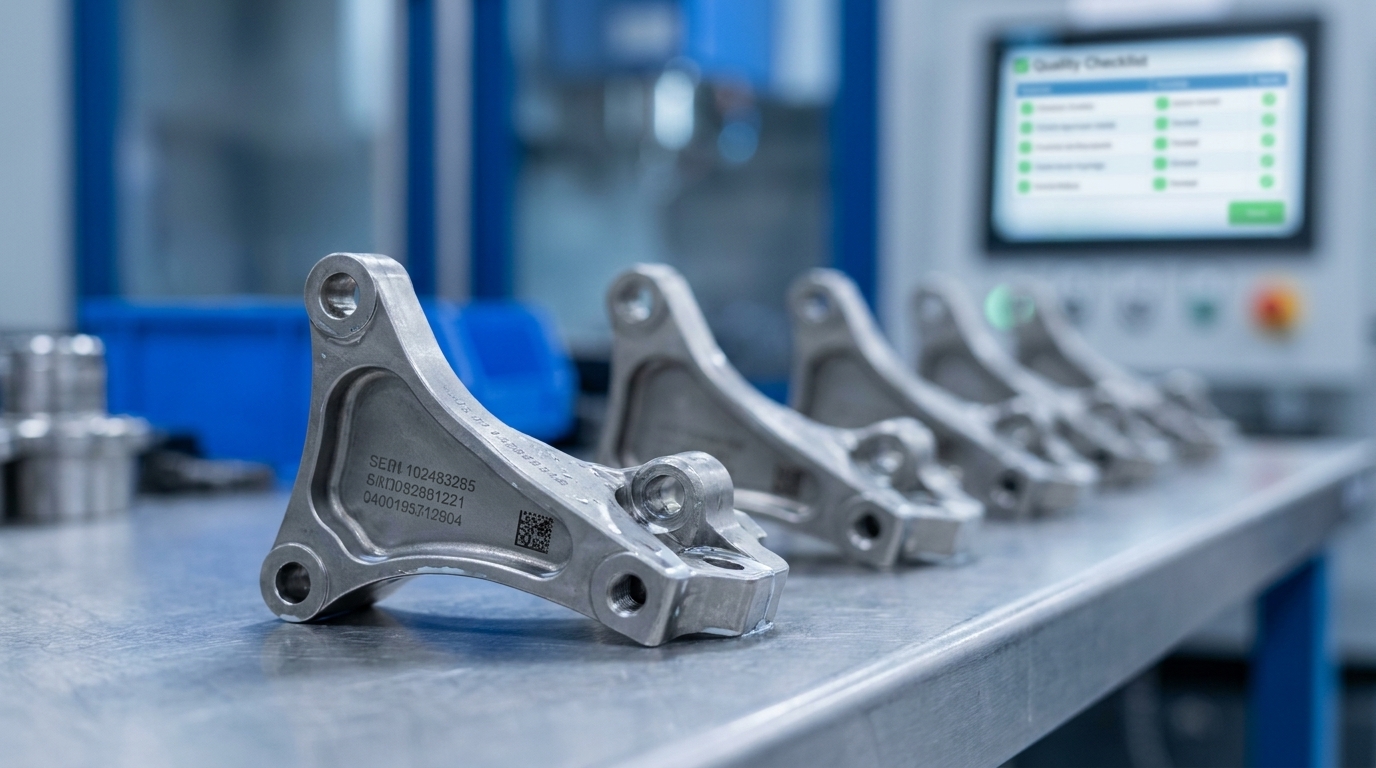
- Unique identification systems apply laser marking, serial numbers or lot numbers that tie each part to its records. Unique part identification connects to a production traveler that links the part to all operations.
- Process records document CNC parameters, tooling specifications and operator identification for each operation.
- Inspection reports include First Article Inspection per AS9102 and non-destructive testing results for critical features.
- Digital ERP and QMS tracking provide visibility across the manufacturing lifecycle and centralize traceability data.
Aerospace applications demand precision because of tight tolerances and advanced materials. These components work together to create the comprehensive traceability systems that aerospace programs depend on for safety and compliance.
Why Full Traceability Protects Aerospace Programs
Full traceability serves as the foundation for aerospace safety and regulatory compliance.
- Safety assurance supports rapid failure tracing and root cause analysis. “Back to Birth” (BtB) traceability provides an unbroken record of life-limited parts such as engine disks and turbine blades from original manufacturing through all installations, repairs and removals.
- Regulatory compliance with AS9100D, NADCAP and ITAR requirements reduces audit risk and helps maintain program schedules.
- Risk reduction lowers rework, scrap costs and supply chain disruptions through proactive quality management.
- Supply chain transparency improves visibility into material sources and process controls across the manufacturing network.
These benefits directly address the operational challenges facing aerospace programs, where delays and quality issues can result in significant cost overruns and schedule impacts. Achieving these benefits requires adherence to specific regulatory frameworks that define traceability expectations.
AS9100D, ITAR and NADCAP Requirements for CNC Traceability
Aerospace traceability follows stringent regulatory frameworks that build on one another. AS9100D clause 8.5.2 establishes the baseline requirement for product traceability in aerospace manufacturing. ITAR export controls add further scrutiny for defense components and require detailed records that prevent unauthorized technology transfer. NADCAP certification often applies to titanium and special process suppliers and demonstrates the process controls aerospace programs expect, creating a multilayered compliance framework that manufacturers must navigate.
Precision Advanced Manufacturing maintains AS9100D and ITAR certifications, so its quality management systems already meet documentation standards for mission-critical applications. This certification foundation reduces regulatory risk for customers because parts arrive with traceability infrastructure in place, which limits additional supplier qualification steps.
Step-by-Step Traceability Across CNC Operations
Full traceability in CNC processes develops through a structured sequence that covers every stage of production.
- Raw material verification confirms material certifications, chemistry and mechanical properties against specifications before production.
- Unique identification assignment applies laser marking or serialization that links each part to its complete production history.
- In-process tracking captures CNC parameters, tooling data and operator information through integrated ERP systems at each operation.
- Inspection documentation records dimensional verification, material testing and quality control results at every critical stage.
- Certificate of Conformance delivery supplies a complete documentation package with the final part shipment.
Precision Advanced Manufacturing operates an integrated facility that combines CNC machining, fabrication and finishing under one roof. This structure minimizes handoffs and maintains traceability across the entire manufacturing process. The consolidated approach reduces the risk of documentation gaps that often appear when parts move between multiple suppliers.
Digital Systems and QMS Infrastructure for Aerospace Traceability
Digital technologies strengthen aerospace traceability by automating data capture and analysis throughout manufacturing. ERP and MES systems provide the backbone for real-time tracking and data integration across operations. Inline spectroscopy and AI-based grading systems monitor material composition continuously, verify grades with AI and adjust cutting parameters when variation appears.
Current trends include digital passports for components and digital thread technologies that streamline raw materials through a digital Certificate of Conformance process, reduce manual intervention and enhance traceability. Precision Advanced Manufacturing uses digital systems to provide visibility and support scalable production. Discuss traceability requirements with the team to see how this digital infrastructure supports complex aerospace programs.
How Precision Advanced Manufacturing Supports Full Traceability
Precision Advanced Manufacturing delivers aerospace CNC full traceability through certified systems, lifecycle support and an integrated production environment.
- Program support relies on consistent delivery performance and established aerospace experience.
- Efficiency comes from right-first-time manufacturing that reduces rework and schedule risk.
- Compliance uses complete documentation and certified systems that align with AS9100D and ITAR requirements.
- Scalable production spans prototype development through full-rate manufacturing without sacrificing traceability.
- Supply chain reliability improves through clear traceability and transparency across each production step.
This integrated approach, described earlier, keeps CNC machining, fabrication and finishing within one coordinated system. That continuity supports traceability and removes documentation gaps that often occur in multi-vendor supply chains.
Case study: Precision Advanced Manufacturing supported a UAV program with end-to-end traceability from titanium stock through finished components. Comprehensive documentation supported FAA compliance and streamlined program approval.
Conclusion: Traceability as a Strategic Aerospace Capability
Aerospace CNC full traceability supports safety, compliance and mission-critical reliability for demanding applications. From raw material certification through final delivery, comprehensive traceability systems protect against failures, reduce costs and support regulatory requirements. Precision Advanced Manufacturing delivers these capabilities through certified processes, integrated manufacturing and advanced digital systems. Explore how certified traceability systems can support the next aerospace program.
Frequently Asked Questions
What documentation supports aerospace CNC full traceability?
Aerospace CNC full traceability relies on documentation such as material certifications with heat numbers and chemistry data, unique part identification, process records, inspection reports per AS9102 and Certificates of Conformance. Organizations retain this documentation for audits and program reviews.
How does AS9100D address traceability requirements for CNC machining?
AS9100D clause 8.5.2 requires traceability of the product for aerospace manufacturing and directs organizations to maintain records that enable identification of parts throughout manufacturing. This requirement covers material source documentation, process control records, inspection results and unique identification systems. The standard also calls for configuration management and change control processes that protect traceability when modifications occur during production.
Can traceability systems scale from prototype to production volumes?
Modern traceability systems scale from single prototype parts to high-volume production runs. Digital ERP and MES platforms capture and link data regardless of production volume while maintaining consistent documentation standards and quality controls. Effective systems handle increased data volume and complexity without compromising traceability or adding manual steps that introduce errors.
What are the cost implications of implementing full traceability?
Comprehensive traceability systems require initial investment in digital infrastructure and process development. Long-term cost benefits often outweigh these expenses. Full traceability reduces rework and scrap, prevents program delays, shortens audit preparation and lowers the risk of regulatory penalties. Many organizations see return on investment through improved first-pass quality and reduced quality-related costs.
How do digital technologies enhance aerospace traceability capabilities?
Digital technologies enhance aerospace traceability through real-time data capture, automated documentation and integrated quality management systems. AI-powered systems monitor material composition and process parameters continuously, while digital twins provide virtual representations that track component history and support performance prediction. Cloud-based platforms provide rapid access to traceability data across global supply chains and support fast decision-making and regulatory verification.