Key Takeaways
-
Aerospace CNC prototypes face sourcing challenges from unreliable suppliers, out-of-spec parts and compliance risks, especially with titanium and superalloys.
-
5-axis CNC machining produces complex geometries for UAV and space components with tight tolerances in a single setup, which reduces errors.
-
Essential standards include AS9100D certification and ITAR registration to support quality, traceability and regulatory compliance.
-
Scaling from prototype to production benefits from integrated US-based manufacturing that maintains quality and removes supplier handoffs.
-
Precision Advanced Manufacturing provides ITAR-compliant, AS9100D-certified aerospace CNC prototypes with seamless scalability, supported through an online quote request.
Critical Sourcing Challenges in Aerospace CNC Prototyping
Aerospace program managers face mounting pressure from unreliable suppliers who deliver out-of-specification prototypes that trigger delays and rework cycles. This pressure intensifies because high-performing aerospace manufacturing programs maintain low rework rates while many suppliers struggle to meet standards for UAV and space components. As a result, procurement teams encounter compliance risks with noncertified providers and quality engineers carry heavy inspection burdens to catch inconsistent parts before assembly.
These challenges compound when programs scale from prototype to production and material demands increase. Titanium alloys often experience chronic supply chain delays, which disrupt schedules and budgets. Partnering with ITAR-registered providers that hold AS9100D certification reduces these risks and supports consistent quality. These providers deliver aerospace CNC prototypes with integrated manufacturing capabilities that keep work under one roof. De-risk aerospace programs with a compliant manufacturing partner.
Defining Aerospace CNC Prototypes and 5-Axis Capabilities
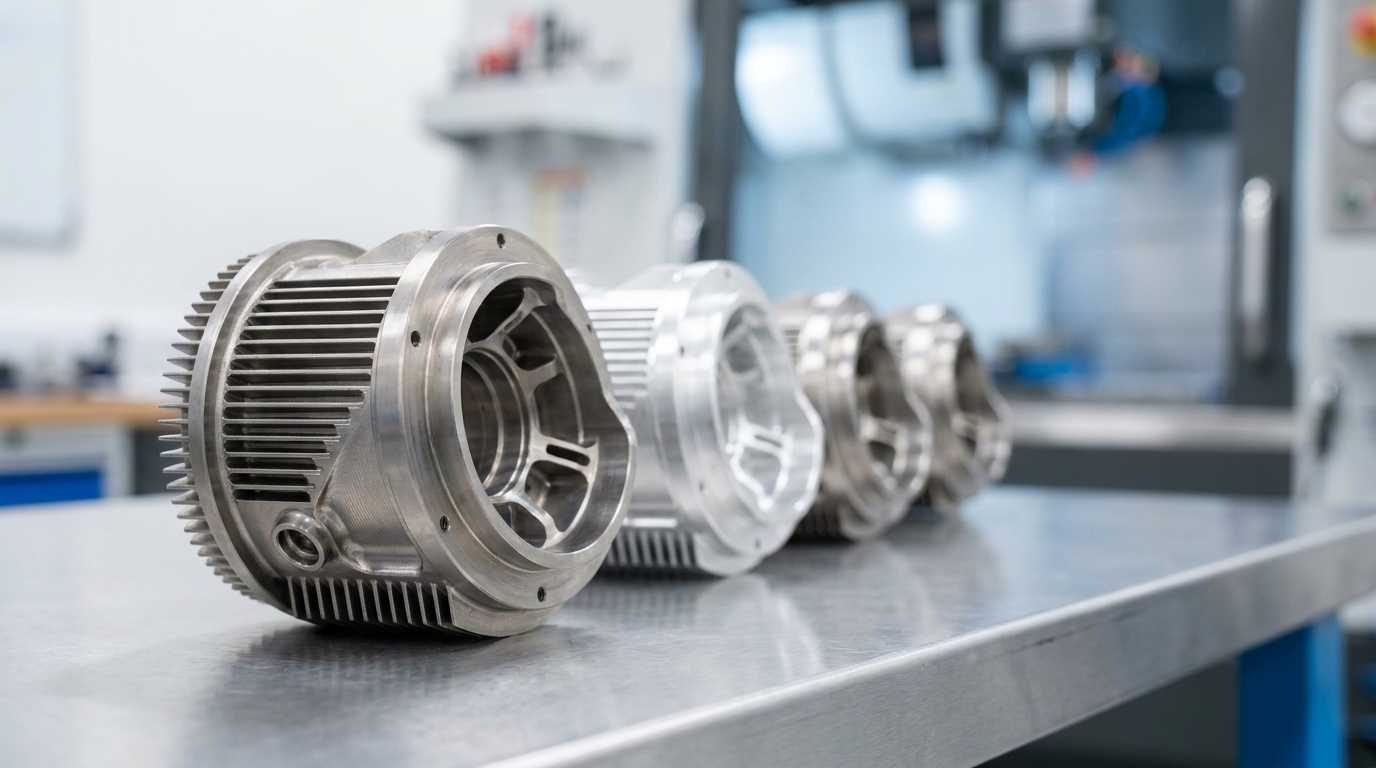
Aerospace CNC prototypes are precision-machined components produced with multi-axis computer numerical control equipment to validate designs before full production. Advances in 5-axis CNC machining enable complex aerospace geometries, such as turbine airframe structures with internal passages, blisks, impellers, turbine blades and IGVs, in a single setup. This approach removes multiple fixtures and repositioning steps, which reduces cumulative error.
Rapid CNC parts support faster design iteration while maintaining the tight tolerances required for flight-critical applications. CNC machining suits aerospace parts that require tight tolerances, complex internal geometries, threaded features and consistent mechanical performance under extreme conditions. Modern 5-axis CNC aerospace components benefit from continuous machining that produces superior surface finishes and prevents tolerance buildup from repeated setups. The materials used in these components determine how effectively programs can realize these machining advantages.
Key Aerospace Materials and Their Machining Challenges
Aerospace CNC prototypes rely on materials that withstand extreme loads, temperatures and vibration while holding tight tolerances. Common choices include titanium alloys, nickel superalloys, high-strength aluminum alloys, alloy steels, precipitation-hardened stainless steels and engineering plastics. Each material combines specific mechanical and thermal properties that create distinct machining challenges, so providers need focused process knowledge.
Titanium alloys provide high strength-to-weight ratios and low thermal conductivity, which causes heat to concentrate at the cutting edge and accelerates tool wear. Inconel and related nickel superalloys retain strength at high temperatures but resist cutting and generate significant heat. These materials demand advanced CNC controls, rigid fixturing, specialized tooling and careful thermal management. Precision Advanced Manufacturing applies aerospace experience to manage these factors and maintain dimensional accuracy and surface integrity.
Essential Compliance and Standards for Aerospace Prototypes
AS9100D certification confirms that aerospace CNC machining operations meet quality management requirements specific to aviation, space and defense industries. This standard builds on ISO 9001 with added expectations for configuration management, risk management and product safety. ITAR registration becomes mandatory when prototypes involve defense-related technical data or components destined for military applications.
Noncompliance introduces significant risks that include failed audits, program delays and potential legal consequences. Aerospace CNC machining requires material certification, traceability and dimensional consistency to support reliable component performance. Precision Advanced Manufacturing operates under AS9100D, ISO 9001 and ITAR registrations with complete documentation and traceability that streamline customer audits and support regulatory alignment.
Scaling Aerospace CNC Programs from Prototype to Production
The transition from prototype to production aerospace work often creates bottlenecks and quality issues because processes and suppliers change during ramp-up. Traditional CNC machining and injection molding raise costs for low- to medium-volume UAV production when tooling and setup investments spread across limited quantities. These conventional methods also slow design iterations and prototyping for UAV components, which forces teams to balance speed against cost control.
Successful scaling benefits from integrated manufacturing capabilities that keep machining, fabrication and finishing within a unified system. These capabilities remove supplier handoffs, reduce communication gaps and maintain consistent quality procedures. Precision Advanced Manufacturing addresses scaling challenges through multi-axis CNC machining, precision sheet metal fabrication, welding and finishing that operate under a single quality framework.
The scalable production platform supports multi-shift operations and flexible capacity allocation that match evolving program needs. This structure enables smooth transitions from low-volume prototypes to sustained production while maintaining aerospace-grade quality standards. Evaluate integrated manufacturing capabilities for aerospace programs.
Common Aerospace CNC Pitfalls and How Providers Prevent Them
Aerospace CNC prototype programs often encounter out-of-specification parts, supplier fragmentation and heavy inspection workloads that strain teams. These issues extend program timelines, increase costs and complicate configuration control. Paper-based operations in aerospace manufacturing add further delays and rework because data moves slowly and errors slip through manual processes.
Effective prevention relies on certified manufacturing processes, comprehensive documentation systems and proactive manufacturability reviews before production. Precision Advanced Manufacturing addresses these risks through in-process inspections, material traceability and engineering support that reviews designs early. This support improves designs for manufacturability before production begins and reduces the likelihood of late-stage changes.
Choosing an Aerospace CNC Provider with Proven Capabilities
Selection of an aerospace CNC prototyping partner works best when teams evaluate certifications, domestic manufacturing capabilities, integrated services and aerospace track records together. Key criteria include the AS9100D and ITAR credentials described earlier, US-based operations, multi-axis CNC capabilities and robust quality documentation systems that support audits.
Precision Advanced Manufacturing presents a strong option for ITAR-compliant aerospace prototypes by combining AS9100D certification with advanced multi-axis CNC machining, precision sheet metal fabrication, specialty welding and integrated finishing services. The company’s aerospace experience, scalable production platform and comprehensive engineering support promote on-time delivery and smooth prototype-to-production transitions. Schedule a detailed review of aerospace CNC prototyping requirements.
Frequently Asked Questions
What materials does Precision Advanced Manufacturing handle for aerospace CNC prototypes?
Precision Advanced Manufacturing machines a wide range of aerospace-grade materials, including titanium alloys, Inconel and other nickel superalloys, high-strength aluminum alloys, stainless steels, alloy steels and engineering plastics. The company maintains expertise in exotic materials and challenging alloys commonly specified for space, UAV and defense applications. Material exceptions include tempered glass and beryllium copper.
Does Precision Advanced Manufacturing work with CAD files for CNC prototyping?
Precision Advanced Manufacturing uses advanced CAD/CAM systems that accept most standard digital file formats. The engineering team provides design for manufacturability feedback that refines features before machining. The team also programs toolpaths for complex geometries, which supports efficient production. Resulting surface finishes meet aerospace expectations.
What certifications support ITAR-compliant aerospace prototypes?
Precision Advanced Manufacturing operates under AS9100D, ISO 9001:2015 and ITAR registrations with quality management systems tailored to aerospace and defense applications. All processes include full documentation, material traceability and inspection reporting that meet stringent aerospace requirements and simplify customer audits.
Can Precision Advanced Manufacturing scale from prototype to production aerospace manufacturing?
Precision Advanced Manufacturing provides seamless scalability through flexible multi-shift operations and integrated manufacturing capabilities. The company maintains consistent quality systems and documentation processes from initial prototypes through high-volume production, which removes supplier transitions and associated risks during program ramp-up phases.
Does Precision Advanced Manufacturing handle complex geometries in 5-axis CNC aerospace components?
Precision Advanced Manufacturing specializes in complex multi-axis CNC machining for tight-tolerance aerospace components that include intricate internal geometries, compound curves and challenging material combinations. The company’s advanced CNC equipment and experienced machinists deliver precision components that meet demanding aerospace specifications.
Conclusion: De-Risking Aerospace CNC Prototypes with Integrated US Manufacturing
De-risking aerospace CNC prototypes starts with compliant, scalable US manufacturing that supports consistent quality from first article through production. This approach reduces supplier reliability concerns and compliance risks while keeping communication and documentation within a unified system. Precision Advanced Manufacturing offers ITAR-registered, AS9100D-certified services with integrated capabilities and deep aerospace experience that align with these goals. Teams can verify certifications, confirm domestic operations, evaluate integrated services and assess traceability systems during early discussions. Connect with Precision Advanced Manufacturing aerospace specialists for a program review.