Last updated: August 16, 2026
Key Takeaways
- U.S. defense manufacturing companies range from prime contractors to subtier specialists, with subtier partners increasingly critical as demand grows.
- ITAR registration and AS9100D certification are mandatory for any supplier handling defense articles, with strict obligations flowing down the supply chain.
- Subtier suppliers face the greatest scaling challenges, and limited visibility beyond Tier 1 creates program and compliance risk.
- Evaluating suppliers on prototype-to-production scalability, integrated capabilities and documentation readiness protects schedules and reduces qualification risk.
- Precision Advanced Manufacturing provides ITAR-registered, AS9100D-certified precision machining and fabrication across U.S. facilities. Engage a qualified subtier partner for aerospace, defense and UAV programs.
US Defense Contractors and Subtier Manufacturing Companies
Prime contractors manage program integration, systems engineering and government relationships. They rarely manufacture every component in house. Instead, they depend on a layered supply chain of Tier 1 integrators and Tier 2+ subtier specialists that produce precision parts, assemblies and subsystems.
CSIS analysis shows munitions contract obligations have risen 330% since fiscal 2010, and roughly 10,000 new firms entered the U.S. defense market in the past two years. That growth places sourcing pressure on procurement teams that must qualify compliant, capable subtier partners quickly.
Prime contractors reported a backlog of almost $900 billion in early 2026 according to a May 2026 Oliver Wyman survey of more than 160 defense supply chain companies, a figure likely to grow further. The industrial base remains under strain because subtier capacity and resilience lag program demand.
Procurement and program management teams benefit from a structured framework that identifies subtier suppliers that are compliant, capable and scalable before program schedules face disruption.
Engage a qualified subtier partner for aerospace, defense and UAV programs with Precision Advanced Manufacturing.
Understanding the US Defense Manufacturing Landscape
Prime contractors manage major programs across multiple product areas. Examples include Lockheed Martin, Northrop Grumman and Raytheon Technologies, whose contract data from Department of Defense announcements reveals program scale and supplier activity. Understanding these prime contractors and their expectations connects directly to the compliance frameworks that subtier suppliers must meet.
ITAR-Compliant Defense Manufacturing Companies in the USA
The International Traffic in Arms Regulations, administered by the State Department’s Directorate of Defense Trade Controls, govern the manufacture, export and transfer of defense articles and technical data listed on the U.S. Munitions List.
Any U.S. company that manufactures a defense article on the U.S. Munitions List must register annually with DDTC under 22 CFR Part 122, even if the company never exports the item. This requirement flows down the supply chain and applies to subtier suppliers that produce individual components.
Key ITAR compliance requirements for subtier manufacturers include:
- Annual DDTC registration with disclosure of foreign ownership and senior officer citizenship
- Appointment of a U.S.-person Empowered Official legally responsible for DDTC submissions
- A Technology Control Plan that governs physical security, digital access, visitor screening and employee training
- Annual ITAR training for all personnel, with role-specific depth for export and technical staff
- Retention of all ITAR-related records for at least five years
- Screening of foreign nationals to prevent deemed exports of controlled technical data
Civil penalties for ITAR violations can exceed one million dollars per violation, while criminal penalties for ITAR violations include fines up to one million dollars and imprisonment for up to 10 years. Sourcing from an unregistered supplier creates direct program and legal exposure for the prime contractor and the contracting organization.
Subtier Defense Manufacturers and Structural Risk
Oliver Wyman’s May 2026 survey found that Tier 2+ suppliers are the most structurally exposed segment of the defense supply chain. Workforce barriers and tooling limitations rank as the top scaling constraints for this segment.
Deloitte’s 2018–2020 Global CPO surveys found that 65% of procurement leaders have limited or no visibility beyond tier-one suppliers. These visibility gaps make compliance failures and capacity shortfalls at the subtier level difficult to detect early, so issues often surface only after a program is already at risk.
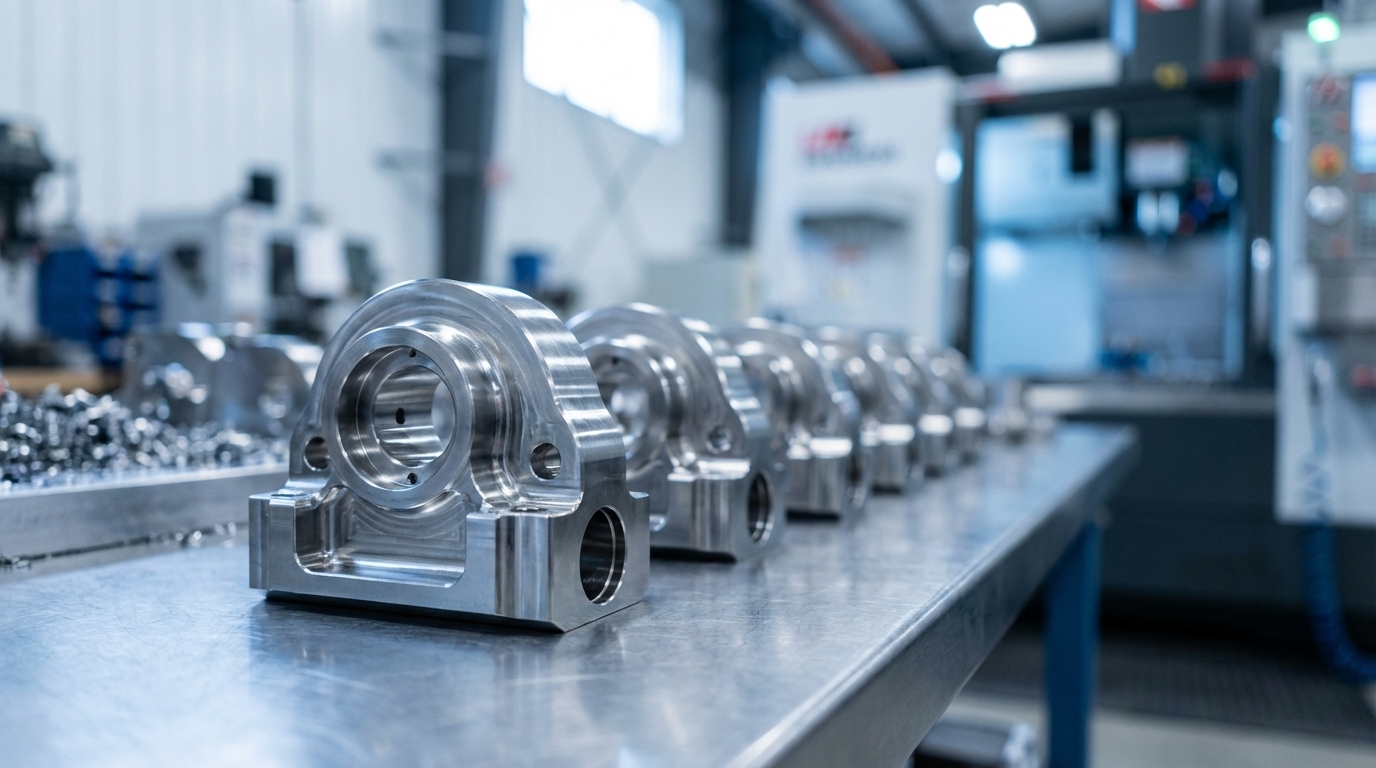
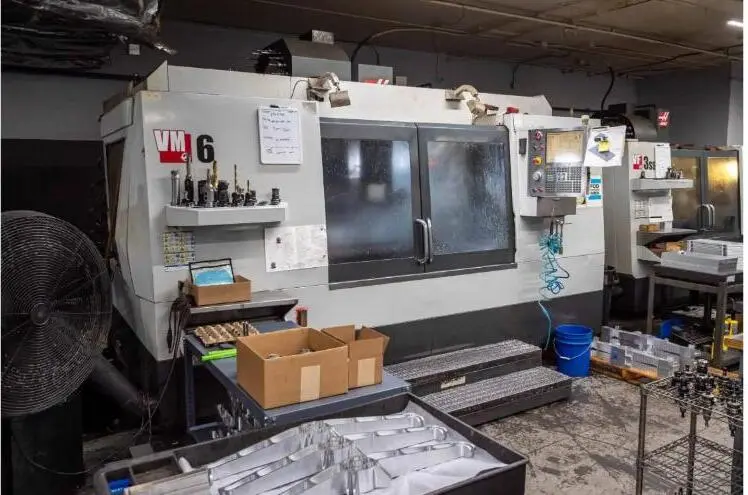
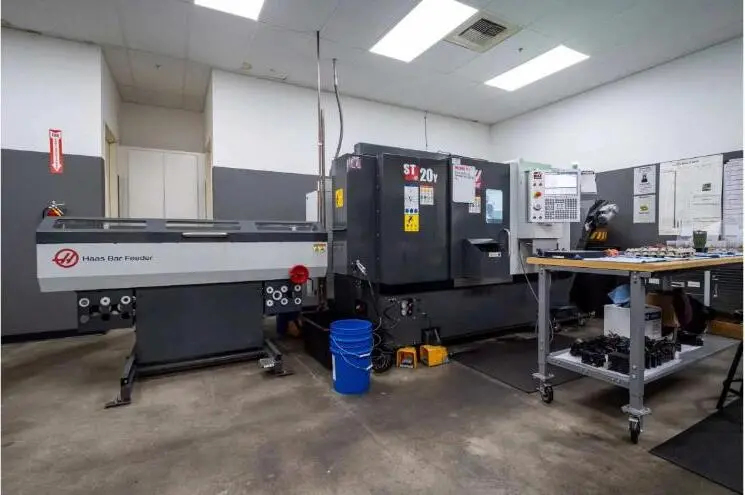
Precision Advanced Manufacturing addresses these structural gaps directly. As a U.S.-based, ITAR-registered precision machining and fabrication provider, the company operates under AS9100D and ISO 9001:2015 certified quality management systems. Multi-axis CNC machining, precision metal fabrication, specialty welding, integrated finishing and engineering support sit under one roof across facilities in California and Texas. Multi-shift production capacity supports scaling from prototype through full-rate manufacturing without supplier transitions or documentation gaps. These integrated capabilities are particularly important for precision machining applications, where tolerance requirements define program success.
Precision Machining Defense Contractors and Tight-Tolerance Work
Mission-critical aerospace, defense and UAV components require tight tolerances that standard machine shops cannot consistently achieve. Structural brackets, actuator housings, missile guidance components and UAV airframe elements demand repeatable accuracy across every production run.

Precision machining defense contractors differentiate on:
- Multi-axis CNC milling and turning for complex geometries
- In-house programming and tooling development that improve manufacturability
- Validated fixturing that maintains tolerance consistency across production runs
- Integrated finishing, including anodizing, passivation, plating and laser marking, that delivers ready-to-integrate components
- Full first-article inspection documentation aligned with AS9102 requirements
Delivering finished, ready-to-integrate parts removes secondary work at the assembly level and protects integration timelines. Precision Advanced Manufacturing’s integrated capability model, with machining, fabrication, welding and finishing under one quality system, reduces handoffs and maintains traceability across every production step.
AS9100D Defense Suppliers and Quality Expectations
Prime contractors and OEMs such as Boeing, Lockheed Martin and Raytheon often require or prefer AS9100 certification from suppliers for production and special processes, though alternatives like ISO 9001 may be accepted depending on the specific program, part criticality and supplier role. Without AS9100D, suppliers are often excluded from bidding regardless of manufacturing capability.
AS9100D builds on ISO 9001 and adds aerospace-specific requirements that include:
- Product safety and reliability controls
- Configuration management
- Counterfeit part prevention
- Supply chain traceability
- Risk management integrated into production planning
For supplier quality engineers and procurement teams, an AS9100D-certified supplier reduces incoming inspection burden because quality is built into the process rather than inspected only at receipt. Complete documentation packages, including material certifications, inspection reports and process records, arrive with every shipment and simplify audits while reducing qualification risk.
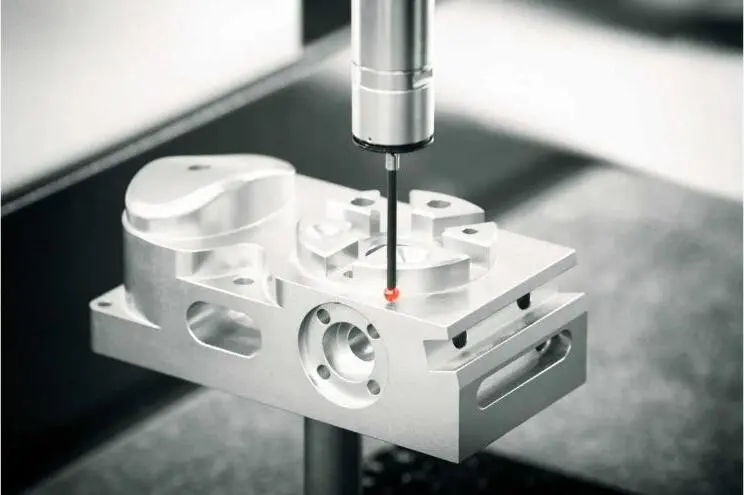
Precision Advanced Manufacturing maintains AS9100D and ISO 9001:2015 registrations with full documentation, inspection reporting and material certifications aligned to aerospace quality standards. This certification foundation becomes more valuable as the defense industrial base expands and procurement teams face pressure to qualify new suppliers quickly.
Fastest Growing Defense Segments and Subtier Opportunity
The U.S. defense industrial base is expanding at a pace not seen in decades. Nontraditional companies received more than 100 billion dollars in contract obligations in fiscal 2025, and the influx of new entrants has concentrated in UAV programs and nontraditional technology areas.

UAV programs serve as a primary growth driver. The U.S. Department of Defense announced its Drone Dominance Program in December 2025 with approximately $1–1.1 billion in funding, aiming to scale domestic drone production and field more than 200,000 units by 2027.
Oliver Wyman notes that suppliers doubt their ability to scale production quickly. Agile subtier manufacturers with established processes and available capacity are positioned to capture a disproportionate share of new program awards. Suppliers that have invested in certified quality systems, multi-shift capacity and scalable production infrastructure stand ready to respond.
Evaluating Scaling from Prototype to Production
Prototype-to-production transitions create a primary source of program risk. A supplier that performs well on a 10-piece first article may lack the process discipline, documentation systems or capacity to sustain a multi-shift production run at program rate.
This risk often appears during the first-article phase itself, where timeline estimates reveal process maturity. A realistic first-article defense fabrication timeline accounts for material acquisition, setup and programming, production and first-article inspection documentation. Suppliers that underestimate these phases consistently miss committed dates.
A practical evaluation framework for prototype-to-production scaling includes:
- Confirm the supplier operates the same quality system at prototype and production volumes, with no unplanned process changes between phases
- Verify multi-shift capacity and scheduling discipline that can absorb production ramp without quality degradation
- Assess in-house engineering support for design-for-manufacturing feedback, tooling development and tolerance refinement at the outset
- Require full AS9102 first-article inspection documentation before production release
- Confirm material traceability from mill certification through finished part delivery
- Evaluate integrated finishing capability that removes secondary supplier handoffs
- Review on-time delivery performance across comparable aerospace or defense programs
Precision Advanced Manufacturing’s scalable production platform supports the full product lifecycle, from prototype development through sustained multi-shift manufacturing, using the same certified processes, quality checkpoints and documentation systems at every stage.
Compliance Checklist for Defense Component Sourcing
Use this checklist when shortlisting subtier defense manufacturers:
- ITAR registration with DDTC active and current
- AS9100D certification from an accredited registrar
- ISO 9001:2015 registration
- Empowered Official designated and documented
- Technology Control Plan in place for ITAR technical data
- Full material traceability from raw stock through finished component
- First-article inspection capability with AS9102-compliant documentation
- In-process and final inspection records provided with every shipment
- DFARS specialty metals compliance where applicable
- Foreign ownership disclosure and mitigation of foreign ownership, control or influence if required
- Scalable production capacity with documented scheduling and on-time delivery history
- U.S.-based manufacturing facilities
US-Facility Sourcing Map and Supply Chain Security
Domestic manufacturing location supports ITAR compliance, supply chain security and program responsiveness. Sourcing from U.S.-based facilities removes foreign-person access risks associated with offshore manufacturing and simplifies export control obligations for both the prime contractor and the subtier supplier.
These risks extend beyond direct suppliers. Analyses have shown that entities on lists of Chinese military-affiliated companies can appear at deeper tiers in contractor supply chains, which makes domestic sourcing at the subtier level a direct mitigation for this exposure.
Precision Advanced Manufacturing operates from two specialized U.S. facilities in California and Texas, providing geographic coverage for West Coast aerospace programs and Gulf Coast and Southern defense industrial clusters. Both locations operate under the same AS9100D, ISO 9001:2015 and ITAR-compliant quality systems, which ensures consistent documentation and traceability regardless of which facility produces the components.
Frequently Asked Questions
Is AS9100D-certified precision manufacturing more expensive than standard machining?
Certified precision manufacturing reflects the cost of rigorous quality systems, documented processes and full traceability. The relevant comparison is total program cost, not unit price. Out-of-spec parts generate rework, scrap, expedited orders and integration delays that exceed the cost difference between a certified and an uncertified supplier. Delivering parts right the first time, with complete documentation, protects program budgets and schedules.
How does Precision Advanced Manufacturing handle tight program deadlines?
Precision Advanced Manufacturing consolidates machining, fabrication, welding and finishing under one roof, which removes the handoff time between separate vendors that often extends lead times on defense programs. Multi-shift capacity and disciplined scheduling support responsive delivery. Engineering support at the outset, including design-for-manufacturing feedback and tooling development, shortens iteration cycles and prevents late-stage changes that compress delivery windows.
What happens when a program needs to transition from an existing supplier mid-program?
Supplier transitions mid-program carry risk when documentation and traceability are incomplete. Precision Advanced Manufacturing supports transitions by providing complete material traceability, engineering documentation and quality records from the first production run. Pilot builds or validation runs can be structured to reduce risk while integrating into existing supply chains, which maintains continuity without disrupting program timelines.
Can Precision Advanced Manufacturing scale from a single prototype to full-rate production?
Precision Advanced Manufacturing’s production platform supports the full product lifecycle. The same certified quality processes, inspection systems and documentation standards used during prototyping carry forward into multi-shift, high-volume production. Programs move from initial design validation to full-rate manufacturing without supplier changes, process requalification or documentation gaps.
What certifications does Precision Advanced Manufacturing hold for defense programs?
Precision Advanced Manufacturing is ITAR registered with DDTC and holds AS9100D and ISO 9001:2015 certifications. Every component is produced under these quality systems with full traceability, inspection reporting and material certifications. This compliance posture simplifies supplier qualification audits and meets prerequisite requirements of prime contractors and OEMs in the aerospace and defense supply chain.
Next Steps: Engage a Qualified Subtier Partner
Procurement teams, program managers and supplier quality engineers working on aerospace, defense and UAV programs benefit from subtier partners that are compliant, capable and scalable from day one. Precision Advanced Manufacturing delivers ITAR-registered, AS9100D-certified precision machining and fabrication with full traceability, integrated finishing and multi-shift production capacity across U.S. facilities in California and Texas.
Teams can connect with Precision Advanced Manufacturing’s aerospace and UAV manufacturing specialists to define program requirements, part specifications and critical timelines. The result is a detailed, customized plan that covers capabilities, tolerances, materials, certifications and production strategy.
Begin the qualification process with a proven subtier defense manufacturing partner.