Last updated: June 24, 2026
Key Takeaways for Aerospace Programs
- 5-axis CNC machining supports single-setup production of complex aerospace geometries, which removes repositioning errors and lowers fixture costs.
- Simultaneous 5-axis motion holds tighter tolerances, improves surface finishes and cuts non-conformances on flight-critical titanium and Inconel parts.
- AS9100D, ISO 9001:2015 and ITAR registrations provide documented traceability and compliance that simplify supplier audits and regulatory submissions.
- Scalable, in-house capabilities support a smooth move from prototype validation to full-rate production without supplier changes or process re-qualification.
- Precision Advanced Manufacturing combines certified multi-axis machining, quality systems and engineering support under one roof to reduce program risk, and start a tailored assessment.
5-Axis Machining for Complex Aerospace Geometries
Aerospace structures rely on compound curves, undercuts and thin-wall sections that conventional 3-axis machines cannot reach without repositioning the workpiece. Each repositioning introduces a new datum, a new opportunity for error and a new fixture cost.
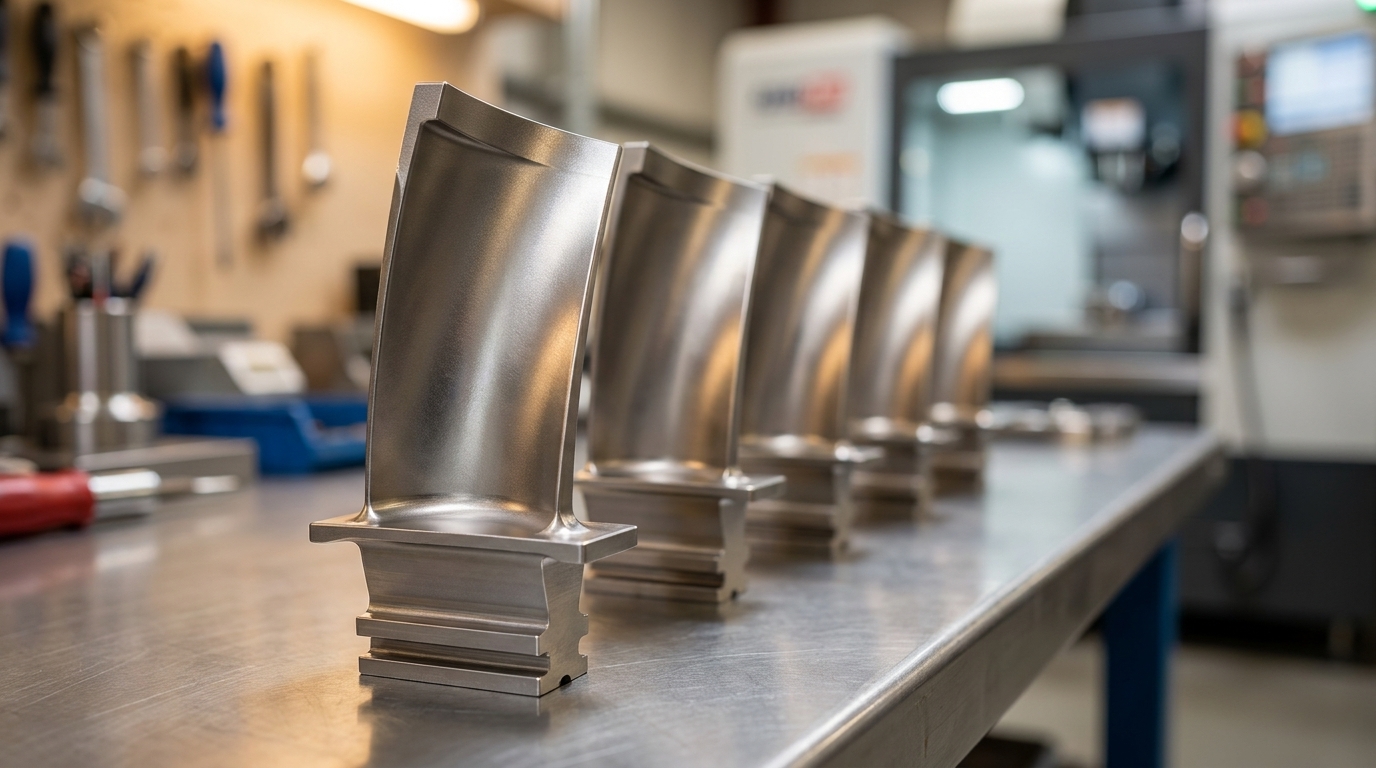
5-axis machining removes most of those repositioning steps. The cutter tilts and rotates to follow the geometry, which produces turbine housings, structural brackets and UAV airframe sections in fewer operations.
Each eliminated operation removes a fixture requirement, shortens the production cycle and reduces the points where dimensional errors can create integration problems downstream.
Precision Advanced Manufacturing applies multi-axis CNC technology to deliver finished, ready-to-integrate components that move directly into assembly without secondary adjustments.
Discuss complex geometry requirements with the Precision Advanced Manufacturing engineering team.
Single-Setup Accuracy for Flight Hardware
Tolerance stack-up remains one of the most persistent sources of rework in aerospace machining. Every time a part leaves a fixture and returns, dimensional error accumulates.
On tight-tolerance flight hardware, that accumulation can push a part out of specification before the final operation begins. Scrap, rework and schedule pressure follow.
Single-setup 5-axis machining holds all critical features to a common datum throughout the cutting cycle. That approach produces tighter feature-to-feature relationships, better surface finish and fewer non-conformances at final inspection.
For program managers, fewer non-conformances support on-time milestone delivery. For supplier quality engineers, they reduce inspection burden and raise first-article acceptance rates.
Titanium and Inconel in Demanding Aerospace Roles
Those accuracy benefits become even more important when machining aerospace’s most demanding materials. Titanium and Inconel serve as core materials for engine components, structural frames and thermal management hardware.
Both alloys resist heat and corrosion, and both generate high cutting forces and heat at the tool-workpiece interface. Tool wear, chatter and distortion become constant risks.
Simultaneous 5-axis motion allows the cutter to maintain a consistent engagement angle with the material, which distributes heat and load more evenly than fixed-axis approaches. That control supports better dimensional stability across the full depth of a cut and longer tool life across a production run.
Precision Advanced Manufacturing machinists hold the tolerances that titanium and Inconel aerospace parts require. In-house CNC programming and tooling expertise manage material behavior from the first prototype through sustained production.
Compliance and Traceability in Aerospace Machining
Aerospace procurement and supplier quality teams require documented evidence that every process step met the required standard. Compliance functions as a built-in part of each operation, not a separate activity at the end.
Precision Advanced Manufacturing operates under AS9100D and ISO 9001:2015 registered quality management systems and is ITAR registered for defense and space-related programs. These registrations define process controls, inspection checkpoints and full material traceability from raw stock to finished part.
For sourcing managers, that documentation streamlines supplier audits and regulatory submissions. For supplier quality engineers, it removes the need to reconstruct traceability after the fact, because every job ships with complete quality records aligned to aerospace standards.
Scaling from Prototype to Full-Rate Production
Supplier changes mid-program introduce significant risk. A new supplier must revalidate processes, requalify toolpaths and rebuild traceability records, which consumes time that programs rarely have.
Precision Advanced Manufacturing supports the full product lifecycle under one roof, from initial prototype development through multi-shift, full-rate manufacturing. The same certified processes, the same quality system and the same engineering team that validated the prototype govern every production run that follows.
That continuity protects program schedules, preserves traceability chains and removes the supplier-change risk that procurement and program management teams work to avoid.
Outline program volume requirements so Precision Advanced Manufacturing can map a scalable production strategy.
Choosing Between 3+2 and Simultaneous 5-Axis
3+2 machining positions the workpiece at a fixed compound angle and then executes a standard 3-axis cut. This method expands access compared with conventional 3-axis work and suits many structural features.
For flight-critical parts with complex contoured surfaces, 3+2 reaches its limits. Multiple setups and blended surfaces raise the risk of mismatch and rework.
Simultaneous 5-axis motion keeps the cutter perpendicular to the surface throughout the toolpath. Continuous orientation control produces better surface finish on blended radii, tighter tolerances on compound features and shorter cycle times on parts that would otherwise require multiple 3+2 setups.
For aerospace engine components, structural spars and satellite housings where surface finish and dimensional accuracy appear as specification requirements, simultaneous 5-axis execution provides the appropriate method. 3+2 remains a cost-effective option for simpler geometries but does not replace continuous tool-axis control when the geometry demands it.
Engineering and Risk Considerations for 5-Axis CNC
Is 5-axis CNC difficult?
5-axis machining requires advanced CAM programming, experienced machinists and rigorous process validation. The complexity is real, and it affects every stage of production.
A certified supplier with in-house engineering support absorbs that complexity before the first chip is cut. Precision Advanced Manufacturing provides in-house CNC programming and tooling development, so the engineering burden stays off the customer program team.
What are the disadvantages of 5-axis CNC machining?
Capital cost and programming time run higher than for 3-axis work. Setup and process validation demand more engineering investment upfront.
For aerospace programs, those costs are offset by reduced rework, fewer setups and tighter tolerances that prevent far more expensive downstream failures. A certified supplier with established 5-axis processes spreads that investment across programs and delivers the capability without shifting the overhead to the customer.
Supplier-Evaluation Checklist for Aerospace 5-Axis
- Confirmed simultaneous 5-axis capability, not only 3+2 positioning
- Current, auditable AS9100D and ISO 9001:2015 registrations
- ITAR registration for defense, space and UAV programs
- Documented experience with titanium, Inconel and other aerospace alloys
- In-house engineering support for CNC programming and manufacturability review
- Full material traceability and inspection documentation on every job
- Integrated finishing, welding and secondary operations under one roof
- Scalable capacity from prototype through multi-shift full-rate production
- Proven prototype-to-production transition without supplier change
- Documented first-article inspection and non-conformance resolution processes
Why Precision Advanced Manufacturing Reduces Program Risk
Precision Advanced Manufacturing consolidates advanced multi-axis CNC machining, precision fabrication, specialty welding, integrated finishing and engineering support at two U.S. facilities in California and Texas. This integration removes vendor handoffs that create traceability gaps and schedule risk.
The certifications detailed earlier embed process controls at every production step. Documentation, inspection reporting and material certifications ship with every order, which reduces the compliance burden on customer quality teams.
Prototype-to-production continuity, as described in the scaling section, eliminates the supplier-change risk that threatens program schedules. For procurement managers, program managers and supplier quality engineers on mission-critical aerospace, defense, space and UAV programs, that combination of capability, compliance and continuity directly reduces program risk.
Next Step: Tailored Program Assessment
Precision Advanced Manufacturing aerospace and UAV manufacturing specialists stand ready to review part specifications, tolerance requirements, material needs and program timelines. The process starts with a detailed, customized quote that maps capabilities, certifications and production strategy to program requirements.
Begin a tailored program assessment with Precision Advanced Manufacturing.
Frequently Asked Questions
What certifications should an aerospace 5-axis CNC supplier hold?
An aerospace supplier should hold AS9100D registration, which is the quality management standard specific to aviation, space and defense. ISO 9001:2015 registration demonstrates a broader quality management foundation.
For defense, space and UAV programs, ITAR registration functions as a legal requirement. Precision Advanced Manufacturing holds all three, with full documentation and traceability built into every production step.
How does single-setup 5-axis machining reduce rework on aerospace parts?
When a part is machined in a single setup, all features reference a common datum throughout the cutting cycle. That approach removes the dimensional error that accumulates each time a part is repositioned.
Fewer repositioning steps support tighter feature-to-feature relationships, better surface finish and higher first-article acceptance rates. For aerospace programs, higher acceptance rates translate to fewer non-conformances, less rework and more predictable delivery schedules.
Can a 5-axis CNC supplier handle both prototype and full-rate production?
A supplier with scalable multi-shift capacity and certified quality systems can support the full program lifecycle without a supplier change. Precision Advanced Manufacturing moves programs from initial prototype development through sustained, high-volume production using the same certified processes and the same engineering team.
That continuity preserves traceability, protects program schedules and removes the requalification risk associated with mid-program supplier transitions.
What makes titanium and Inconel challenging for CNC machining?
Titanium and Inconel generate high cutting forces and heat at the tool-workpiece interface. Titanium tends to work-harden, and Inconel’s high strength at elevated temperatures accelerates tool wear.
Simultaneous 5-axis motion helps manage these challenges by maintaining a consistent cutter engagement angle and distributing heat and load more evenly. Experienced machinists with in-house programming expertise and appropriate tooling selection are essential for holding tight tolerances across a full production run in these alloys.
How does ITAR registration affect aerospace supplier selection?
ITAR, the International Traffic in Arms Regulations, governs the manufacture, export and transfer of defense-related articles and services. Any supplier producing components for defense, space or UAV programs that fall under the U.S. Munitions List must be ITAR registered.
Working with a nonregistered supplier on a covered program creates legal and compliance exposure for the prime contractor or OEM. Precision Advanced Manufacturing is ITAR registered, which means its processes, personnel and documentation controls meet the requirements for defense and space-related manufacturing programs.