Last updated: April 17, 2026
Key Takeaways
- Aerospace CNC machining demands ultra-tight tolerances down to ±0.0001 inches for flight-critical components such as turbine blades and UAV frames.
- Core aerospace materials include titanium alloys, Inconel superalloys, and aluminum 7075, which require advanced 5-axis CNC and cryogenic cooling technologies.
- AS9100D certification and ITAR registration support consistent quality, full traceability, and compliant export controls in aerospace manufacturing.
- Procurement teams reduce risk by choosing US-based partners that scale from prototype to high-volume production and provide complete in-house services.
- Precision Advanced Manufacturing operates AS9100D-certified, ITAR-registered facilities in the United States, so you can request a quote with confidence for mission-critical aerospace components.
Why CNC Precision Matters in Aerospace Programs
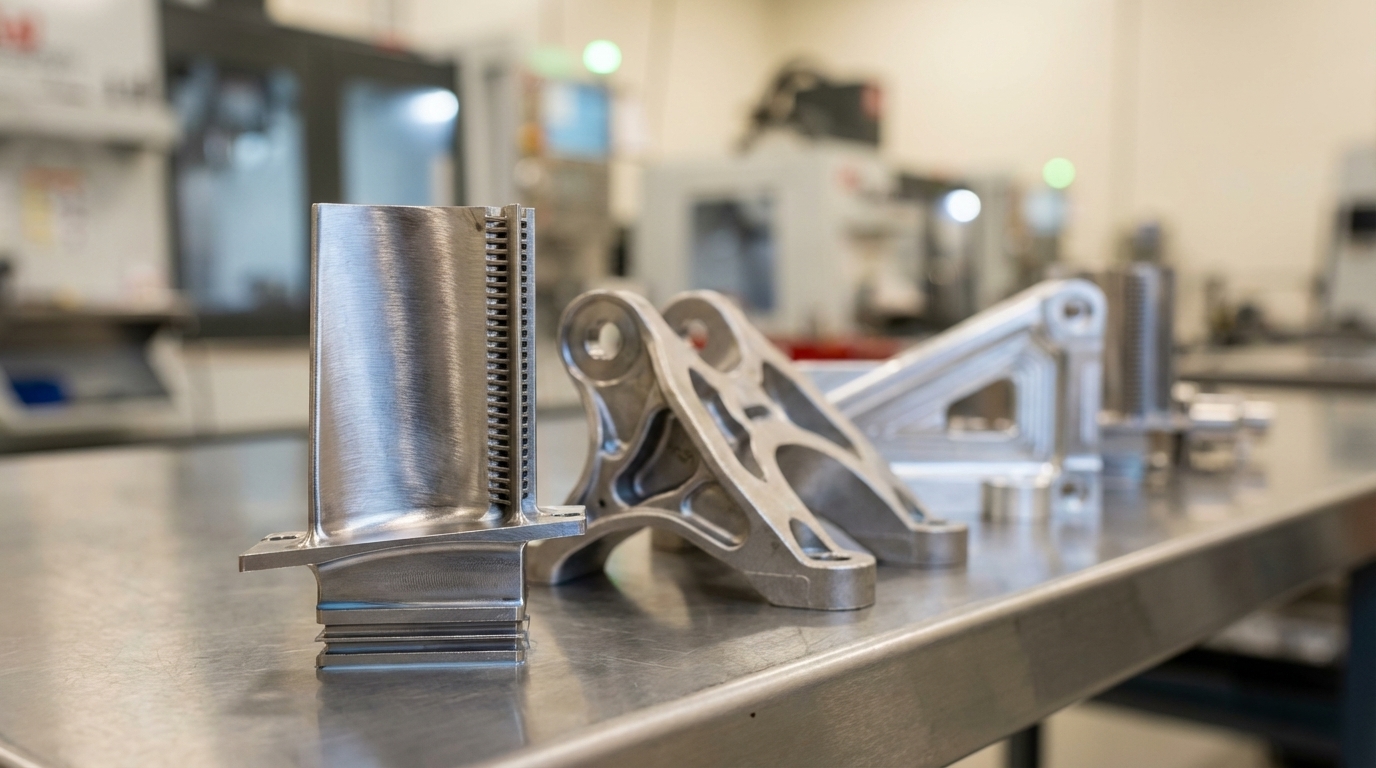
Aerospace precision CNC machining delivers programmable multi-axis control that keeps accuracy consistent across every production run. This consistency protects flight-critical components where failure is never acceptable. Typical applications include turbine blades, landing gear assemblies, UAV frames, and satellite housings that must perform reliably in extreme conditions.
Three factors make precision CNC machining indispensable for aerospace programs:
- Ultra-tight tolerances: Aerospace components often require tolerances in the thousandths of an inch or tighter compared to general manufacturing, which uses wider ranges. High-precision CNC machines hold these tolerances under controlled conditions.
- Exotic material capability: Advanced alloys such as titanium and Inconel resist conventional machining but remain essential for aerospace performance and durability.
- High-volume repeatability: Modern CNC machining centers deliver high repeatability, so complex geometries remain consistent from part to part.
The following table shows how tolerance requirements differ across aerospace component types. Flight-critical parts consistently demand the tightest specifications.
| Part Type | Typical Tolerance | Source |
|---|---|---|
| Structural Components | varies by application | ER Machining |
| Flight-Critical Parts | ±0.005″ to ±0.001″ | Modus Advanced |
| Titanium Components | varies by application | FSFab |
Key Aerospace Materials and the Technologies Behind Them
Aerospace precision CNC machining relies on deep expertise with specialized materials and advanced equipment that many standard machine shops do not offer. The most critical materials include:
- Titanium alloys: Used in airframes and structural components. Holding tight aerospace tolerances in titanium requires strong thermal control, high-pressure coolant, and rigid custom fixturing.
- Inconel superalloys: Used for engine components that operate at extreme temperatures and demand specialized tooling and cryogenic cooling.
- Aluminum 7075: Lightweight yet strong, well suited for UAV frames and satellite structures.
- Advanced superalloys: Materials such as Waspaloy and René support demanding turbine applications.
Machining these demanding materials requires equally advanced technologies. Key advances shaping 2026 aerospace manufacturing include 5-axis CNC capabilities, with the 5-axis and above machining centers market projected to grow at 6.78% CAGR through 2031.
Cryogenic hybrid processes that use LN₂ jets can cut tool wear by about 40 percent for titanium and high-entropy alloys. AI-driven control systems further enhance performance by detecting and suppressing chatter within milliseconds, which improves surface finish and extends tool life.
Precision Advanced Manufacturing applies these technologies along with advanced thermal-control welding capabilities. This combination supports smooth production of complex aerospace assemblies within a single coordinated workflow.
Quality, Compliance, and Scaling for Aerospace Programs
Aerospace procurement teams face mounting pressure from program delays, compliance risks, and scaling bottlenecks that threaten mission-critical timelines. These challenges often arise when suppliers lack the certifications, capacity, and operational maturity that aerospace programs require. Success depends on partners who remove these pain points through proven quality systems and reliable, scalable operations.
Core compliance requirements include:
- AS9100D certification: Builds on ISO 9001 with added focus on risk management, configuration control, and aerospace-specific processes.
- ITAR registration: Required for defense and space programs that fall under strict export control regulations.
- Full traceability: Complete documentation from raw material through final inspection and shipment.
Procurement teams should also watch for clear red flags when evaluating suppliers:
- Absence of US-based operations or ITAR registration for controlled programs.
- Limited ability to scale from prototype builds to steady production volumes.
- Minimal Design for Manufacturing (DFM) support during early design and quoting.
The following comparison highlights how Precision Advanced Manufacturing’s certifications and capacity differ from typical generic suppliers.
| Certification | Precision Advanced Manufacturing | Generic Suppliers |
|---|---|---|
| AS9100D | Yes | Often No |
| ITAR Registered | Yes (100%) | Variable |
| ISO 9001 | Yes | Yes |
| Multi-shift Production | Yes | Limited |
Comprehensive in-house services reduce costly handoffs between multiple suppliers, which shortens lead times and lowers quality risk. Request a quote to see how Precision Advanced Manufacturing’s coordinated approach can streamline your aerospace supply chain.
How to Select an Aerospace CNC Machining Partner
Choosing the right aerospace CNC machining partner works best with a clear evaluation framework that covers both technical capability and operational reliability.
- Certifications and tolerances: Confirm AS9100D, ITAR, and documented experience meeting your specific tolerance and material requirements.
- Scaling capability: Look for a partner that supports a smooth move from prototype to full-rate production without changing suppliers.
- US locations: Favor domestic facilities that reduce supply chain risk and support compliant handling of controlled work.
- Proven track record: Review case studies and references within your aerospace segment, such as commercial aviation, defense, or space.
Precision Advanced Manufacturing stands out as an ITAR-registered partner with dual US operations in California and Texas. These facilities provide multi-axis CNC machining, fabrication, welding, and finishing capabilities tailored to aerospace primes and defense contractors.
Precision Advanced Manufacturing for Mission-Critical Programs
Precision Advanced Manufacturing addresses common aerospace procurement challenges with a focused set of capabilities.
- Complete in-house capabilities: Multi-axis CNC machining, precision fabrication, welding, and finishing in a single coordinated operation.
- Scalable production: Smooth progression from prototype builds to multi-shift, high-volume manufacturing.
- Proven aerospace expertise: Established history supporting commercial aerospace, defense, and UAV programs.
- Risk reduction: Our certified quality systems, described above, support on-time delivery, minimal rework, and full regulatory alignment.
Our dual-facility model in California and Texas provides geographic redundancy and flexible capacity while maintaining consistent quality standards. Request a quote to see how we help prevent program delays and reduce supply chain risk for your next aerospace initiative.
Frequently Asked Questions
What tolerances can aerospace precision CNC machining achieve?
Aerospace precision CNC machining supports very tight tolerances that vary by application and material. As noted earlier, flight-critical components demand the narrowest tolerance bands in aerospace manufacturing, while structural parts often allow slightly wider ranges. Titanium components can still meet these demanding specifications with proper thermal management and robust fixturing. High-precision processes such as surface grinding and wire EDM can reach ±0.0001 inches under controlled conditions.
Is Precision Advanced Manufacturing compliant for defense and space projects?
Yes. Precision Advanced Manufacturing is 100 percent ITAR registered and operates under AS9100D and ISO 9001:2015 certified quality management systems. Every component follows these standards with full documentation, traceability, and material certifications suitable for defense and space programs. Our two US facilities in California and Texas support complete domestic production for controlled work.
What aerospace materials does Precision Advanced Manufacturing support?
Precision Advanced Manufacturing works with a wide range of aerospace materials, including titanium alloys such as Ti-6Al-4V, Inconel superalloys such as 718, Waspaloy, and René, and aluminum alloys such as 7075 and 6061. We also machine stainless steels and advanced composites. Our team applies specialized techniques for difficult materials, including cryogenic cooling and adaptive CNC strategies for functionally graded materials.
How does Precision Advanced Manufacturing scale from prototype to production?
Precision Advanced Manufacturing supports scaling through flexible, multi-shift operations that grow with program demand. We keep the same quality systems, tooling strategies, and process controls from early prototypes through high-volume production. This continuity removes the need for supplier changes that can introduce risk and delay. Our coordinated workflow preserves product data, process knowledge, and quality standards at every stage.
Where are Precision Advanced Manufacturing’s US facilities located?
Precision Advanced Manufacturing operates specialized facilities in California and Texas. These locations provide geographic redundancy and serve major aerospace hubs across the United States. Both facilities maintain consistent AS9100D and ITAR-compliant operations, which supports reliable supply for aerospace programs nationwide.
Conclusion: Align Your Programs with a Proven Aerospace CNC Partner
Aerospace precision CNC machining requires certified US expertise, advanced multi-axis equipment, and reliable scalability to support flight-critical applications. As UAV adoption grows and reshoring accelerates, the choice of manufacturing partner has a direct impact on program success. Precision Advanced Manufacturing delivers coordinated capabilities, strong compliance credentials, and operational discipline for mission-critical aerospace components. Request a quote from Precision Advanced Manufacturing today to support reliable, on-time delivery without compromising quality or regulatory requirements.