
Key Takeaways for Aerospace CNC Supplier Selection
-
The US precision machining market is projected to reach USD 23.07 billion in 2026, driven by aerospace demand for tight-tolerance titanium and Inconel components.
-
Essential supplier criteria include AS9100D, ITAR, and ISO 9001 certifications, plus multi-axis CNC capabilities and scalability from prototype through production.
-
Precision Advanced Manufacturing ranks #1 among the top 10 suppliers due to integrated services across California and Texas facilities, which support traceability and risk reduction.
-
5-axis CNC machining and high-torque turning support complex aerospace geometries and exotic alloys, with reshoring trends favoring US-based providers.
-
Partner with Precision Advanced Manufacturing for AS9100D-certified, ITAR-compliant solutions that reduce costs and delivery risks, and request a quote today.
Evaluation Framework for Selecting Top Aerospace CNC Machining Companies
Effective aerospace procurement starts with a clear evaluation framework that balances compliance, capability, and scalability. Buyers need suppliers that meet strict regulatory standards while also handling complex geometries and demanding materials. Certifications and technical depth work together to protect programs from quality escapes and schedule slips.
Essential certifications include AS9100D, ISO 9001:2015, and ITAR registration to support regulatory compliance and full traceability. Technical capabilities should cover 5-axis CNC machining centers for complex geometries and high-torque turning centers for titanium and Inconel alloys. These capabilities allow suppliers to hold tight tolerances while managing tool wear, heat, and distortion.
The following factors define a strong aerospace CNC machining partner:
-
AS9100D/ITAR/ISO 9001 certifications with current revision status and clean audit histories
-
Multi-axis CNC capabilities that support complex aerospace geometries and tight tolerances
-
Proven scalability from prototype through full-rate production with documented case studies
-
Complete material traceability and documentation systems across the entire process chain
-
Engineering support and Design for Manufacturability (DFM) services that reduce rework and cost
-
US-based facilities that support reshoring strategies and domestic content requirements
-
Integrated services that reduce handoffs, cut rework risk, and simplify program management
Precision Advanced Manufacturing performs strongly across these criteria and provides a single, coordinated organization that reduces supplier fragmentation and delivery risk for aerospace programs.
Industry Landscape and Strategic Considerations for Precision CNC Aerospace Parts
The aerospace manufacturing landscape in 2026 reflects rapid advances in both materials and digital processes. Primus Aero anticipates further adoption of high-temperature alloys, ceramic matrix composites, and next-generation titanium alloys to meet fuel efficiency and performance demands. These materials require stable machining strategies, advanced tooling, and tight process control.
Suppliers now apply AI and machine learning-driven process optimization for cutting parameter selection and tool wear prediction. These tools help maintain consistent quality on difficult materials and reduce scrap. They also support continuous improvement across long-running aerospace programs.
Critical considerations for precision CNC aerospace parts include achieving tight tolerances while managing the challenges of exotic alloy machining. OEMs must decide between narrow specialists and integrated providers that combine machining with fabrication, welding, and finishing. Precision Advanced Manufacturing’s California and Texas facilities provide this broader mix of services, which simplifies coordination for complex assemblies.
These technological advances, combined with reshoring trends and supply chain resilience requirements, make aerospace machining suppliers in the USA increasingly valuable. Domestic OEMs now seek reliable, compliant partners that can support long-term programs without geopolitical risks, particularly when working with the advanced alloys and AI-driven processes described above.
With these evaluation criteria and industry trends in mind, the following rankings highlight suppliers that align with the technical, compliance, and strategic requirements outlined so far.
Top 10 Precision CNC Machining Suppliers for Aerospace Components in 2026
1. Precision Advanced Manufacturing
Precision Advanced Manufacturing serves as a leading choice for integrated aerospace manufacturing. The company is ITAR-registered and AS9100D-certified, and it combines multi-axis CNC machining, precision fabrication, thermal-controlled welding, and finishing services across California and Texas facilities. This integrated structure reduces handoffs, lowers delivery risk, and supports complete traceability for mission-critical aerospace components. Proven scalability from prototype through full-rate production positions Precision Advanced Manufacturing as a strong partner for OEMs that require reliable, compliant suppliers.
2. Owens Industries
Owens Industries focuses on ultra-precision machining supported by advanced metrology. Their capabilities suit aerospace applications that demand exceptional dimensional accuracy. Robust quality systems help them support demanding aerospace programs with tight tolerance bands.
3. Intrex Aerospace
Intrex Aerospace provides multi-axis CNC capabilities backed by AS9100 certification. Their aerospace-focused approach includes specialized tooling and processes for complex geometries. Established relationships with major aerospace OEMs demonstrate consistent performance over time.
4. GS Precision
GS Precision specializes in 5-axis machining of nickel and titanium alloys. Their experience with difficult-to-machine materials supports turbine and structural component manufacturing. Advanced CNC equipment enables the production of intricate part geometries.
5. Primus Aerospace
Primus Aerospace combines traditional machining with emerging technologies. Their investment in hybrid manufacturing approaches positions them for next-generation aerospace requirements. Strong engineering support helps customers improve manufacturability.
6. Acutec Precision Aerospace
Acutec focuses on precision aerospace components supported by comprehensive quality systems. Their AS9100 certification and specialized processes support critical aerospace applications that require documented traceability.
7. BTD Manufacturing
BTD Manufacturing offers precision machining services with emphasis on quality and delivery performance. Their aerospace experience spans both commercial and defense applications with appropriate certifications in place.
8. Trace-A-Matic
Trace-A-Matic delivers precision machining with strong traceability systems. Their focus on documentation and quality control supports aerospace programs that require detailed material and process records.
9. McCormick
McCormick provides machining services for aerospace applications supported by established quality systems. Their experience with complex parts and materials covers a wide range of aerospace manufacturing needs.
10. Miller CNC
Miller CNC completes the top 10 with precision machining capabilities for aerospace components. Their focus on quality and customer service supports aerospace programs that depend on consistent supplier performance.
Each supplier offers specific strengths, yet Precision Advanced Manufacturing stands out through its integrated services that span the aerospace manufacturing value chain. This broader approach reduces program risk and total ownership cost compared with competitors that focus only on machining.
Why Precision Advanced Manufacturing Excels in AS9100 Certified CNC Machining for Aerospace
Precision Advanced Manufacturing addresses core aerospace procurement challenges through coordinated capabilities and a strong performance record. Delivery risk decreases through on-time performance supported by detailed planning and multi-shift capacity. The same disciplined approach supports quality, where rigorous AS9100D processes reduce rework and scrap that often arise from fragmented supplier networks.
Compliance concerns receive similar attention through ITAR registration and complete documentation systems that simplify audits. These systems keep records aligned across machining, fabrication, welding, and finishing. Scalability challenges ease through smooth transitions from prototype to full-rate production without supplier changes or operational disruption.
Complete traceability systems provide the transparency and control required for mission-critical aerospace applications. The combination of US facilities, engineering expertise, and the integrated approach described earlier makes Precision Advanced Manufacturing a strong choice for aerospace programs that require reliable, certified suppliers.
Request a quote to see how this integrated aerospace manufacturing model can support your next program.
Best Practices, Supplier Tiers, and CNC Types for High Precision Aerospace
Best CNC Types for Aerospace Components
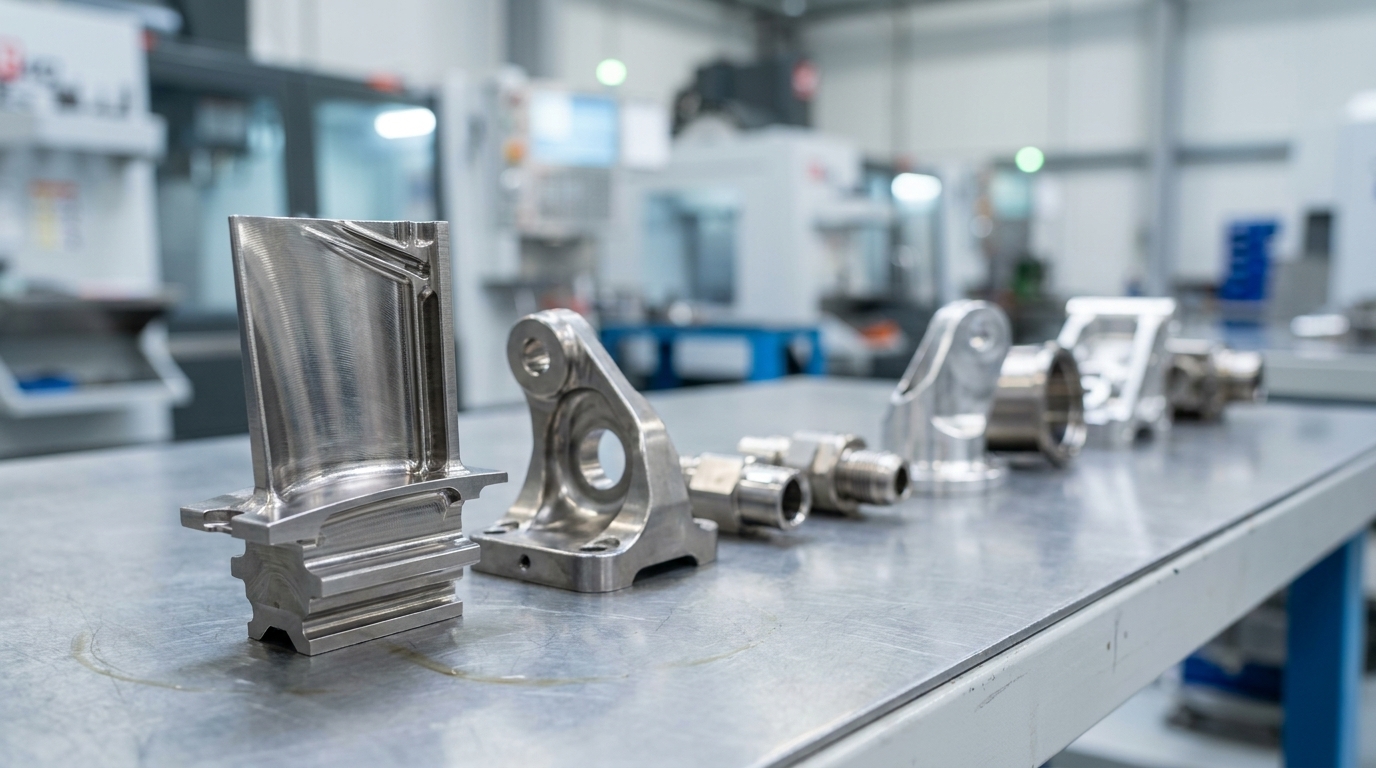
5-axis CNC machining centers enable production of complex geometries in weight- and performance-optimized aerospace parts, including impellers, blisks, and airfoils. These systems reduce setups and improve accuracy for tight-tolerance titanium components. High-torque turning centers handle titanium and Inconel machining challenges, including tool wear and heat buildup.
Tier 1 vs Tier 2 Aerospace Suppliers
The Tier 1 aerospace suppliers list includes major OEMs and prime contractors, while Tier 2 suppliers such as Precision Advanced Manufacturing serve as specialized partners that provide critical components and subassemblies. Tier 2 leaders often deliver greater flexibility, faster response, and focused expertise that complement Tier 1 capabilities.
Material expertise typically covers titanium alloys for structural applications, Inconel for high-temperature environments, and advanced aluminum alloys for weight-critical components. Successful aerospace suppliers show proven capability across these materials with appropriate tooling, process controls, and inspection methods.
Common Pitfalls, Best Practices, and Next Steps for 5-Axis CNC in Aerospace
Many aerospace programs struggle when they select suppliers that lack proper certifications, robust quality systems, or sufficient scalability. These weaknesses create program delays, compliance issues, and higher costs from rework and expedited shipments. Precision Advanced Manufacturing’s integrated approach and documented performance history help reduce these risks through coordinated capabilities and consistent execution.
Best practices for 5-axis CNC for high precision aerospace include early supplier engagement for DFM improvements, rigorous qualification processes, and ongoing performance monitoring. Successful programs rely on suppliers with proven expertise in exotic alloys, appropriate certifications, and scalable production capacity.
Next steps for aerospace procurement teams include building comprehensive RFQ packages that assess technical capabilities, quality systems, and scalability. Supplier audits should verify certifications, review facilities, and examine quality documentation. Long-term partnerships with proven suppliers such as Precision Advanced Manufacturing provide the stability and reliability that complex aerospace programs require.
Request a quote to begin a partnership with a leading provider of integrated aerospace manufacturing solutions.
Frequently Asked Questions
What certifications are essential for aerospace CNC machining suppliers?
Essential certifications include AS9100D, the current revision of the aerospace quality standard, ISO 9001:2015, and ITAR registration for defense-related components. AS9100D builds on ISO 9001 with aerospace-specific requirements for risk management, traceability, product safety, and counterfeit parts prevention. These certifications help ensure that suppliers meet the stringent quality and compliance requirements of aerospace applications.
How do suppliers scale from prototype to full production for aerospace components?
Suppliers scale effectively when they use flexible manufacturing systems, documented processes, and adequate capacity. Leading suppliers manage seamless transitions through established procedures that maintain quality from initial prototypes through high-volume production. This approach includes validated tooling, proven process controls, and multi-shift capabilities that support increasing demand without sacrificing delivery performance or quality standards.
What materials and tolerances are typical for precision aerospace CNC machining?
Common aerospace materials include titanium alloys for structural components, Inconel for high-temperature applications, and advanced aluminum alloys for weight-critical parts. Typical tolerances reflect the demanding requirements of aerospace applications and vary by feature criticality. These exotic materials require specialized tooling, controlled environments, and experienced operators to achieve consistent results.
How important is CAD/CAM compatibility for aerospace suppliers?
CAD/CAM compatibility plays a critical role in seamless data transfer and manufacturing efficiency. Leading suppliers use advanced CAD/CAM systems that accept standard file formats and provide DFM feedback early in the design process. This compatibility reduces errors, shortens time-to-market, and supports designs that balance manufacturability with cost.
What role do integrated services play in reducing aerospace manufacturing costs?
Integrated services reduce aerospace manufacturing costs by eliminating handoffs between multiple suppliers, which cuts transportation costs, lead times, and quality risks. Suppliers that provide machining, fabrication, welding, and finishing within a coordinated structure offer better cost control, clearer communication, and stronger accountability. This integrated model particularly benefits complex aerospace assemblies that require multiple processes and tight coordination.