Key Takeaways
- ITAR requires DDTC registration, not certification, and OASIS verification helps you avoid fines that can exceed $1 million.
- AS9100D certification delivers stronger quality control, full traceability, and near-zero-defect performance for defense components.
- CES machining excels at small-diameter, tight-tolerance parts (<0.0005″) using Swiss CNC for weapon systems and tactical hardware.
- Scalable suppliers support smooth prototype-to-production transitions with multi-shift capacity and stable, repeatable processes.
- Partner with Precision Advanced Manufacturing for ITAR-registered, AS9100D-certified CES machining that supports demanding defense programs.
Leading ITAR-Registered CES Machine Shops for Defense Programs
This comparison highlights ITAR-registered machine shops that specialize in CES (Complex Engineering Solutions) machining for defense applications. The focus stays on certifications, capabilities, and differentiators that matter for small-diameter, precision defense components.
|
Shop |
Certifications/Locations |
CES Capabilities |
Key Differentiators |
|
Precision Advanced Manufacturing |
ITAR/AS9100D/ISO9001, CA/TX |
Multi-axis CNC machining for tight tolerances, SpaceX/Blue Origin/FireFly approved |
Integrated fabrication/welding/kitting, scalable production |
|
CES Machine |
ITAR/AS9100, Reno NV |
Swiss CNC turning <3″ diameter, tight-tolerance components |
Specialized small-diameter expertise, defense weapon systems |
|
C&H Machine |
AS9100D/ITAR, Multiple US |
Precision CNC machining, advanced metrology |
Zero-defect focus, advanced inspection capabilities |
|
Brinkman Precision |
AS9100D/NADCAP/ITAR |
Heat treating, nonconventional machining |
Special processes accreditation, advanced metrology |
|
RDS Machine |
AS9100D/ISO9001/ITAR |
First Article Inspection, in-process quality |
Advanced metrology, comprehensive QMS |
These shops operate under NAICS codes 332710 (Machine Shops) and 332721 (Precision Turned Product Manufacturing) and support defense programs with specialized CES capabilities.
1. ITAR Registration Requirements for CES Machine Shops
A persistent misconception in defense manufacturing confuses ITAR “certification” with registration. DDTC registration is a formal regulatory process under ITAR Part 122, where companies submit registration applications through DECCS to become approved registrants. No ITAR certification program exists, only registration with the Directorate of Defense Trade Controls (DDTC).
ITAR Registration vs Certification Explained
ITAR registration requires any company that manufactures defense articles to register with DDTC, even if it does not export. Annual DDTC registration starts at $3,000 and must be renewed 30–60 days before expiration. Registration allows access to controlled technical data and use of ITAR exemptions, but it does not grant export authority by itself.
For CES machining, verify that suppliers maintain current DDTC registration through the OASIS database. Registered manufacturers such as Precision Advanced Manufacturing can receive controlled technical data, produce defense articles, and support ITAR-controlled programs with full compliance documentation.
Request a quote for ITAR registered CES machine shop services so your defense parts remain compliant with current regulations.
2. CES Machining Capabilities for Defense Components
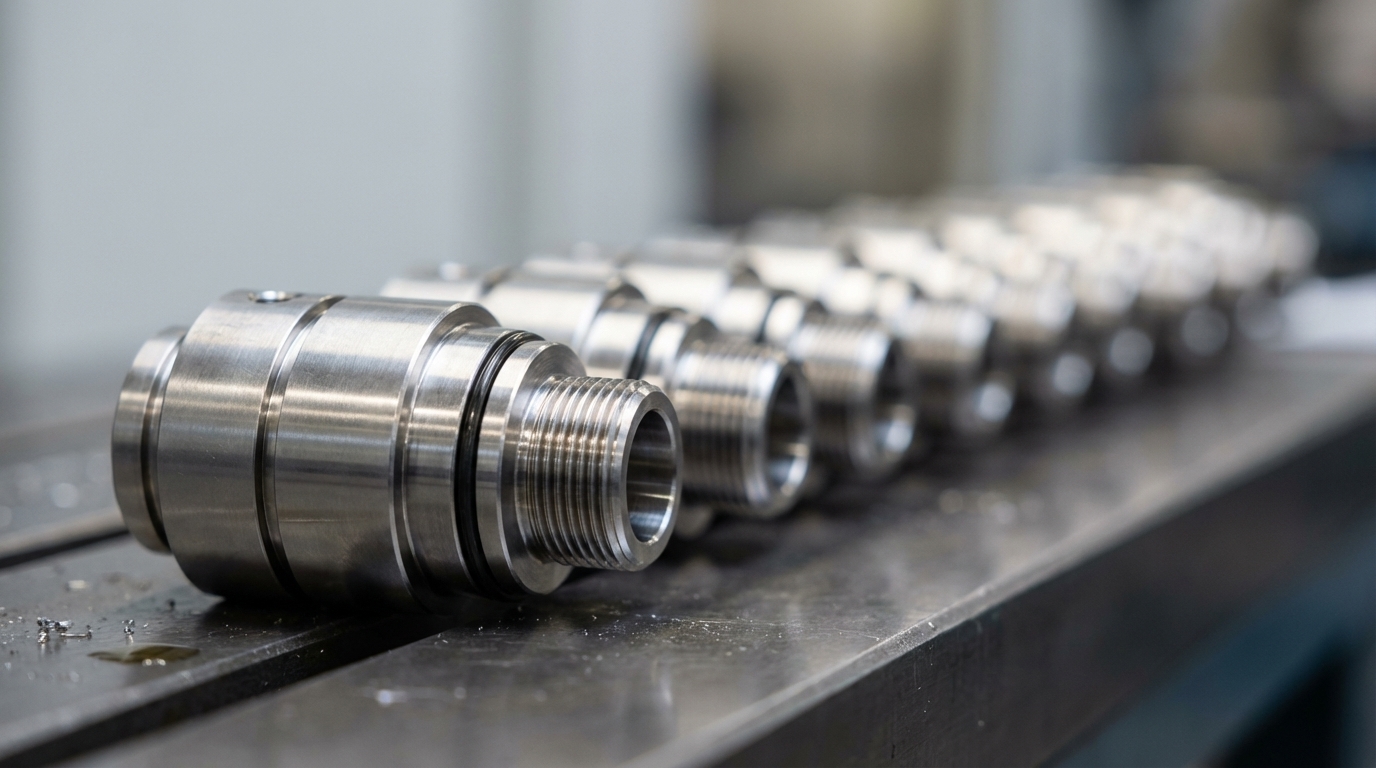
CES machining focuses on precision CNC work for complex, small-diameter defense components that require tight tolerances and clean surface finishes. Swiss screw machining with Tornos Deco and Tsugami equipment delivers tight-tolerance turned parts under 3.00 inches in diameter, from prototypes to 100,000+ units per year.
Typical defense applications include weapon system components, fire control assemblies, mounting brackets, precision shafts, guide components, and tactical communication hardware. Materials range from carbon and stainless steels to titanium 6Al-4V, aluminum alloys, and specialty plastics such as PEEK, which supports a wide range of defense program requirements.
Key CES Specifications for Supplier Selection
Evaluate suppliers on their ability to machine multi-feature shafts, sleeves, thin-wall components, and precision interfaces using simultaneous turning, milling, and cross-drilling. Strong CES providers deliver superior surface finishes and complex geometries that standard machine shops often cannot match.
Precision Advanced Manufacturing uses multi-axis CNC equipment that holds tight tolerances across standard and exotic aerospace-grade materials, which supports demanding defense specifications.
3. AS9100D Quality Systems for Defense Machining
AS9100D is the recognized quality management standard for aerospace, aviation, space, and defense industries and confirms compliance with regulatory, safety, and reliability requirements. This certification improves competitiveness and enables listing in the OASIS database for supplier qualification.
AS9100D-certified machine shops maintain stronger process control, risk management, and traceability than ISO 9001-only facilities. AS9100D certification requires high process control, full traceability, risk management, and continuous improvement practices aimed at zero-defect components.
How AS9100D Improves Program Performance
Defense contractors often see better on-time delivery and lower defect rates when they work with AS9100D-certified suppliers. Advanced inspection equipment, Statistical Process Control (SPC), and First Article Inspection (FAI) support consistent quality for mission-critical programs.
Precision Advanced Manufacturing operates under AS9100D and ISO 9001:2015 registrations, so every defense component ships with aerospace-grade quality, documentation, and traceability.
4. Precision, Tolerances, and Metrology Expectations
Defense CES machining frequently requires tolerances of 0.0005 inches or tighter on critical interfaces and mating surfaces. Swiss-type lathes hold these tolerances across full production runs while delivering the surface finishes needed for weapon systems and tactical equipment.
When you qualify suppliers, review their metrology capabilities, including Coordinate Measuring Machines (CMM), optical comparators, and in-process inspection systems. Robust metrology supports real-time process control and confirms conformance to defense specifications throughout production.
Verifying Tight Tolerance Capability
Request capability studies that show sustained tolerance performance across representative production runs. Suppliers should provide SPC data, measurement uncertainty analyses, and calibration certificates for critical inspection equipment.
Precision Advanced Manufacturing combines advanced multi-axis CNC equipment with comprehensive metrology and quality records to support tight tolerances with repeatable results.
5. Scaling CES Machining from Prototype to Production
Defense programs need a smooth path from prototype through full-rate production without sacrificing quality or delivery. Evaluate each supplier’s capacity for multi-shift operations, production planning, and process control as volumes increase.
Scalable suppliers maintain flexible manufacturing systems, adequate machine capacity, and a deep workforce that supports program growth. Favor shops with documented success moving defense programs from early prototypes to sustained production volumes above 10,000 units per year.
Signals of Reliable Production Scalability
Review facility size, equipment redundancy, and multi-shift staffing. Ask for case studies that show successful program transitions and stable delivery performance during ramp-up.
Precision Advanced Manufacturing offers a scalable production platform that supports the full product lifecycle, from prototype through multi-shift, high-volume manufacturing, while holding consistent quality.
Request a quote for scalable ITAR-registered CES machining services that support your program from first article through production.
6. Traceability and Documentation for ITAR Programs
ITAR compliance depends on full traceability from raw material through final inspection, including material certifications, process records, and inspection reports. Defense contractors must confirm that suppliers maintain documentation systems that support audits and program-level traceability.
Evaluate each supplier’s document control, material traceability, and ability to deliver complete manufacturing records. Digital documentation systems with secure access for authorized users provide faster audit support and easier program reviews.
Core Documentation Requirements
ITAR-registered suppliers must keep records that show proper handling of controlled technical data, personnel security clearances when required, and export control procedures. Complete traceability covers material heat lot tracking, process parameter records, and inspection data.
Precision Advanced Manufacturing supplies material certifications, inspection reports, and full traceability records that support defense program requirements and audit readiness.
7. Cost, Reliability, and Supplier Red Flags
Defense CES machining costs vary with part complexity, tolerances, materials, and volume. Build cost benchmarks through competitive quotes while weighing total program value, including quality, delivery reliability, and compliance support.
Red flags include missing or expired ITAR registration, weak quality certifications, limited metrology, or no proven defense program history. ITAR violations can trigger fines that exceed $1 million, so supplier compliance checks remain critical.
Balancing Cost with Risk and Added Value
Evaluate the total cost of ownership, including quality-related costs, delivery performance, and compliance risk. Give preference to suppliers that provide kitting, secondary finishing, and engineering support, since these services reduce program complexity and overall cost.
Precision Advanced Manufacturing offers competitive pricing with aerospace-grade quality and compliance, supported by integrated capabilities that reduce handoffs and improve program control.
FAQ: ITAR CES Machine Shops for Defense
What is the difference between ITAR-registered and ITAR-certified machine shops?
No ITAR certification exists. Companies that manufacture defense articles must register with the Directorate of Defense Trade Controls (DDTC) under ITAR Part 122. ITAR registration is a regulatory requirement, not a certification program. Registered companies can access controlled technical data and manufacture defense articles, but registration alone does not grant export authority. Always verify current registration status through the OASIS database.
What are typical costs for ITAR-compliant CES machining services?
CES machining costs depend on part complexity, tolerances, materials, and production volume. Small-diameter precision components often range from $50 to $500 per part at low volumes, with unit costs dropping at higher quantities. Premium pricing reflects specialized equipment, robust quality systems, compliance overhead, and skilled labor. Total program value also includes quality consistency, delivery reliability, and compliance support.
How do ITAR-registered machine shops handle tight defense program deadlines?
Experienced ITAR suppliers maintain multi-shift capacity, equipment redundancy, and stable supply chains to support urgent defense needs. Integrated facilities that combine machining, fabrication, and finishing shorten lead times by reducing outside processing. Advanced production planning and dedicated program management help protect schedules while maintaining quality.
Can CES machine shops scale from prototype to full production for defense programs?
Leading CES suppliers design manufacturing systems that scale from prototype to high-volume production without major process changes. This approach requires enough equipment capacity, trained staff, and quality systems that hold consistency as volumes grow. Proven suppliers can show examples of defense programs that moved from early prototypes to sustained production above 10,000 units per year.
What materials are commonly used for small-diameter defense CES parts?
Defense CES components often use stainless steels (15-5, 17-4, 303, 316, 440C), aluminum alloys (2024, 6061, 7075), titanium 6Al-4V, carbon steels, alloy steels (4130, 4140), brass, copper, and specialty plastics such as PEEK. Material selection depends on strength, corrosion resistance, weight, and environmental conditions. Suppliers must prove material traceability and certification capability.
Request a quote for expert evaluation of your ITAR-registered CES machine shop requirements and confirm that your defense parts meet strict technical and regulatory standards.
Conclusion: Selecting an ITAR-Registered CES Partner
These seven criteria create a clear framework for evaluating ITAR-registered CES machine shops that support defense programs. Priority factors include verified DDTC registration, AS9100D certification, and proven scalability from prototype through production. Strong partnerships align on precision capability, documentation discipline, and program support.
Key evaluation priorities include:
- Current ITAR registration with DDTC verification
- AS9100D certification with documented quality performance
- Scalable production capacity that supports program growth
Partner with Precision Advanced Manufacturing, request a quote for expert evaluation of your ITAR-registered CES machining requirements, and support mission-critical defense programs with proven aerospace and defense expertise.