Key takeaways for ITAR-registered CNC sourcing
- Recent ITAR revisions effective September 2025 and CMMC 2.0 enforcement increase compliance pressure on aerospace and defense CNC procurement.
- Noncompliance risks include multimillion-dollar penalties, program delays and supplier debarment, as shown by GE Aerospace’s $36 million settlement.
- Leading ITAR-registered providers combine multi-axis CNC machining, fabrication, welding and finishing to reduce supply chain risk.
- Effective vetting focuses on certifications, technical capabilities, scalability and documentation for dependable long-term partnerships.
- Precision Advanced Manufacturing delivers certified ITAR-registered CNC services with AS9100D compliance and scalable capacity; request a quote to support defense program needs.
ITAR and AS9100 requirements for CNC machining
ITAR-registered CNC machining relies on manufacturing processes secured under DDTC oversight for defense articles listed on the U.S. Munitions List. Maintaining this status requires strict data security protocols, material traceability and facility access limited to U.S. persons. ITAR’s definition of “technical data” (22 C.F.R. § 120.33) covers information necessary for the design, development, operation or production of defense articles and applies to AI-generated outputs regardless of whether produced by humans or AI, which expands compliance obligations for manufacturers using AI tools.
AS9100D certification establishes aerospace quality management systems that support precision manufacturing. The standard mandates documented processes, risk management procedures and continuous improvement protocols that protect mission-critical components. CMMC 2.0 enforcement from November 2025 to November 2026 requires Level 1 and Level 2 self-assessments for contract eligibility, adding cybersecurity controls to traditional quality and compliance frameworks.
Beyond cybersecurity mandates, the regulatory environment continues evolving in other areas. The September 2025 ITAR revisions require organizations, particularly those in aerospace and defense, to reassess USML classifications, licensing needs and compliance processes due to shifts in ITAR scope. Certified providers help interpret these changes and maintain program continuity during updates.
Core capabilities of leading ITAR CNC providers
Leading ITAR-registered CNC machining providers deliver comprehensive capabilities under one roof to reduce supply chain fragmentation and compliance exposure. Essential services include:
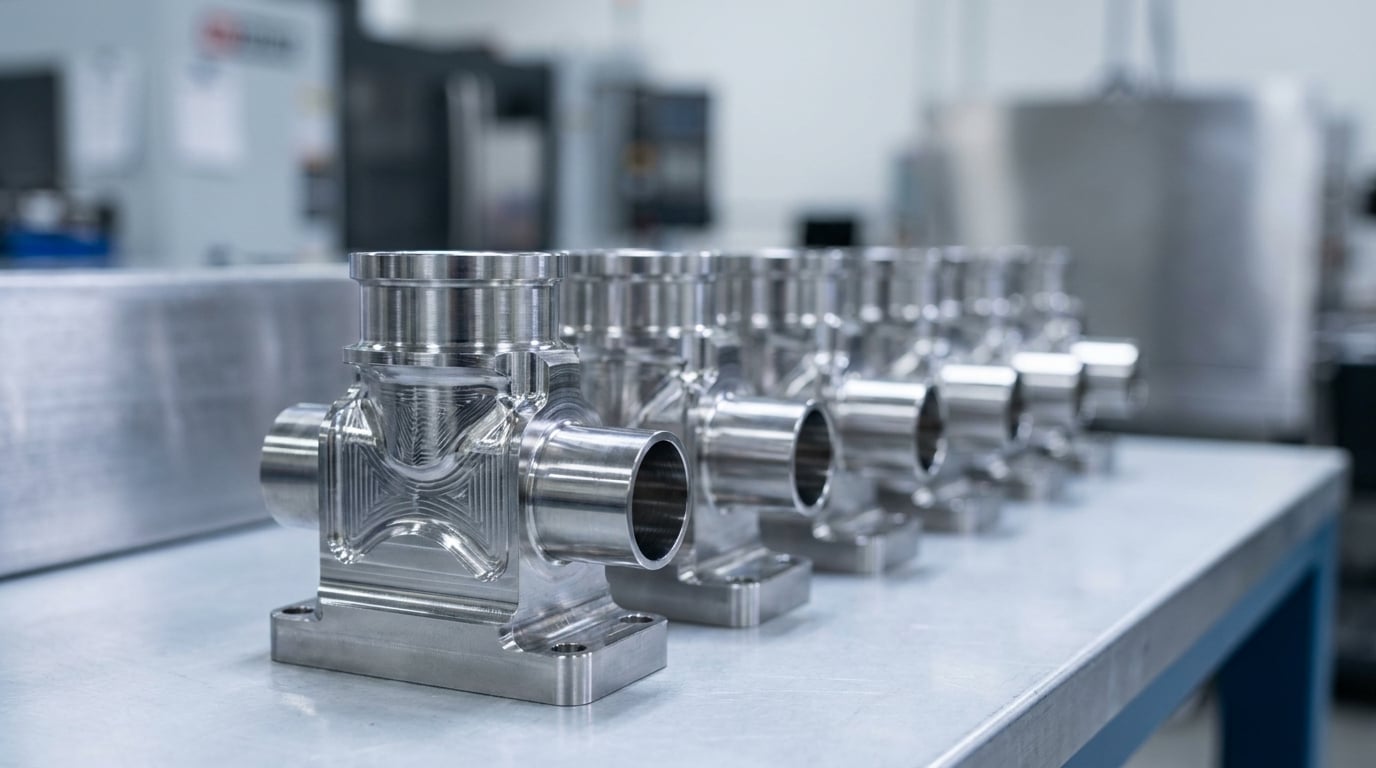
- Multi-axis CNC machining, including 5-axis capabilities for complex geometries
- Precision sheet metal fabrication with advanced cutting and forming
- Specialty welding with thermal distortion control for lightweight assemblies
- Secondary finishing such as anodizing, passivation and laser marking
- Component kitting and hardware installation
- Engineering support and manufacturability improvements
Integrated providers remove handoffs between multiple suppliers, which reduces documentation complexity and compliance touchpoints. This structure supports programs that must scale from prototype to production while maintaining strict traceability and consistent quality.
Precision Advanced Manufacturing delivers this integrated model, combining certified machining capabilities with engineering support and finishing services. The company’s dual facilities in California and Texas provide geographic redundancy and scalable capacity for defense programs that require dependable output.
Buyer vetting checklist for ITAR CNC partners
Effective selection of an ITAR-registered CNC machining partner relies on structured evaluation across four primary areas.
- Verify certifications: Confirm active ITAR registration with DDTC, AS9100D certification and ISO 9001 compliance. Request current certificate numbers and expiration dates.
- Assess technical capabilities: Review tolerance capabilities, material expertise and inspection equipment. Examine work envelope specifications and multi-axis machining capacity.
- Confirm scalability: Evaluate production capacity, multi-shift capabilities and the ability to move from prototype to full-rate manufacturing without supplier changes.
- Review documentation systems: Examine material traceability processes, inspection reporting capabilities and quality management system documentation.
Precision Advanced Manufacturing meets these criteria with verified certifications, advanced multi-axis capabilities and proven scalability. The company’s integrated services and geographic presence support complex defense programs that require consistent performance.
Core problem and solution areas in ITAR CNC programs
These four problem areas frequently drive delays, cost overruns and compliance exposure in ITAR-controlled CNC programs. Effective partners address each area with specific processes and capabilities.
Compliance and traceability risks
ITAR debarment prohibits suppliers from defense contracts, with administrative debarment typically lasting three years and requiring DDTC approval for reinstatement. Certified providers implement documented quality systems with complete material traceability and inspection reporting to support regulatory alignment and audit readiness.
Out-of-specification delays
Parts that fail to meet tolerances create program delays and increase inspection burdens. Preventing these failures requires advanced CNC capabilities paired with rigorous inspection protocols that catch deviations before parts leave the facility. This upstream quality control delivers first-time quality and prevents downstream integration issues that compound delays across programs.
Production scaling challenges
Limited supplier capacity creates bottlenecks during program ramp-up phases. Multi-shift production platforms with established processes support smooth transitions from prototype quantities to sustained manufacturing while protecting quality and delivery schedules.
Rework and scrap costs
Manufacturing errors drive cost overruns and schedule impacts. Engineering-driven manufacturability analysis combined with proven fabrication expertise reduces rework risk and supports consistent conformance across production runs.
Why Precision Advanced Manufacturing fits complex defense programs
Precision Advanced Manufacturing addresses these challenges through comprehensive ITAR-registered capabilities and certified quality systems. The company maintains the aerospace and quality certifications discussed above alongside ITAR registration, which provides a strong regulatory foundation for defense programs.
With compliance credentials established, the company’s operational structure delivers an integrated approach that reduces supply chain risk. Multi-axis CNC machining, precision fabrication, specialty welding and finishing services operate under one coordinated system that maintains consistent controls across all operations.
Geographic presence in California and Texas provides scalable capacity and redundancy for distributed programs that require consistent output across multiple sites. This dual-facility structure enables multi-shift operations that support scaling from prototype development through sustained manufacturing and reduces the need for disruptive supplier transitions.
Procurement managers seeking reliable ITAR-compliant partners gain certifications, capabilities and scalability that protect program timelines and budgets with Precision Advanced Manufacturing. Request a quote to review specific program requirements with the team.
How Precision Advanced Manufacturing compares to other providers
Understanding where Precision Advanced Manufacturing fits within the broader supplier landscape helps contextualize the capabilities described above. The ITAR-registered CNC machining market includes various provider types, from specialized job shops to integrated manufacturers. Basic machine shops may offer limited compliance capabilities without the comprehensive certifications required for complex defense programs.
Established providers such as Advance CNC and Primus Aerospace deliver solid foundational capabilities for many applications. Precision Advanced Manufacturing differentiates through integrated service offerings and lifecycle support that extend across machining, fabrication and finishing. The integration advantage discussed earlier reduces handoffs and centralizes accountability.
The dual-facility structure mentioned earlier becomes particularly valuable when compared with single-location competitors. It supports distributed defense programs that require consistent quality across multiple production sites and provides capacity flexibility when demand shifts between regions.
Frequently asked questions about Precision Advanced Manufacturing
What certifications does Precision Advanced Manufacturing hold for defense work?
Precision Advanced Manufacturing maintains ITAR registration with the Directorate of Defense Trade Controls and the aerospace quality certifications mentioned earlier. These credentials support compliance with defense industry requirements and provide the regulatory foundation for handling sensitive defense articles.
Can Precision Advanced Manufacturing scale from prototype to full production?
Precision Advanced Manufacturing’s production platform supports scaling from prototype development through sustained multi-shift manufacturing. Established processes and capacity enable transitions without supplier changes or disruption. The company maintains consistent quality standards across phases.
How does Precision Advanced Manufacturing ensure ITAR compliance?
Precision Advanced Manufacturing operates under ITAR-compliant processes with restricted facility access limited to U.S. persons, documented quality systems, complete material traceability and comprehensive inspection reporting. Operations follow defined security protocols that protect sensitive defense information.
What materials and tolerances can Precision Advanced Manufacturing achieve?
Precision Advanced Manufacturing works with aerospace-grade materials including titanium, aluminum, stainless steel and exotic alloys used in defense applications. The company’s advanced CNC capabilities support tight tolerances suitable for mission-critical components while maintaining repeatability across production runs.
How does Precision Advanced Manufacturing support program transitions?
Precision Advanced Manufacturing provides complete documentation, material traceability and engineering support to support smooth transitions from existing suppliers. The team can begin with pilot builds or validation runs to limit risk while integrating into established supply chains.
Conclusion: securing ITAR-registered CNC capacity
ITAR-registered CNC machining services strengthen defense supply chain reliability and compliance. The evolving regulatory landscape and penalties for noncompliance make partner selection central to program success.
Precision Advanced Manufacturing offers certified capabilities, integrated services and scalable capacity that reduce risk for defense programs. The company’s track record and structured approach support procurement managers and program leads.
Precision Advanced Manufacturing’s experts prepare detailed quotes tailored to program requirements. Request a detailed quote for upcoming aerospace and defense machining needs.