
Key Takeaways
- Precision machined spacecraft components hold tolerances as tight as ±0.0002 inches using 5-axis CNC, EDM, and Swiss turning for structural brackets, valves, and actuators.
- Materials such as Titanium Ti-6Al-4V, Inconel 718, Aluminum 7075-T6, and Stainless Steel 316L deliver strength, heat resistance, and corrosion protection in extreme space environments.
- AS9100D and ITAR compliance support mission-critical reliability, with full traceability and quality systems that prevent failures in vacuum, radiation, and thermal cycling conditions.
- Common sourcing challenges like scaling, supplier fragmentation, and quality rework are addressed through integrated manufacturing and certified operations from prototype through production.
- Partner with Precision Advanced Manufacturing for ITAR-registered, space-proven components that support on-time reliability for your 2026 missions.
Defining Precision Machined Spacecraft Components
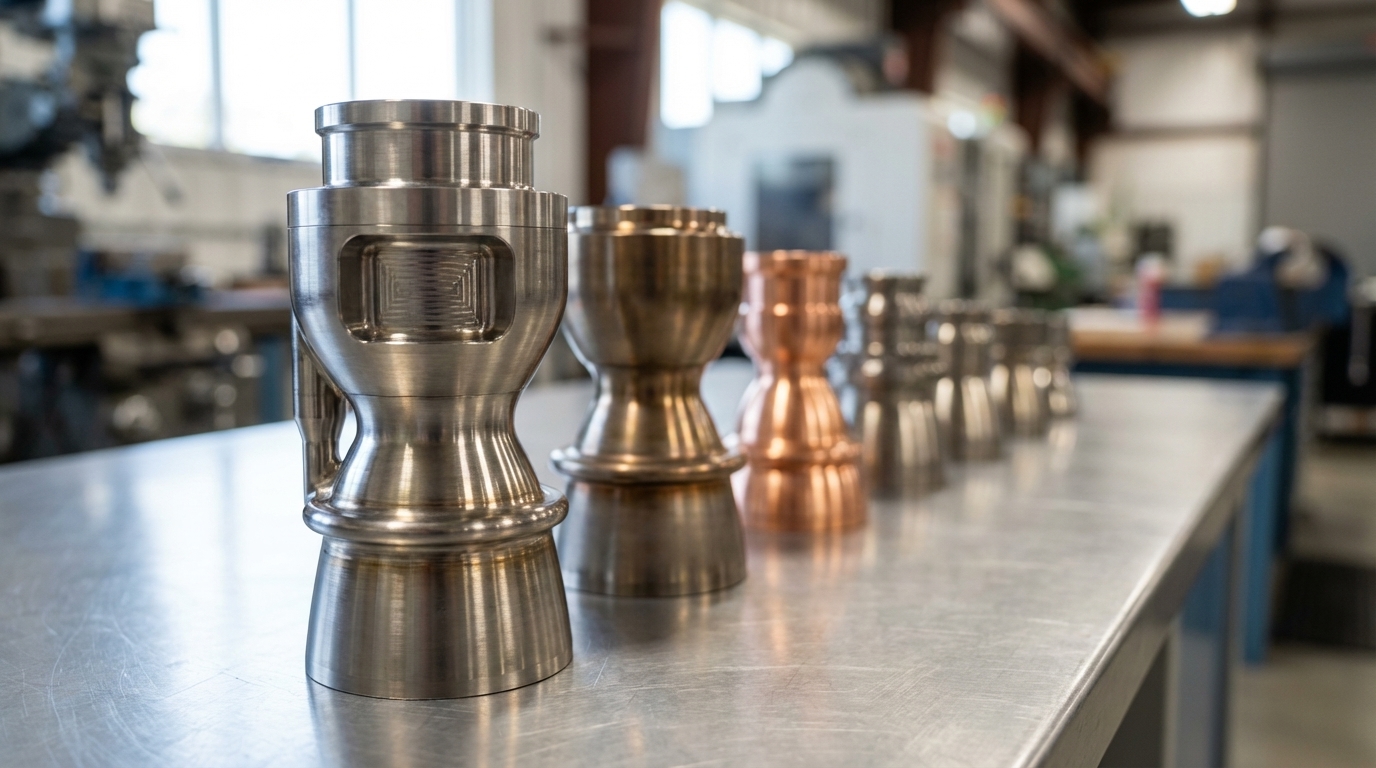
Precision machined spacecraft components are ultra-precise metal parts produced to micron-level tolerances for critical space applications. These parts must endure launch vibrations, thermal cycling from -250°F to +250°F, radiation exposure, and vacuum conditions while maintaining structural integrity over multi-year missions.
|
Component Type |
Application |
Typical Tolerance |
Material |
|
Mounting Brackets |
Structural Systems |
±0.0005″ |
Titanium Alloy |
|
Valve Bodies |
Propulsion Systems |
±0.0002″ |
Inconel 718 |
|
Actuator Housings |
Control Systems |
±0.0003″ |
Aluminum 7075 |
|
Sensor Mounts |
Avionics Systems |
±0.0001″ |
Stainless Steel 316L |
These components rely on specialized manufacturing processes and materials that standard machine shops rarely support consistently. Extreme precision requirements, exotic alloys, and strict quality documentation make spacecraft component manufacturing a specialized discipline that depends on certified suppliers with proven space heritage.
Space-Grade Metals That Keep Components Stable
Spacecraft components rely on materials that combine high strength-to-weight ratios, corrosion resistance, and thermal stability. Material selection directly affects mission success, component life, and overall spacecraft performance in harsh orbital and deep-space environments.
|
Material |
Key Properties |
Achievable Tolerance |
Common Applications |
|
Titanium Ti-6Al-4V |
High strength-to-weight, cryogenic tolerance |
±0.0002″ |
Structural brackets, tank components |
|
Inconel 718 |
Heat resistance, corrosion resistance |
±0.0005″ |
Engine components, exhaust systems |
|
Aluminum 7075-T6 |
Lightweight, excellent machinability |
±0.0003″ |
Housings, mounting hardware |
|
Stainless Steel 316L |
Corrosion resistance, weldability |
±0.0001″ |
Fuel system components, fittings |
Titanium and Inconel spacecraft parts represent advanced aerospace materials engineering and deliver reliable performance in extreme conditions. These alloys require specialized machining expertise, purpose-built tooling, and controlled material handling procedures that only qualified aerospace suppliers typically maintain. Precision Advanced Manufacturing brings extensive experience with these demanding materials and supports consistent quality and traceability for mission-critical applications.
Machining Processes That Deliver Micron-Level Accuracy
Modern spacecraft manufacturing depends on advanced machining processes that reach micron-level precision while staying repeatable across production runs. Each process supports specific geometries, tolerances, and material behaviors.
|
Process |
Achievable Tolerance |
Primary Applications |
Key Advantages |
|
5-Axis CNC Machining |
±0.0002″ |
Complex geometries, structural components |
Single-setup machining, superior surface finish |
|
EDM (Electrical Discharge) |
±0.0001″ |
Hard materials, intricate features |
No cutting forces, exceptional precision |
|
Swiss Turning |
±0.0003″ |
Small diameter parts, high volumes |
Excellent concentricity, automated production |
|
Dynamic Waterjet |
±0.0005″ |
Thick sections, exotic alloys |
No heat-affected zone, minimal waste |
5-axis CNC machining for spacecraft components supports complex geometries in a single setup, which reduces handling errors and improves dimensional accuracy. Precision machining for space applications depends on specialized programming, advanced tooling, and strict process control to meet the extreme tolerances required in orbital environments. Precision Advanced Manufacturing uses an integrated approach that combines multi-axis CNC machining, precision fabrication, finishing, and engineering support in one facility, which removes handoffs and keeps tight control over every production step.
Spaceflight Tolerances, Standards, and Compliance
Spacecraft precision part tolerances rank among the most demanding in manufacturing, with standard aerospace tolerances reaching ±0.0005 inches or tighter for CNC machining. Engine components often require even tighter control, with aerospace precision engineering calling for tolerances as precise as ±0.0002 inches.
|
Component Category |
Tolerance Range |
Compliance Standards |
|
Structural Components |
±0.001″ to ±0.0005″ |
AS9100D, ITAR |
|
Engine Components |
±0.0002″ to ±0.0005″ |
AS9100D, ITAR, NASA-STD |
|
Fuel/Hydraulic Systems |
±0.0001″ to ±0.0003″ |
AS9100D, ITAR, MIL-STD |
AS9100 spacecraft component certification confirms that suppliers maintain the rigorous quality management systems required for space applications. AS9100D adds more than 100 requirements beyond ISO 9001:2015, including product safety, counterfeit parts prevention, and structured risk management. ITAR-compliant spacecraft machining supports security and traceability for defense and commercial space programs, with complete documentation and controlled access throughout manufacturing.
Sourcing Challenges and How PrecisionAM Scales With You
The rapid growth of space programs has created serious sourcing challenges for precision machined spacecraft components. Supply chain disruptions, quality escapes, and limited scalability can threaten program schedules and mission outcomes across both government and commercial initiatives.
|
Challenge |
Program Impact |
Precision Advanced Manufacturing Solution |
|
Prototype-to-Production Scaling |
Schedule delays, cost overruns |
Seamless multi-shift capacity expansion |
|
Quality Rework/Scrap |
Budget overruns, timeline slips |
First-time-right manufacturing with full traceability |
|
Supplier Fragmentation |
Coordination complexity, delays |
Integrated machining, welding, and finishing |
|
Compliance Gaps |
Program risk, audit failures |
AS9100D/ITAR certified operations |
Recent industry data highlights these risks, with NASA’s Mars Sample Return mission experiencing repeated delays and cost overruns tied to sourcing and scalability issues. The global 6-DOF positioning system market growth from $194 million in 2025 to a projected $287 million by 2034 also signals rising demand for precision components across space platforms. Request a tailored quote for your spacecraft program and address these challenges with proven, scalable manufacturing support.
Frequently Asked Questions
What tolerances are achievable for precision machined spacecraft components?
Precision Advanced Manufacturing delivers high-precision components with tight tolerances for mission-critical space and UAV applications using advanced multi-axis CNC machining and related processes. These tolerances stay consistent through rigorous process control, advanced metrology, and certified quality systems that include AS9100D and ITAR compliance.
What materials are best suited for precision machined spacecraft components?
Common materials include Titanium Ti-6Al-4V for structural applications due to its high strength-to-weight ratio, Inconel 718 for high-temperature engine components, Aluminum 7075-T6 for lightweight housings, and Stainless Steel 316L for corrosion-resistant fuel system parts. Final material selection depends on temperature exposure, stress loads, radiation levels, and other environmental conditions for each application.
Why is ITAR compliance critical for spacecraft component machining?
ITAR compliance confirms that spacecraft components and related data meet U.S. export control regulations for defense and dual-use space technologies. Requirements include controlled facility access, background-checked personnel, secure data handling, and complete traceability documentation. ITAR registration is mandatory for suppliers on defense-related space programs and applies to many commercial space initiatives as well.
How do you scale from prototype to full production for spacecraft components?
Precision Advanced Manufacturing supports smooth scaling through multi-shift production, standardized processes, and flexible capacity planning. The same quality standards, documentation, and core personnel carry from prototype through high-volume production, which reduces risks from supplier transitions and keeps component quality consistent across the program lifecycle.
What advanced machining processes does Precision Advanced Manufacturing offer for spacecraft components?
Capabilities include advanced multi-axis CNC machining for complex geometries, precision sheet metal fabrication, Dynamic Waterjet cutting, specialty welding with controlled thermal distortion, and integrated finishing services such as anodizing and passivation. All processes operate under AS9100D and ITAR-compliant quality systems.
Choosing a Space-Qualified Machining Partner
Precision machined spacecraft components require advanced manufacturing expertise, disciplined quality control, and strict regulatory compliance. As space programs accelerate toward 2026 launches, reliable and certified suppliers play a direct role in mission success.
When you evaluate suppliers for your spacecraft program, confirm that they hold AS9100D and ITAR certifications, show proven space heritage, offer integrated manufacturing capabilities, and provide complete traceability documentation. These factors influence program risk, schedule performance, and long-term mission reliability.
Connect with Precision Advanced Manufacturing experts for precision machined spacecraft components that help your mission launch on time and perform reliably in space. Comprehensive capabilities, certified quality systems, and deep space industry experience support the level of reliability your program requires.