
Last updated: March 30, 2026
Key Takeaways
- Space programs face tight tolerances, exotic materials, strict ITAR rules, and fast scaling from prototype to production as the 2026 market expands.
- Successful suppliers bring Inconel and titanium expertise, multi-axis CNC, ±0.001″ tolerances, mission-critical part experience, and AS9100D/ITAR certifications.
- Precision Advanced Manufacturing supports leading space programs such as SpaceX, Blue Origin, and FireFly Aerospace with integrated CNC, fabrication, welding, and finishing.
- Solutions improve durability, maintain full compliance and traceability, scale efficiently, and achieve the delay reductions mentioned later through DFM and right-first-time manufacturing.
- Partner with Precision Advanced Manufacturing for certified, mission-proven space components and receive a tailored program-specific quote.
Core Requirements for Space-Grade Precision Machining
Spacecraft and satellite machining programs succeed when suppliers consistently meet demanding specifications across five core technical areas.
1. Advanced Materials Capability
Space applications rely on specialized alloys that maintain performance under extreme conditions. Inconel supports high-temperature propulsion components, while titanium alloys provide structural strength with low mass. Aluminum alloys balance strength, stiffness, low density, and radiation resistance, with strict controls on purity and alloy composition. Carbon fiber reinforced polymers (CFRP) deliver exceptional stiffness-to-weight ratios for panels and antenna structures, and they require protective strategies against atomic oxygen erosion in low Earth orbit.
2. Multi-Axis CNC and Advanced Techniques
The machining segment holds a 43% share of aerospace parts manufacturing in 2025, driven by precision CNC machining for structural, engine, and landing gear components. Multi-axis CNC platforms, supported by advanced tooling and automation, maintain tight tolerances on complex geometries. EDM, waterjet cutting, and laser processing expand capability for intricate profiles and help control thermal distortion during welding and joining operations.
3. Precision Tolerances and Surface Finishes
Spacecraft components often require tolerances from ±0.001″ down to ±0.0004″ for laser-cut parts and around ±0.002″ for CNC machining. Standard CNC machining tolerances of ±0.25 mm (±0.010″) cover many satellite needs, yet tighter tolerances significantly increase lead times and cost. Early engineering collaboration helps define where ultra-tight tolerances matter and where more flexible limits still protect performance while keeping schedules realistic.
4. Mission-Critical Components
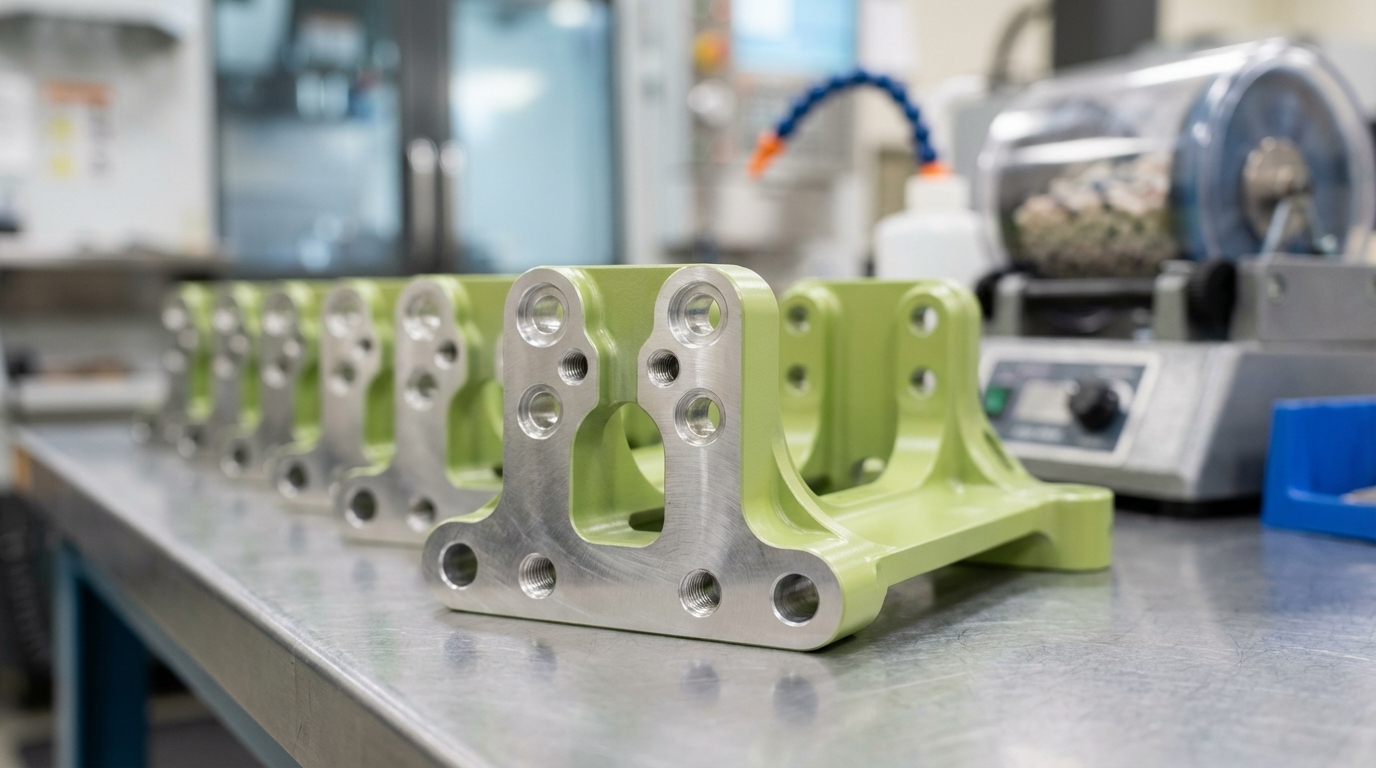
Key spacecraft components span several functional categories, and each group carries distinct precision demands. Structural brackets and mounting interfaces create the mechanical backbone that holds subsystems in alignment. RF shield housings must preserve electromagnetic compatibility and prevent interference. Thermal management depends on accurately machined heat sinks and related hardware. Propulsion system elements endure extreme temperatures and pressures, while optical assemblies require exceptional surface finishes and dimensional stability to maintain alignment throughout launch and orbit.
5. Certifications and Compliance
AS9100D certification builds on ISO 9001 with added requirements for risk management, product safety, supplier oversight, and accountability that space and defense programs expect. Nonconformities must be recorded in the Online Aerospace Supplier Information System (OASIS) database, which strengthens transparency and traceability.
ITAR registration confirms adherence to export control regulations. The upcoming IA9100 standard, expected in late 2026 from the IAQG, will align with ISO 9001:2026 and emphasize tighter process controls, statistical methods, and mandatory cybersecurity protections.
See how Precision Advanced Manufacturing achieves these specifications by requesting detailed capabilities documentation tailored to your program requirements.
Why Precision Advanced Manufacturing Excels for Satellite and Spacecraft Programs
Precision Advanced Manufacturing serves as a proven U.S. partner for mission-critical space components, with a record that includes SpaceX, Blue Origin, and FireFly Aerospace. This experience reflects consistent 100% on-time delivery and zero quality escapes across demanding space applications.
The company’s integrated manufacturing model brings multi-axis CNC machining, precision sheet metal fabrication, specialty welding with thermal distortion control, kitting, laser marking, deburring, and secondary finishing into a single operation. This structure removes handoffs between separate vendors, shortens lead times by weeks, and maintains unified quality control from raw material through finished assembly.
Scalable capacity supports smooth movement from early prototypes to multi-shift, high-volume production while holding the same quality standards. Strategic facilities in California and Texas place production close to major aerospace hubs, which improves responsiveness and simplifies logistics for West Coast and Southwest space programs. The following comparison shows how these capabilities translate into practical advantages over typical suppliers.
|
Capability |
Precision Advanced Manufacturing |
Generic Suppliers |
Advantage |
|
Space Industry Clients |
SpaceX, Blue Origin, FireFly |
Limited/None |
Proven mission-critical experience |
|
Manufacturing Integration |
CNC, fabrication, welding, finishing |
Single-process focus |
Reduced handoffs and lead times |
|
Production Scalability |
Prototype to multi-shift |
Limited capacity |
Seamless program growth |
|
Geographic Coverage |
California and Texas facilities |
Single location |
Aerospace hub proximity |
Request a mission-critical components quote from Precision Advanced Manufacturing and align production with your launch schedule.
Solving Key Buyer Pains with Proven Precision Machining
Meeting Extreme Tolerances and Harsh Environment Demands
Advanced multi-axis CNC machining at Precision Advanced Manufacturing delivers ±0.001″ repeatability for components that must survive launch and operate reliably in orbit. Spacecraft materials endure vacuum-driven outgassing, wide temperature swings that induce thermal stress, ionizing radiation, and micrometeoroid impacts. Expertise with specialized alloys and controlled-heat welding keeps parts dimensionally stable across these conditions, protecting system performance over the full mission life.
Maintaining Compliance and Full Traceability
AS9100D and ITAR-compliant quality systems at Precision Advanced Manufacturing provide complete documentation, inspection records, and material certifications for space programs. AS9100D requires nonconformities to appear in the OASIS database, which gives aerospace and defense customers clear visibility into supplier performance. This structured approach reduces compliance risk and helps prevent findings that can pause or derail program milestones.
Scaling Production from Prototype to Constellation
Full lifecycle support at Precision Advanced Manufacturing keeps the same processes and quality standards in place from prototype validation through full-rate production. Vertically integrated satellite manufacturing that combines CNC machining, FIP dispensing, RF shielding, and thermal management can cut weeks from lead times, unify quality control, and reduce supply chain risk compared with multi-vendor models. This integrated structure supports the projected deployment of more than 37,000 satellites between 2023 and 2033.
Reducing Cost, Rework, and Schedule Risk
Right-first-time manufacturing philosophy, which achieves the delay reductions mentioned earlier, relies on rigorous quality control and advanced fabrication expertise. This approach starts with early engineering collaboration and Design for Manufacturability (DFM) reviews that identify potential production issues before they trigger redesigns. By refining precision machining requirements during design, components move from rapid prototyping to high-volume production without the rework cycles that typically extend timelines and increase cost.
Evidence and Validation: Certifications, Facilities, and Track Record
Precision Advanced Manufacturing operates under AS9100D, ITAR registration, and ISO 9001:2015 certifications, with NAICS codes 332710 (Machine Shops) and 332721 (Precision Turned Product Manufacturing). The company’s 52,000 square feet of manufacturing space in California and Texas supports both development builds and multi-shift production runs.
Proven capability with exotic alloys and composites, combined with tolerance performance that meets demanding aerospace specifications, positions Precision Advanced Manufacturing as a trusted mission partner. Client testimonials consistently describe shorter delays, stronger quality outcomes, and smooth scaling from prototype quantities to production volumes. To place these strengths in context, the following comparison outlines how Precision Advanced Manufacturing performs against other supplier options.
Comparative Analysis: Precision Advanced Manufacturing vs. Competitors
Four evaluation factors often determine whether a machining partner can support space programs effectively. This comparison highlights how Precision Advanced Manufacturing’s integrated capabilities and space industry experience create advantages that directly influence schedule, risk, and long-term scalability.
|
Factor |
Precision Advanced Manufacturing |
BTD Manufacturing |
Primus Aerospace |
Generic Suppliers |
|
Space Industry Clients |
SpaceX, Blue Origin, FireFly |
Limited |
Some aerospace |
None |
|
Integrated Capabilities |
Full CNC, fabrication, finishing |
Machining focus |
Machining focus |
Single processes |
|
ITAR Compliance |
Fully registered |
Yes |
Yes |
Variable |
|
Geographic Reach |
CA and TX facilities |
Multiple facilities |
Global presence |
Limited |
FAQ: Precision Machining for Satellites and Spacecraft
What materials can you machine for space applications?
Precision Advanced Manufacturing supports nearly every material commonly used in spacecraft, including stainless steel, titanium alloys, Inconel, aluminum alloys, carbon fiber composites, and other exotic alloys. Dynamic Waterjet technology processes hard-to-cut materials such as ballistic composites and Kevlar while holding ±.005″ tolerances on complex geometries. The only exceptions are tempered glass and beryllium copper, which present safety concerns.
What tolerances can you achieve for space components?
Our precision machining capabilities meet and exceed the tolerance requirements outlined earlier, with laser cutting achieving +/-.002″ tolerances and +/-.001″ repeatability. Abrasive waterjet processing maintains tolerances within +/-.005″. These capabilities support structural brackets, RF housings, heat sinks, and optical assemblies used across satellite and spacecraft platforms.
How do you scale from prototype to full production?
Our scalable production platform maintains consistent processes from single prototype parts through multi-shift, high-volume manufacturing. Certified procedures, quality checkpoints, and documentation remain in place at every stage. This continuity removes the need to change suppliers as programs grow, which reduces risk and protects schedule integrity for mission-critical launches.
Are you ITAR compliant and AS9100D certified for demanding space programs?
Precision Advanced Manufacturing is fully ITAR registered and operates under AS9100D and ISO 9001:2015 certified quality systems. Our track record with the space industry leaders mentioned earlier shows our ability to meet stringent requirements. Every component ships with full traceability, inspection documentation, and material certifications suitable for defense and space applications.
Can you support aggressive deadlines and design transitions?
Our integrated manufacturing model and established performance history support reliable on-time delivery for critical programs. We manage supplier transitions through detailed documentation, material traceability, and engineering support that often begins with pilot builds or validation runs. Multi-shift capacity and mature processes help maintain performance even under compressed timelines.
Conclusion: Turn Spacecraft Designs into Flight-Ready Hardware
Precision Advanced Manufacturing provides a complete precision machining solution for satellite and spacecraft programs, combining space industry experience, integrated manufacturing, certified quality systems, and scalable capacity. Our work with the space industry leaders mentioned earlier confirms our ability to meet mission-critical requirements while protecting schedule and budget.
Program teams can move from design to launch with greater confidence by engaging our aerospace specialists early. Share your requirements, receive a detailed capabilities quote tailored to your mission, and align production with your launch window.
Contact Precision Advanced Manufacturing now for satellite and spacecraft precision machining services and request your detailed capabilities quote.