Key Takeaways
- Aerospace and defense CNC machining demands tight tolerances, exotic materials such as titanium and Inconel and certifications including AS9100D and ITAR compliance.
- 5-axis CNC machining produces complex geometries in a single setup, reduces errors and improves surface finishes for turbine blades and avionics housings.
- Integrated manufacturing from prototype to production removes supply chain risks, supports scalability and maintains consistent quality under certified systems.
- Full material traceability and digital documentation support audits, rapid data access and compliance for mission-critical programs.
- Partner with Precision Advanced Manufacturing for certified precision machining that minimizes aerospace and defense program risks and costs.
Precision Requirements in Aerospace and Defense Machining
Tight tolerance CNC machining for aerospace and defense parts operates within precision ranges that exceed general industrial standards. These tolerances protect performance, safety and long-term reliability in demanding environments.
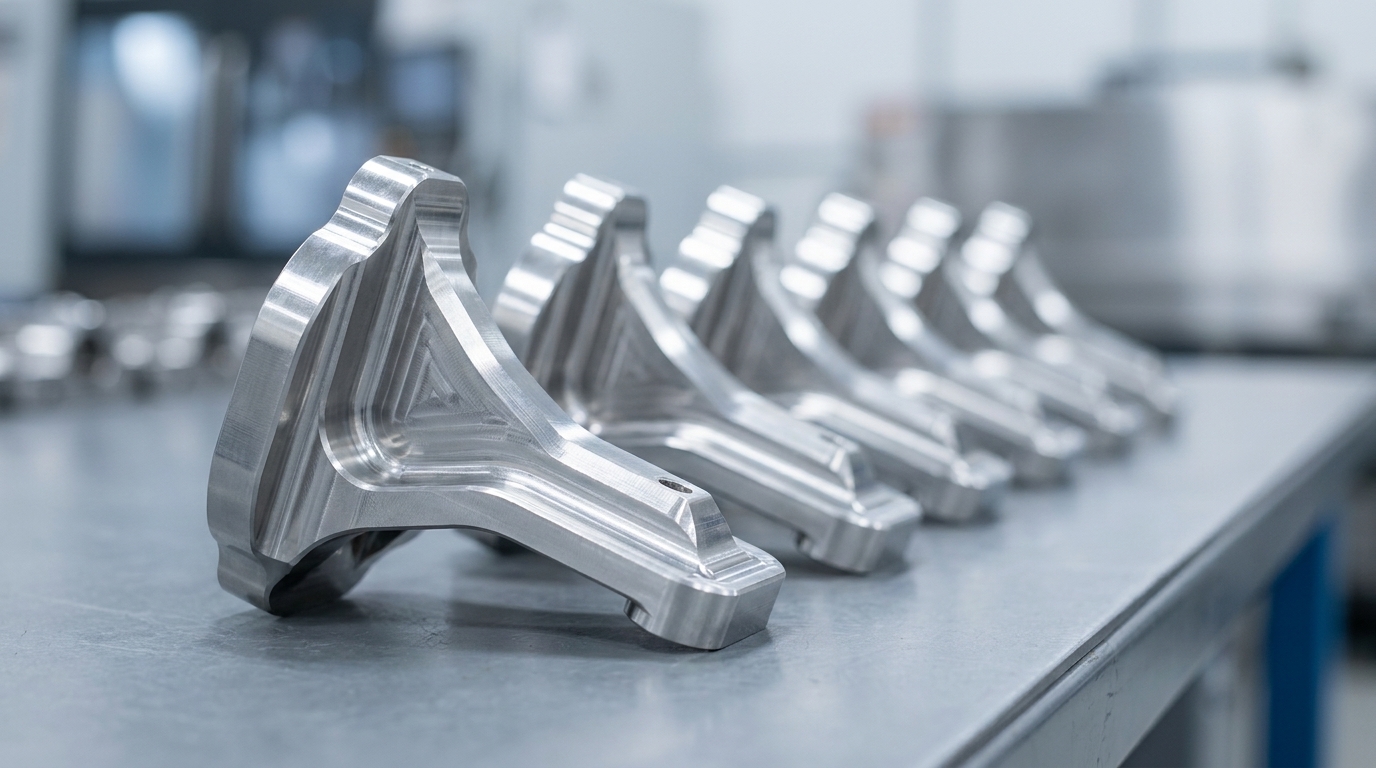
Complex geometries in aerospace and defense parts require advanced machining capabilities. 5-axis CNC machines utilize the X, Y and Z linear axes plus two rotational axes. The tool or workpiece orients in virtually any direction to machine complex shapes in a single setup. This capability supports components such as turbine blades, structural frames and avionics housings.
Material challenges compound precision requirements. Titanium alloys such as Ti-6Al-4V exhibit low thermal conductivity. Inconel superalloys such as Inconel 718 demonstrate work hardening. Specialized tooling, coolant systems and process control maintain dimensional accuracy throughout production runs.
Solving Core Aerospace CNC Challenges
Holding Tight Tolerances on Complex Parts
Rework from imprecise multi-axis geometries creates program delays and cost overruns. Traditional machining approaches struggle with complex aerospace parts that require multiple setups. Each setup introduces potential positioning errors and cumulative tolerance stack-up.
Continuous 5-axis machining provides faster processing speeds, smoother surface finishes and greater geometrical precision through single-setup processing that avoids cumulative tolerance errors from multiple repositionings. This approach supports reliable, compliant aerospace components.
Precision Advanced Manufacturing addresses this challenge through in-house 5-axis CNC capabilities combined with engineering support for manufacturability. Integrated finishing services reduce handoffs between suppliers and remove tolerance stack-up issues that occur when parts move between multiple vendors.
This single-source approach maintains dimensional consistency and reduces cycle times for complex geometries. Programs gain predictable quality and shorter lead times.
Meeting Compliance and Traceability Expectations
Audit risks from inadequate documentation and traceability systems threaten program continuity. Defense and aerospace programs require comprehensive material certifications, process documentation and inspection records that many general machine shops cannot provide.
Precision Advanced Manufacturing maintains AS9100D, ISO 9001 and ITAR-compliant systems with full material traceability and digital documentation. Complete inspection reporting, material certifications and process records support audit requirements and enable rapid response to customer inquiries.
This systematic approach reduces compliance risks and supports mission-critical program requirements. Programs gain confidence that documentation will withstand customer and regulatory reviews.
Scaling from Prototype to Full-Rate Production
Production bottlenecks emerge when prototype suppliers cannot scale to full-rate manufacturing volumes. Many aerospace and defense programs experience delays during the transition from development to production because of supplier capacity limits or weak quality systems.
Precision Advanced Manufacturing supports scalability through multi-shift operations and integrated capabilities spanning CNC machining, welding, fabrication and finishing. This one-roof approach removes supplier transitions while maintaining consistent quality systems from prototype through production.
Engineering support provides manufacturability improvements throughout the product lifecycle. Programs benefit from stable processes as volumes increase.
Reducing Risk and Improving Program Economics
Program delays and scrap costs from out-of-specification parts create significant financial impacts. Tight tolerances in aerospace machining support safety, reliability and performance for turbine blades, landing gear assemblies and flight control actuators.
Precision Advanced Manufacturing delivers right-first-time manufacturing through thermal distortion control, advanced tooling and process validation. This precision reduces rework cycles that increase cost and consume schedule margin.
Complete traceability and documentation further reduce expenses by streamlining audits that would otherwise consume engineering hours. Certified quality systems minimize scrap and protect delivery commitments.
Together, these capabilities provide cost savings compared with fragmented supplier networks that lack integrated capabilities and robust compliance systems. Request a quote to evaluate how integrated precision manufacturing reduces program risks and costs.
Evidence and Validation for Selecting a CNC Partner
Effective precision manufacturing partnerships start with verification of certifications, capabilities and performance history. Modern aerospace CNC machining facilities integrate inspection data into digital quality-management systems that create continuous compliance records and end-to-end traceability.
Precision Advanced Manufacturing provides AS9100D, ISO 9001 and ITAR registrations backed by comprehensive quality management systems. Engineering support includes design for manufacturability reviews, tolerance analysis and process refinement.
This combination of certifications and technical capabilities distinguishes mission-critical suppliers from general machine shops that lack aerospace-specific expertise and compliance systems. Programs gain partners that understand regulatory expectations and complex geometries.
Performance validation includes on-time delivery metrics, first-pass yield rates and customer program support. These benchmarks demonstrate the performance advantages of certified precision manufacturing providers.
Beyond reviewing past performance, procurement teams conduct due diligence to confirm that documented capabilities align with specific program requirements. This step connects evidence to real program risk reduction.
Managing Supplier Risk with Structured Due Diligence
Supplier qualification requires thorough evaluation of certifications, documentation systems and scalability. Due diligence frameworks review quality registrations, material traceability capabilities, inspection equipment and production capacity.
General machine shops provide flexibility but often lack the compliance rigor and documentation systems required for aerospace and defense programs. These gaps increase audit exposure and schedule risk.
The certified compliance systems mentioned earlier support rigorous oversight with proven delivery performance. Precision Advanced Manufacturing combines these systems with seamless scaling capabilities.
This approach contrasts with fragmented supplier networks that require coordination across multiple vendors, each adding potential quality and schedule risks. Integrated capabilities under certified quality systems provide stronger program support and risk mitigation.
Digital Traceability and Documentation in Aerospace CNC
Digital traceability systems now play a central role in ITAR-compliant manufacturing operations. Digital traceability technologies including MES and ERP integration and RFID support ITAR-compliant CNC machining in aerospace and enable secure, auditable production records.
Modern aerospace programs require rapid access to production and inspection records during audits and program reviews. Without integrated systems, retrieving historical data can take days or weeks and delay critical decisions.
Aerospace CNC suppliers address this challenge through MES and ERP systems that enable same-day data retrieval. These capabilities drive the need for integrated digital systems that link design data, machining programs, inspection results and material certifications.
The digital documentation systems described earlier integrate these MES and ERP platforms to support rapid data retrieval and audit requirements. Complete material traceability, inspection records and process documentation provide the transparency required for mission-critical programs while supporting ITAR compliance and data security.
Conclusion: Integrated Precision for Mission-Critical Programs
Tight tolerance CNC machining for aerospace and defense parts requires certified precision manufacturing capabilities that reduce program risks while supporting compliance and scalability. Precision Advanced Manufacturing provides integrated solutions, robust quality systems and consistent performance for mission-critical applications.
The combination of AS9100D compliance, ITAR registration and multi-axis machining positions the company as a strong U.S.-based partner for aerospace and defense programs. Programs gain a single source for complex machining, fabrication and finishing under unified quality control.
Successful program execution depends on collaboration with experienced precision manufacturing specialists who understand aerospace requirements and compliance obligations. Request a quote today to explore how Precision Advanced Manufacturing supports precision, compliance and reliability for mission-critical aerospace and defense components.
Frequently Asked Questions
What certifications ensure compliance for defense projects?
Defense projects require AS9100D certification for aerospace quality management, ITAR registration for defense-related technical data handling and ISO 9001 for general quality systems. These certifications support proper documentation, traceability and process control for mission-critical components. Additional accreditations such as NADCAP may be required for special processes such as heat treating or chemical processing.
Can precision manufacturing providers scale from prototype to production?
Established precision manufacturers with multi-shift operations and integrated capabilities can scale from prototype development to full-rate production. This capability requires adequate production capacity, certified quality systems and engineering support to maintain consistency throughout the product lifecycle.
Integrated facilities remove supplier transitions that often create bottlenecks during production ramp-up. Programs gain smoother transitions between development and production phases.
How is traceability maintained for aerospace and defense parts?
Complete traceability relies on digital documentation systems that link material certifications, machining programs, inspection data and process records. Modern systems provide rapid access to production history and support audit requirements.
Material lot tracking, heat treatment records and dimensional inspection data remain connected throughout the component lifecycle to support program requirements. This structure protects compliance and simplifies investigations.
What materials require specialized machining expertise?
Aerospace and defense applications often specify titanium alloys, Inconel superalloys and other exotic materials that require specialized tooling, coolant systems and process control. These materials exhibit characteristics such as work hardening, low thermal conductivity and high cutting forces.
Experienced machinists and appropriate equipment maintain dimensional accuracy when working with these challenging alloys. Programs benefit from stable processes and consistent part quality.
How do tight tolerances impact manufacturing costs?
Tight tolerance manufacturing requires precision equipment, skilled operators and rigorous quality control that increase initial costs. Right-first-time manufacturing offsets these investments by reducing rework and scrap while protecting schedules.
The total cost of ownership often favors precision manufacturing when considering the risks and expenses associated with out-of-specification parts and program disruptions. Programs gain predictable budgets and fewer unplanned interventions.