Last updated: April 17, 2026
Key Takeaways
- The global satellite bus market reaches $13.99 billion in 2026, driven by pLEO constellations that reshape commercial and defense space architectures.
- Leading US smallsat bus manufacturers include Blue Canyon Technologies, York Space Systems, Terran Orbital, Lockheed Martin, and others with ITAR-compliant platforms for LEO missions.
- Key 2026 trends feature acquisitions such as York Space Systems buying Orbion for propulsion integration and rapid scaling by defense primes like Intuitive Machines.
- Defense programs demand cybersecurity, ruggedness, and ITAR compliance, while commercial programs focus on cost efficiency. Both rely on dependable US component suppliers.
- Partner with an AS9100D/ITAR-compliant precision machining supplier to keep mission-critical smallsat bus components on schedule and within specification.
Satellite Bus Basics: How the Platform Supports the Payload
A satellite bus functions as the standardized spacecraft platform that houses core subsystems including power generation and distribution, propulsion, attitude determination and control systems (ADCS), command and data handling, and structural framework. The bus provides essential services that enable the payload, such as specialized sensors, communications equipment, or scientific instruments, to accomplish the mission objectives. Commercial satellite buses prioritize cost efficiency and rapid deployment for constellation applications, while defense buses emphasize ruggedness, cybersecurity, and ITAR compliance for national security missions. This architectural separation allows manufacturers to develop reusable bus platforms that can support diverse payloads across multiple programs. This foundation also explains why bus platforms evolve quickly as new mission needs and market pressures emerge.
2026 Trends in US Smallsat Bus Manufacturing
The US smallsat bus sector is scaling quickly as the global small satellite market grows at 21.3% CAGR through 2030 and Department of Defense procurement accelerates. Key developments include York Space Systems’ acquisition of Orbion Space Technology in March 2026 to vertically integrate plasma propulsion capabilities. Intuitive Machines’ $800 million acquisition of Lanteris Space Systems in January 2026 positions the company as a vertically integrated space prime. The Space Development Agency’s proliferated architecture requirements and ITAR-focused reshoring efforts expand domestic manufacturing capacity and increase demand for reliable US-based component suppliers such as Precision Advanced Manufacturing.
Top US Small Satellite Bus Manufacturers for Commercial and Defense Missions
1. Blue Canyon Technologies
Blue Canyon Technologies manufactures the X-Series and Starling satellite buses for LEO missions, serving NASA, DoD, and commercial customers with ITAR-compliant platforms. Their standardized bus architectures support rapid constellation deployment and include integrated propulsion and advanced attitude control systems for precise pointing.
2. Terran Orbital Corporation
Terran Orbital delivered 42 satellite bus platforms for the Space Development Agency’s Tranche 1 program in September 2025, specializing in CubeSat to ESPA-class buses. Their Nebula platform has a 250 kg launch mass and supports both commercial Earth observation and defense applications with modular payload integration.
3. York Space Systems
York Space Systems operates as the primary contractor for the SDA’s Tranche 1 Transport Layer, manufacturing S-CLASS and M-CLASS satellite buses with integrated Aurora plasma propulsion following their Orbion acquisition. Their recent Denver facility expansion supports the production scaling required for SDA constellation delivery and depends on precision-machined structural components from suppliers such as Precision Advanced Manufacturing.
4. Redwire Corporation
While York focuses on defense scalability, other manufacturers target different segments of the smallsat market. Redwire provides small satellite buses through their MIS (Mission Integration Services) division, focusing on rapid prototyping and deployment for commercial and government customers. Their platforms emphasize modularity and cost-effectiveness for constellation applications.
5. L3Harris Technologies
L3Harris Technologies contributes communication payloads, digital processors, and mission solutions for multi-orbit markets, delivering 14 satellites with optical links and infrared sensors for the SDA under a July 2022 contract. Their platforms serve both commercial and defense applications and feature advanced RF capabilities for secure, high-throughput communications.
6. Lockheed Martin
Lockheed Martin’s LM 400 mid-sized satellite bus accommodates up to 1,100 kg payloads with flexible propulsion options. Their Next-Generation Space Dominance (NGSD) platform uses a modular common-core design that supports proliferated architectures. The Small Satellite Processing and Delivery Center operates six parallel assembly lines that can produce up to 180 spacecraft annually.
7. Turion Space
Turion Space raised over $75 million in Series B funding in April 2026 to scale DROID spacecraft production from 8 to 40 vehicles annually. Their software-defined architecture supports multi-sensor missions in LEO and GEO and underpins multiple US government contracts spanning NASA, Space Force, and NRO applications.
US Smallsat Bus Manufacturers Comparison Table
This comparison highlights key specifications and capabilities across leading US manufacturers, showing how each platform aligns with different mission requirements. York Space Systems leads in defense-focused scalability after the Orbion acquisition, while Lockheed Martin delivers the highest payload capacity for complex missions.
| Manufacturer | Key Models/Mass Range (kg) | Primary Focus/Orbits | ITAR/Notable Customers |
|---|---|---|---|
| Blue Canyon Technologies | X-Series, Starling | LEO constellations | ITAR / NASA, DoD |
| York Space Systems | S-CLASS, M-CLASS | Defense LEO | ITAR / SDA Transport Layer |
| Lockheed Martin | LM 400, NGSD / up to 1,100kg | Multi-orbit defense | ITAR / Space Force, SDA |
| Terran Orbital | Nebula / 250 kg | Commercial/Defense LEO | ITAR / SDA Tranche 1 |
Defense and Commercial Program Requirements Compared
Defense satellite bus programs require enhanced ruggedness, cybersecurity hardening, and strict ITAR compliance to protect sensitive technologies and mission data. Next-Generation Space Dominance platforms emphasize proliferated architectures with automated mission planning to counter emerging threats. Commercial programs prioritize cost control and rapid deployment for constellation applications, using standardized interfaces and commercial-off-the-shelf components. Both sectors increasingly demand US-sourced components and manufacturing to protect supply chain security and meet regulatory requirements, which creates opportunities for domestic suppliers such as Precision Advanced Manufacturing to support critical structural and mechanical systems.
Precision Component Suppliers for Smallsat Bus Structures
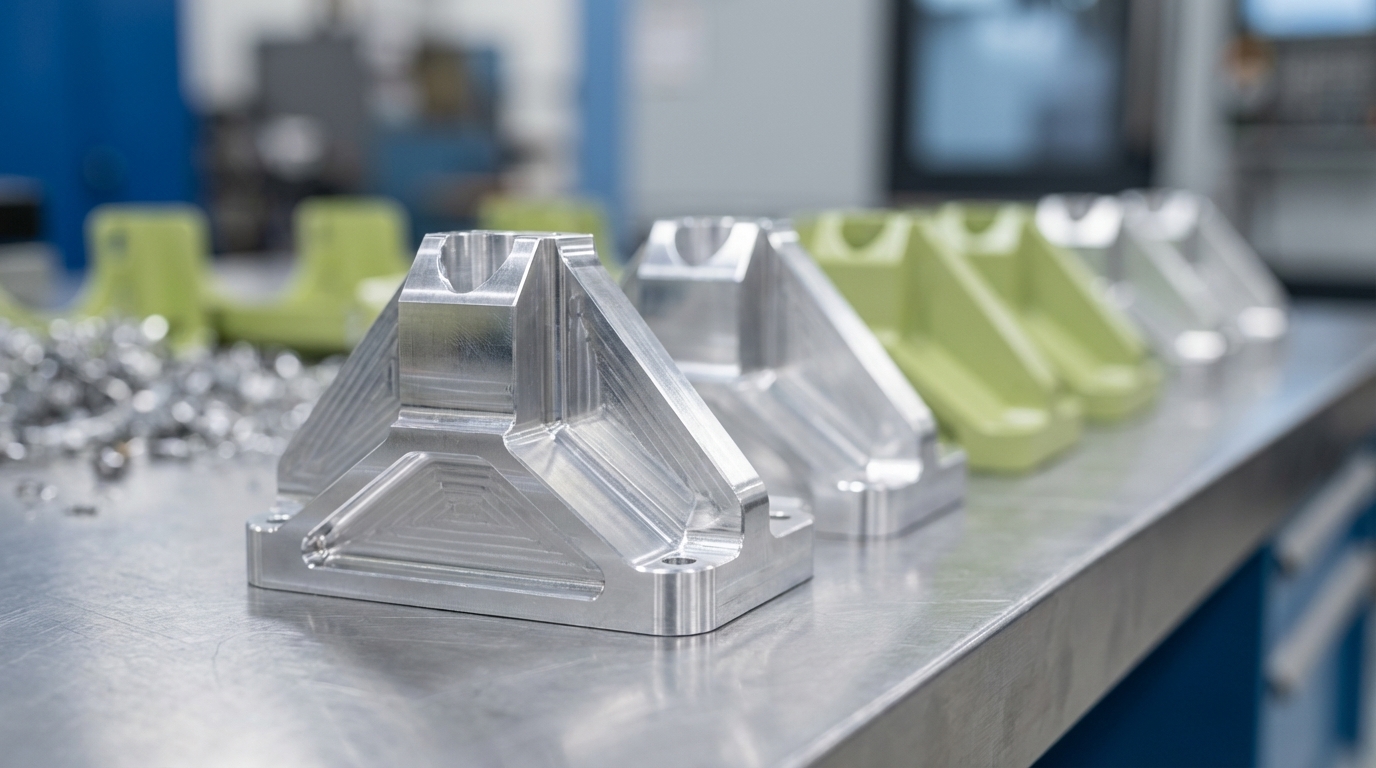
Precision Advanced Manufacturing serves as a key US-based supplier of mission-critical components for small satellite bus structures, providing the precision machining and fabrication expertise required for aerospace and defense applications. Operating under AS9100D, ISO 9001:2015, and ITAR registrations, Precision Advanced Manufacturing delivers multi-axis CNC machining, precision metal fabrication, and integrated finishing services from facilities in California and Texas. Their track record includes tight-tolerance structural components, brackets, and assemblies that perform reliably in demanding space environments.
The company’s scalable production platform supports both prototype development and full-rate manufacturing, which allows programs to scale without changing suppliers midstream. This continuity becomes critical when teams move from early demonstration to constellation deployment, because supplier changes introduce qualification delays and added risk. Advanced capabilities such as precision welding with thermal distortion control, secondary finishing services, and complete documentation and traceability aligned with aerospace quality standards keep components consistent from first article through full-rate production. For satellite bus manufacturers facing aggressive delivery schedules and zero-defect requirements, these integrated capabilities reduce rework and program delays through first-time-right manufacturing processes. Get a quote to discuss how these capabilities support your specific schedule and quality targets.
Key differentiators include integrated engineering support that improves manufacturability, multi-shift production capacity for high-volume programs, and experience with complex materials and exotic alloys used in space applications. Their customer-focused approach provides responsive communication and program support that keeps critical satellite programs on schedule. Discuss your smallsat bus component requirements with Precision Advanced Manufacturing’s engineering team to apply these capabilities to your next program.
Choosing a Bus Partner and Building a Resilient Supply Chain
Successful satellite bus partner selection starts with a clear view of technical capabilities, compliance certifications, production scalability, and performance on similar missions. Key assessment criteria include payload accommodation flexibility, orbit-specific design heritage, ITAR registration status, and demonstrated delivery performance on comparable programs. Procurement teams should request detailed technical specifications, quality certifications, and customer references, then conduct facility audits to confirm manufacturing capabilities and capacity.
Supply chain risk mitigation requires US-based component sourcing for ITAR-controlled programs, with particular attention to structural elements, precision-machined parts, and critical assemblies. These components demand rigorous traceability and configuration control to maintain compliance and consistent quality across the supply base. Establishing clear requirements for material traceability, inspection documentation, and configuration control from the start prevents gaps that can delay key milestones. Integrated suppliers such as Precision Advanced Manufacturing reduce vendor fragmentation by consolidating multiple capabilities under one ITAR-compliant roof, which simplifies both compliance management and program control. Teams should also develop contingency plans for production scaling and monitor supplier financial stability and capacity utilization to avoid disruptions.
Conclusion and Next Steps for Smallsat Bus Programs
The US small satellite bus manufacturing landscape offers diverse platforms from established defense primes and innovative commercial providers, each aligned with specific mission requirements and market segments. Leading manufacturers such as York Space Systems, Lockheed Martin, and Terran Orbital deliver proven solutions for commercial constellations and defense applications, while emerging players such as Turion Space introduce software-defined architectures and rapid scaling capabilities. Program success in this dynamic market depends on careful supplier evaluation, disciplined supply chain management, and strong partnerships with reliable component providers. Connect with Precision Advanced Manufacturing to ensure your satellite bus program benefits from precision-engineered components that meet demanding space requirements while maintaining schedule and quality objectives.
FAQ
What are the top US smallsat bus companies for defense programs?
The leading US small satellite bus manufacturers for defense programs include York Space Systems (SDA Transport Layer prime contractor), Lockheed Martin (NGSD platform for proliferated architectures), L3Harris Technologies (SDA Tracking Layer), Terran Orbital (SDA Tranche 1 supplier), and Blue Canyon Technologies (NASA and DoD heritage). These companies maintain ITAR registration and AS9100D quality systems required for national security missions, with proven records delivering mission-critical platforms for the Space Development Agency, Space Force, and other defense customers.
How do Blue Canyon Technologies satellite buses compare to competitors?
Blue Canyon Technologies focuses on smaller satellite buses with their X-Series and Starling platforms, emphasizing precision attitude control and rapid deployment capabilities. Compared to larger platforms such as Lockheed Martin’s LM 400 or York Space Systems’ M-CLASS buses, Blue Canyon targets CubeSat and microsatellite applications with standardized interfaces and cost-effective solutions. Their buses perform well in constellation applications that require precise pointing and formation flying, which suits Earth observation and technology demonstration missions.
What ITAR requirements apply to defense satellite bus programs?
Defense satellite bus programs require ITAR registration for all manufacturers and suppliers that handle controlled technical data or components. Requirements include restrictions on foreign national access, secure facility controls, and export licensing for any international collaboration. Structural components, propulsion systems, attitude control hardware, and communication subsystems must come from ITAR-compliant facilities with appropriate security clearances. Suppliers must maintain detailed documentation of personnel access, component traceability, and manufacturing processes to demonstrate compliance throughout the supply chain.
Which component suppliers are essential for satellite bus manufacturing?
Critical component suppliers for satellite bus manufacturing include precision machining providers for structural elements and brackets, propulsion system manufacturers for thrusters and tanks, solar panel and battery suppliers for power systems, and electronics manufacturers for flight computers and communication systems. Precision Advanced Manufacturing serves as a key supplier for machined structural components, providing AS9100D and ITAR-compliant manufacturing with the tight tolerances required for space applications. Other essential suppliers include attitude control system providers, thermal management specialists, and harness manufacturers for electrical interconnects.
What is the difference between satellite bus and payload systems?
The satellite bus provides the fundamental spacecraft platform, including power generation and distribution, propulsion, attitude control, command and data handling, thermal management, and structural framework. The payload consists of mission-specific equipment such as cameras, sensors, communication transponders, or scientific instruments that accomplish the primary mission objectives. The bus enables the payload to operate in space by supplying power, pointing accuracy, data transmission, and orbital maintenance. This separation allows standardized bus platforms to support diverse payloads across multiple missions and programs.
How do Terran Orbital smallsat buses perform in government contracts?
Terran Orbital has demonstrated strong performance in government contracts, successfully delivering 42 satellite bus platforms for the Space Development Agency’s Tranche 1 program in September 2025. The Nebula platform mentioned earlier supports both commercial Earth observation and defense missions with modular payload integration suited to evolving requirements. The company maintains ITAR compliance and uses production processes that meet the demanding schedules and quality expectations of government programs, which positions Terran Orbital as a reliable supplier for future SDA tranches and other defense constellation efforts.